Amazon Rainforest Peru With Kids (2025): Our 4-Night Family Jungle Adventure
An honest, first-hand guide to exploring the Amazon Rainforest in Peru with kids, based on our 4-night stay in the Manu Biosphere’s cloud forest and upper Amazon basin.
Updated: December 2025
Visited: Amazon Rainforest, Peru (Dec 2025)
Family travel, long-term route through South America
What You’ll Learn
What exploring the Amazon rainforest in Peru with kids is really like
How the Manu region offers a safe, accessible family-friendly jungle experience
The exact 4-night itinerary we followed from Cusco to Guadalupe Lodge
Practical tips for wildlife, weather, pacing, packing, and safety
Whether a family-focused Amazon trip is worth it, and which ages enjoy it most
The Amazon hits you before you even realise you’ve arrived. One moment we were winding down the last bends of the Manu Road, still half in the mist of the Andes; the next, the air thickened, the forest rose around us, and a deep humming chorus of insects and birds wrapped itself around our family like a living welcome.
Travelling into the Amazon rainforest of Peru with kids sounds dramatic, maybe even intimidating but standing there with the humidity clinging to our skin and monkeys calling somewhere above the trees, it didn’t feel scary. It felt alive. It felt like stepping into a story our children would remember long after the backpacks were unpacked.
We’d dropped from Cusco’s thin mountain air into one of the most biodiverse regions on earth — the Manu Biosphere Reserve, protected under UNESCO for its unparalleled wildlife and ecological significance. Even National Geographic calls this region one of Peru’s last truly wild frontiers:
For families, places like Manu offer something rare: a way to experience the Amazon without multi-day boat journeys or remote expedition-style lodges. According to Peru Travel, the official tourism board, Manu’s buffer zone provides some of the safest and most accessible rainforest experiences for visitors.
We chose Wild Watch Peru and stayed at Guadalupe Lodge as our base for four nights, a simple, comfortable pocket of jungle calm surrounded by river valleys, caves, and wildlife at every turn. What followed was a blend of adventure and quiet moments: monkeys leaping in the canopy, cave walks with cold streams running over our ankles, a peaceful afternoon building stone fortresses by the river, and thunderstorms so powerful they lit up the entire sky.
This guide walks you through exactly what our Amazon experience was like as a family, what we learned, and how to decide if the Amazon should be part of your own Peru trip.
Amazon Family Travel Essentials
Climate & Altitude / The Manu region sits far below Cusco’s elevation, which makes it an immediate relief for families coming from 3,399 m (11,152 ft). Expect warm, humid jungle air from the moment you descend into the cloud forest, usually 28–32°C with sudden tropical downpours. Kids generally adjust quickly, though the humidity can feel intense the first day. Early mornings and late afternoons are the most comfortable times to explore.
Getting In / Most family-friendly Amazon trips begin in Cusco, where tours pick you up and drive along the Manu Road into the tropical foothills of the Manu Biosphere Reserve, a UNESCO-protected region. The journey takes 5–7 hours with scenic stops at Oropesa, Ninamarca tombs, Paucartambo market, and several cloud forest viewpoints. Private transfers can also be arranged through Viator, which is helpful for families needing flexible stops. River access begins at Atalaya Port, where boats launch for day excursions.
What to Book Ahead / Amazon lodges have limited rooms and rely on licensed guides, so booking early is essential, especially during June–September. For our 4-night stay, we booked Guadalupe Lodge, a comfortable base near Pilcopata ideal for families who want accessible wildlife without long river expeditions. If you prefer structured logistics, consider booking a full tour package through GetYourGuide where transport, guided walks, and meals are bundled.
Short on Time? / If you want a lighter version of the Amazon experience, choose a 2–3 day Manu Cloud Forest trip, which still offers monkeys, birds, waterfalls, and river exploration without committing to multi-day boat travel. Families short on time can even do a one-day river excursion from Cusco to Atalaya. But if your goal is deeper connection, night walks, thunderstorms, slow mornings surrounded by jungle sound, the 4-night stay is worth it.
Family-Friendly Wildlife / This region is known for easy-to-spot species: howler monkeys, capuchins, squirrel monkeys, toucans, quetzals, the crimson Cock-of-the-Rock, caimans, frogs, and countless insects. It’s one of the most biodiverse rainforests in Peru according to National Geographic. Because trails are well established and guides are trained in low-impact wildlife encounters, sightings feel safe and organic rather than chaotic. In addition to its wildlife, visitors are drawn to the ancient ruins of Machu Picchu, a UNESCO World Heritage site that showcases the ingenuity of the Inca civilization. Exploring these remarkable structures offers a glimpse into a fascinating history set against breathtaking mountain scenery. The journey to this iconic location can also lead to encounters with diverse flora and fauna, making it a perfect extension of any wildlife adventure in the region.
Where to Stay / We stayed at Guadalupe Lodge, which offers wooden cabins, mosquito-net beds, warm showers, simple meals, electricity, and safe paths for little explorers. It’s not luxury, but it’s comfortable, and crucially, you return to the same room every night instead of changing camps. For families, this stability is gold. If you want alternatives, look for lodges in the Manu Cultural Zone rather than deep rainforest reserves, which require days of river travel and are better suited to adults or older teens.
Getting Around / Jungle travel shifts with weather and daylight. Road segments can be narrow, and river levels change quickly after storms. Most operators include all transport: vehicle transfers, riverboats, and guided walks. If motion sickness is an issue, plan ahead, the descent from Cusco has switchbacks. In the jungle itself, everything slows: boats idle quietly, walks follow shaded forest paths, and kids often lead the pace. For planning routes and onward travel after the lodge, Rome2Rio offers reliable real-time transport estimates.
Why the Amazon Works (and Challenges) for Families
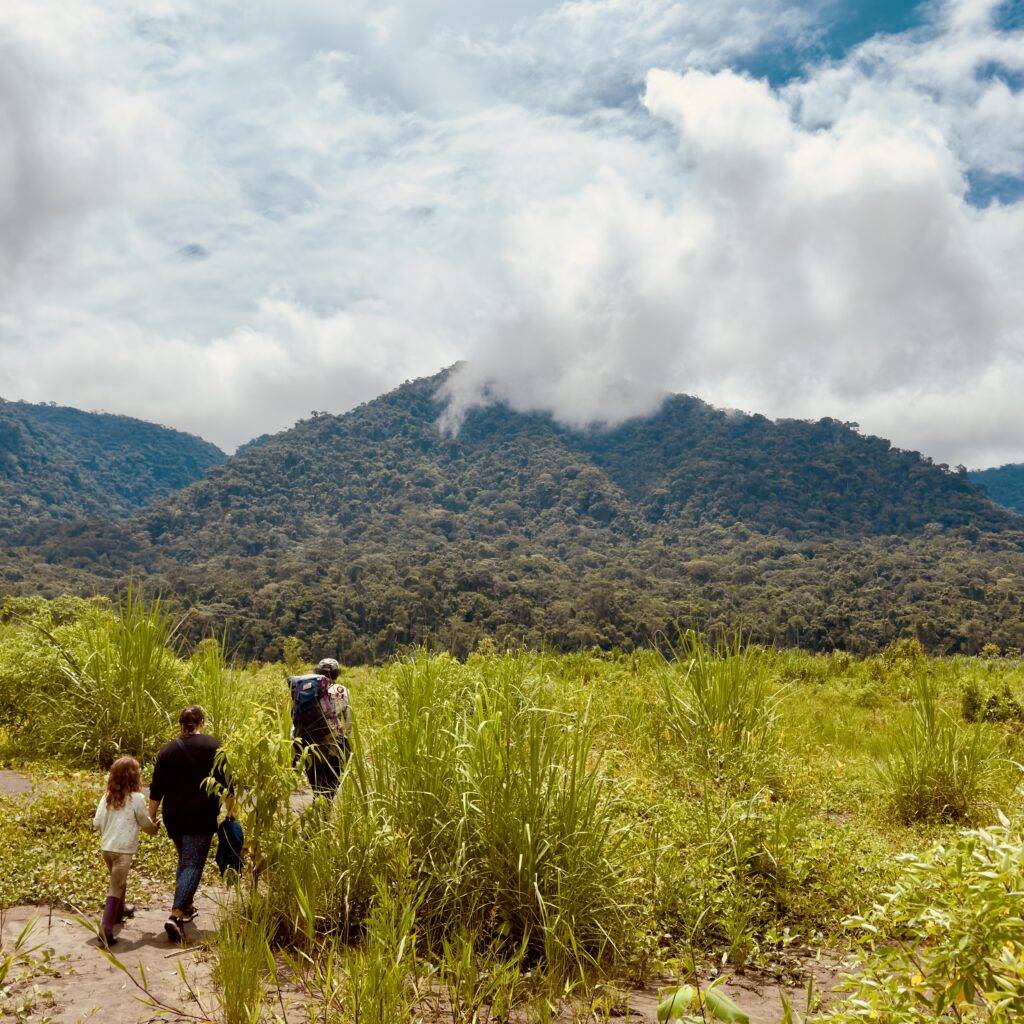
The Amazon has a reputation, wild, humid, unpredictable and some of that is true. But what surprised us most was how gentle the jungle can feel when you’re in the right region, with the right guides, and the right expectations. We weren’t trekking through remote river basins or sleeping in hammocks; we were exploring a softer, more accessible side of the rainforest that still delivered everything our kids hoped to see: monkeys, bright birds, waterfalls, canyons, caves, and storms that rattled the windows.
Why It Works
The Manu Cultural Zone, where Guadalupe Lodge is located, is a sweet spot for families: wild enough to feel like a true rainforest, but close enough to the Andes that it never becomes overwhelming. Walks are short, wildlife is abundant, and the terrain is varied, cloud forest, river valleys, palm forest, and lowland jungle all in one trip. Kids don’t need patience for long boat rides; things happen quickly here. A rustle in the canopy turns into capuchins leaping overhead. A flash of red becomes the Cock-of-the-Rock, Manu’s iconic bird. Even quiet moments feel rich because the jungle is constantly moving.
This part of the Amazon is also safe and structured. Trails are well maintained, guides are deeply knowledgeable, and activities switch between shaded walks, river time, and lodge downtime. The rhythm is good for younger travellers who need bursts of excitement followed by open space to simply play.
What’s Challenging
The humidity is relentless. Clothes stay damp, hair goes wild, and kids feel sticky no matter how many river dips you take. Days start early, before sunrise sometimes, to catch wildlife at its most active. Nights get loud, especially when storms roll in. One of the biggest surprises for our family was how alive the darkness felt. When the sky lit up during a late-night thunderstorm, revealing the entire canopy in one electric flash, it was both thrilling and a little intimidating.
There’s also the emotional reality: no Wi-Fi, no city noise, no rush. Slowing down can feel strange at first, especially for families used to travelling fast. But once you settle into the jungle’s pace, the stillness becomes part of the magic.
Family Tip
Bring light, breathable clothes, patience for early mornings, and flexibility. The Amazon rewards families who follow its rhythm rather than trying to create their own. If you embrace the slowness and the surprise moments, a sudden monkey sighting, a rainstorm that interrupts a walk, a riverbank pause, everything becomes easier.
The Amazon is the world’s largest tropical rainforest, stretching over 5.5 million km² so vast that the UK and Ireland could fit inside it 17 times, and spanning nine countries across South America.”
Source: National Geographic Kids
Our 4-Night Base at Guadalupe Lodge
Guadalupe Lodge sits in that in-between world where the Andes finally exhale and the Amazon begins. Not the deep, remote rainforest you reach after days on the river, but a gentler edge of the jungle where wildlife is everywhere, the air is warm and heavy, and the forest feels close enough to touch. For families, this middle ground is perfect. It’s wild, but not overwhelming. Remote, but not isolating. And most importantly: you return to the same comfortable room every night.
The Lodge Itself
The lodge is built from wood and open space, long walkways, wide verandas, and rooms that let in the sounds of the surrounding forest without letting the forest in. Our cabin had mosquito-netted beds, warm showers, and just enough electricity to charge cameras and the kids’ audiobook device before nightfall. It wasn’t luxury, and it didn’t need to be. The jungle supplies the atmosphere. Everything else is simply background.
What struck us most was the soundtrack. The Amazon doesn’t have “quiet hours.” It hums, chirps, chatters, and rattles long after the sun goes down. At night, lying under a net with storm clouds building in the distance, we felt more connected to the environment than anywhere else we’d stayed in Peru. When a thunderstorm finally rolled in during our second night, the entire sky lit up in white flashes that illuminated the trees like a strobe. The kids whispered to each other, equal parts excited and unsure, while rain hammered the roof in sheets. It was one of the strongest storms we’ve ever heard and somehow one of the most peaceful moments of the trip.
The Grounds & Surroundings
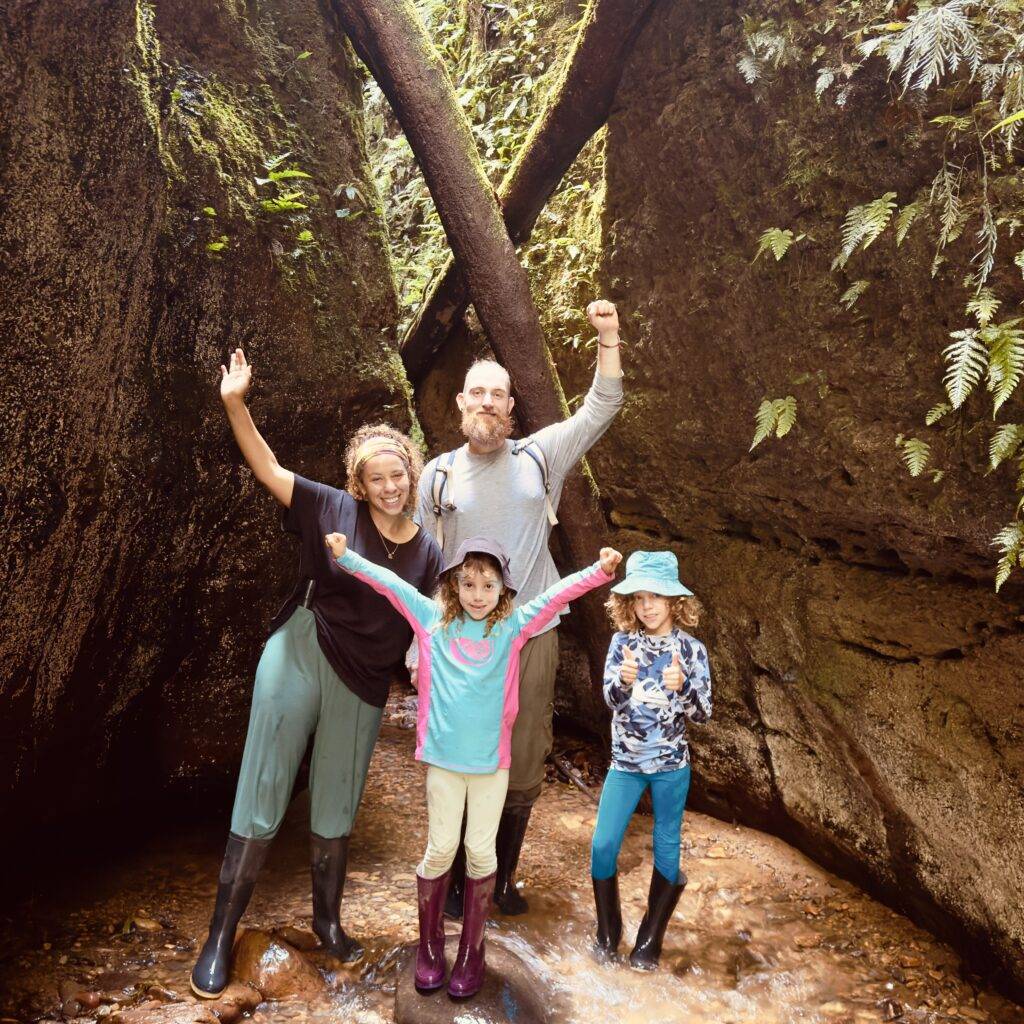
Every direction led somewhere worth exploring. A short walk from the lodge brought us to a canyon system with narrow trails, rock overhangs, and a shallow stream running cold and clear over smooth stones. Our kids loved this place, splashing through ankle-deep water, following the guide’s flashlight as he pointed out spiders tucked into cracks, listening for the wingbeats of bats sliding through the dark. It felt like an adventure film, only real and much wetter.
Behind the lodge, a small trail led into a garden used for teaching visitors about local medicinal plants. Cacao pods, coca leaves, bamboo water, achiote, and dozens of plants we’d never seen were growing quietly in the morning shade. Our guide explained how each one is used by communities throughout the Manu region, for color, for medicine, for daily life. Even this simple walk felt magical in the soft, early light.
A Place to Slow Down
The biggest gift of Guadalupe Lodge was the space to slow down. After hot afternoons along the river or long mornings spotting wildlife, we’d sit outside our cabin and watch the forest move. Butterflies drifted through the clearing, hummingbirds zipped past like tiny blurs, and the kids played with sticks, rocks, and the kind of imagination that only comes when screens and cities are far away.
One of our favourite memories happened down by the riverbank. The kids spent almost an hour building a stone fortress while we dipped our feet into the cool water. Leaves drifted by, monkeys called somewhere across the valley, and the heat softened into something almost gentle. It was one of those small, grounding travel moments, no big sight, no scheduled activity, just a family sitting together in a place that felt impossibly alive.
Why This Base Worked for Us
Guadalupe Lodge is not a resort. It’s not polished or curated. And that’s exactly why it works for families who want to experience the Amazon in a way that feels both safe and real. You get the wildlife, the storms, the rivers, the forests and you also get a clean bed, predictable meals, and a guide who knows exactly how to set the pace for kids.
The jungle can feel overwhelming when you move every night, but with a fixed base, it becomes a home, even if only for four nights and the routines that kids rely on fall naturally back into place. Wake early, explore, eat, rest, explore again, fall asleep to the pounding rain and the rumble of the forest. It’s simple. It’s immersive. And it’s the kind of travel rhythm that stays with you long after you’ve driven back into the mountains toward Cusco.
DAY 1 - From Cusco’s Thin Air to the Edge of the Amazon
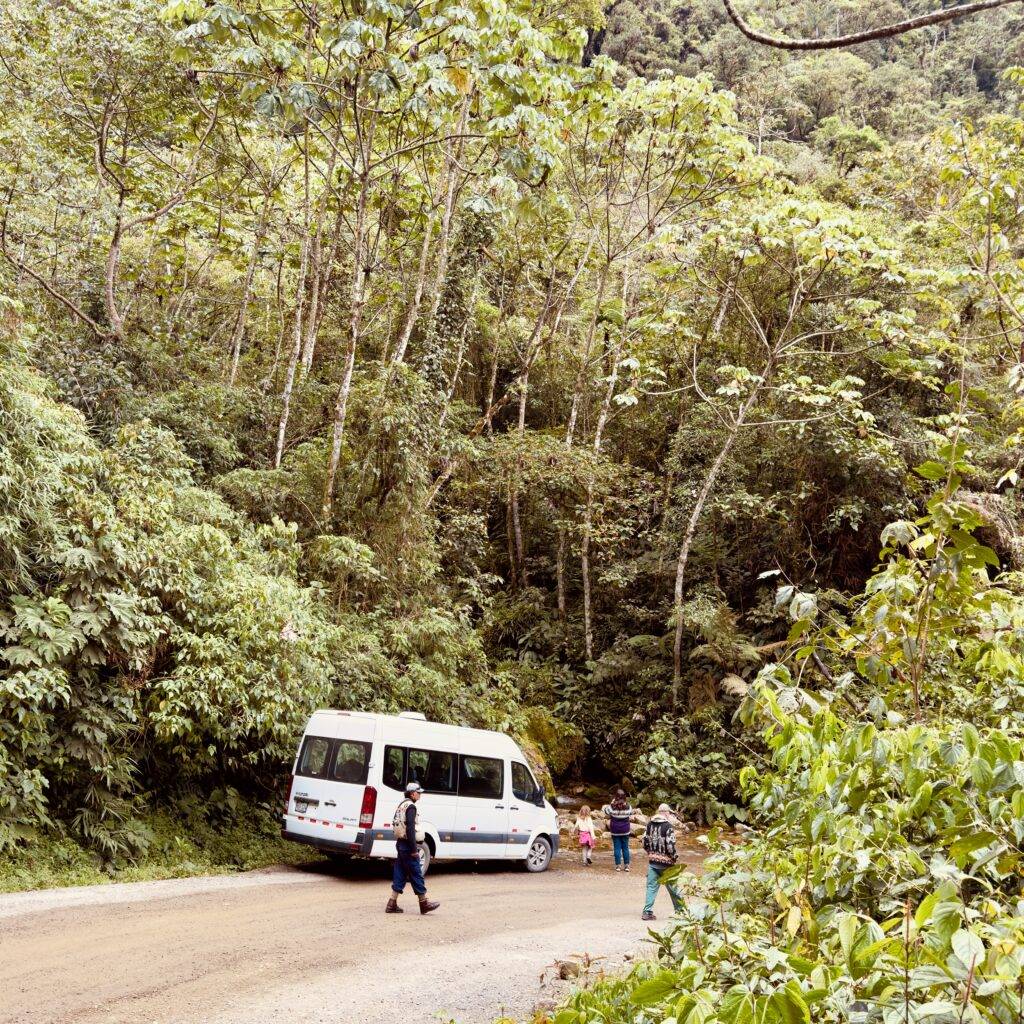
We left Cusco just after sunrise, the city still quiet, the light soft across the terracotta rooftops. The kids bundled into the van half-asleep, cocoa tea barely kicking in, and we began that slow, beautiful descent that would take us from 3,399 m (11,152 ft) to the warm jungle foothills of the Manu Biosphere Reserve. There’s a moment on this drive — somewhere just past the last clusters of highland houses, where the mountains open into deep valleys, and you can almost feel Peru changing underneath you.
Our first stop was Oropesa, the famous “bread town,” where the smell of fresh pan chuta drifted out of brick ovens. We broke warm rounds of bread with our hands while the kids pointed at the giant loaves stacked in the windows. It was a simple stop, but exactly what tired travelers need before a long road day: something warm, something familiar, something grounding.
From there, we continued along winding Andean roads until the guide pulled over at the Ninamarca pre-Incan tombs, stone chullpas perched on a hillside overlooking vast, terraced valleys. Standing there with the cold morning air on our faces, it was strange to think that by afternoon we’d be sweating in the jungle.
The road eventually carried us into Paucartambo, a colourful colonial town where musicians sometimes practice in the plaza and vendors sell bananas, coffee, and fried snacks from tiny stalls. We stretched our legs, wandered a little, and stocked up on water before the climb into the cloud forest.
And then, suddenly, the world shifted.
Into the Cloud Forest
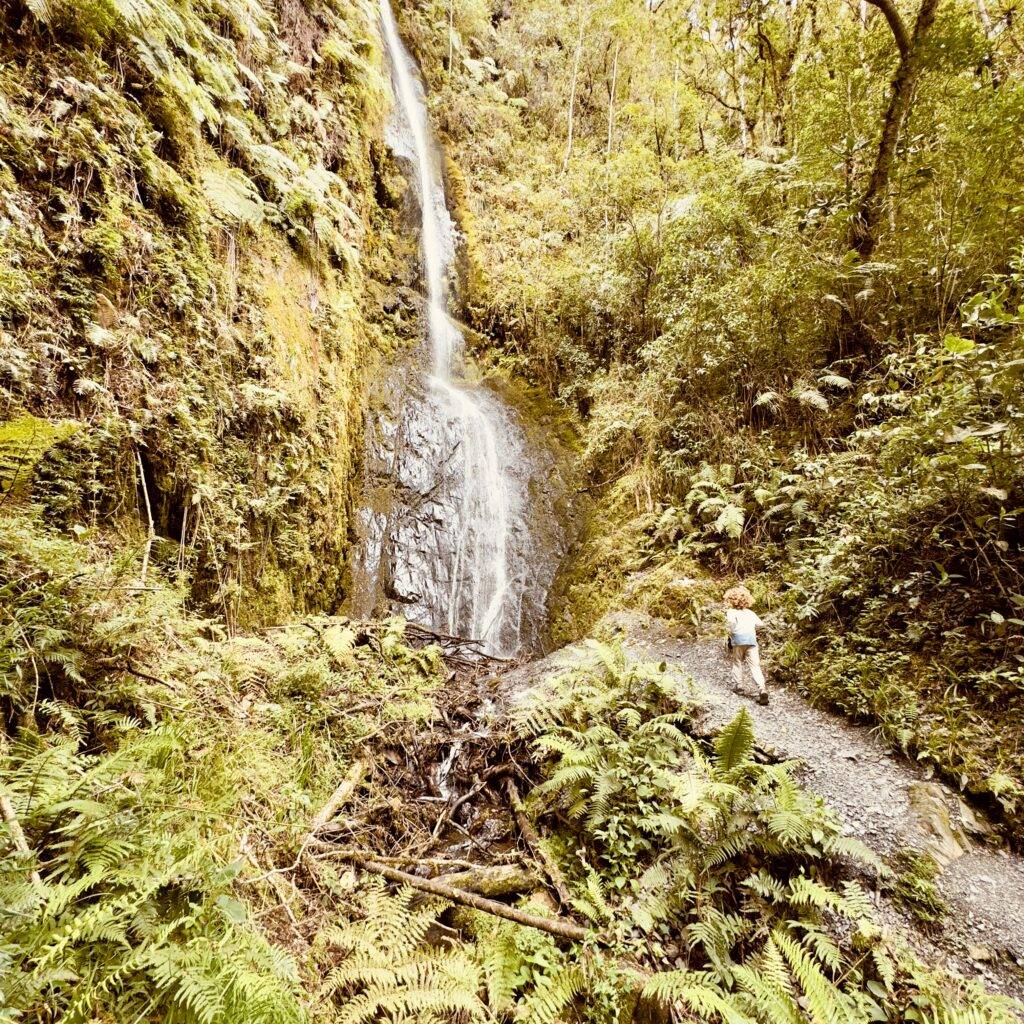
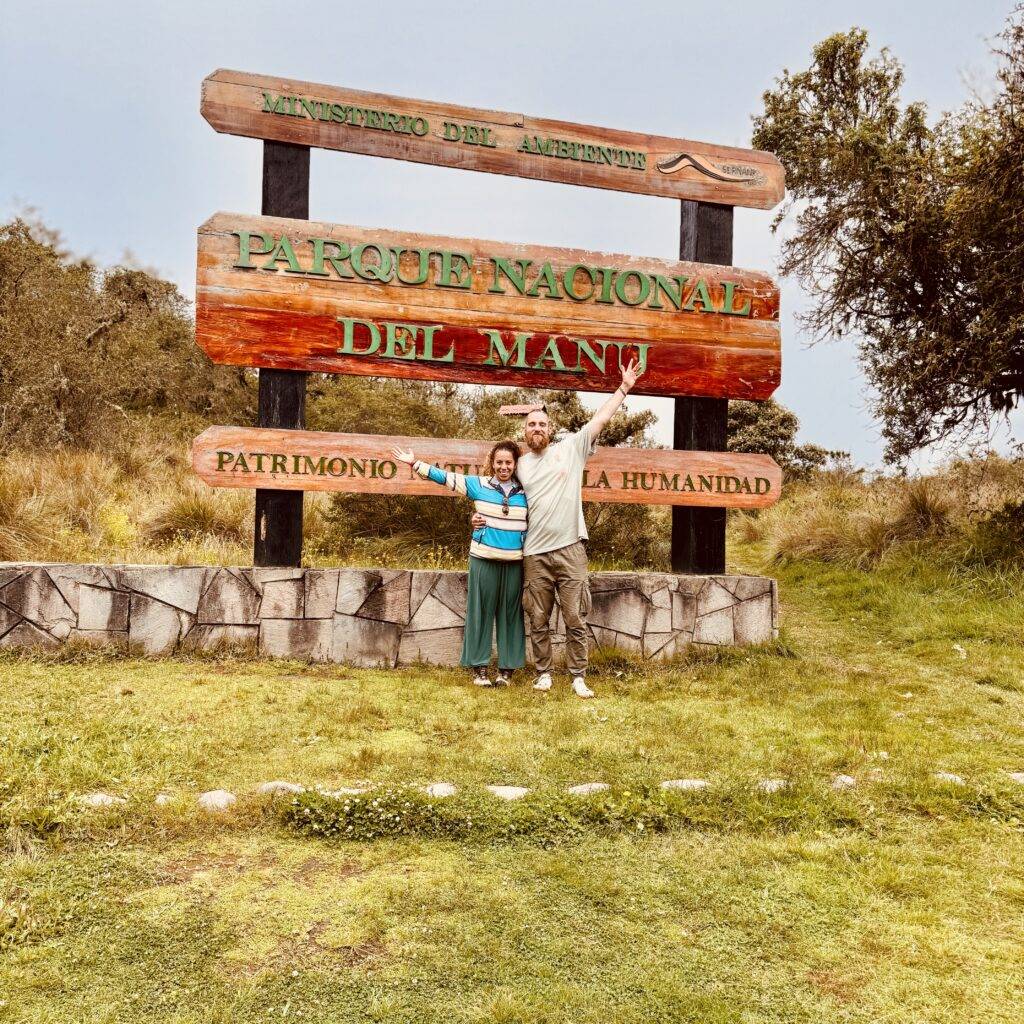
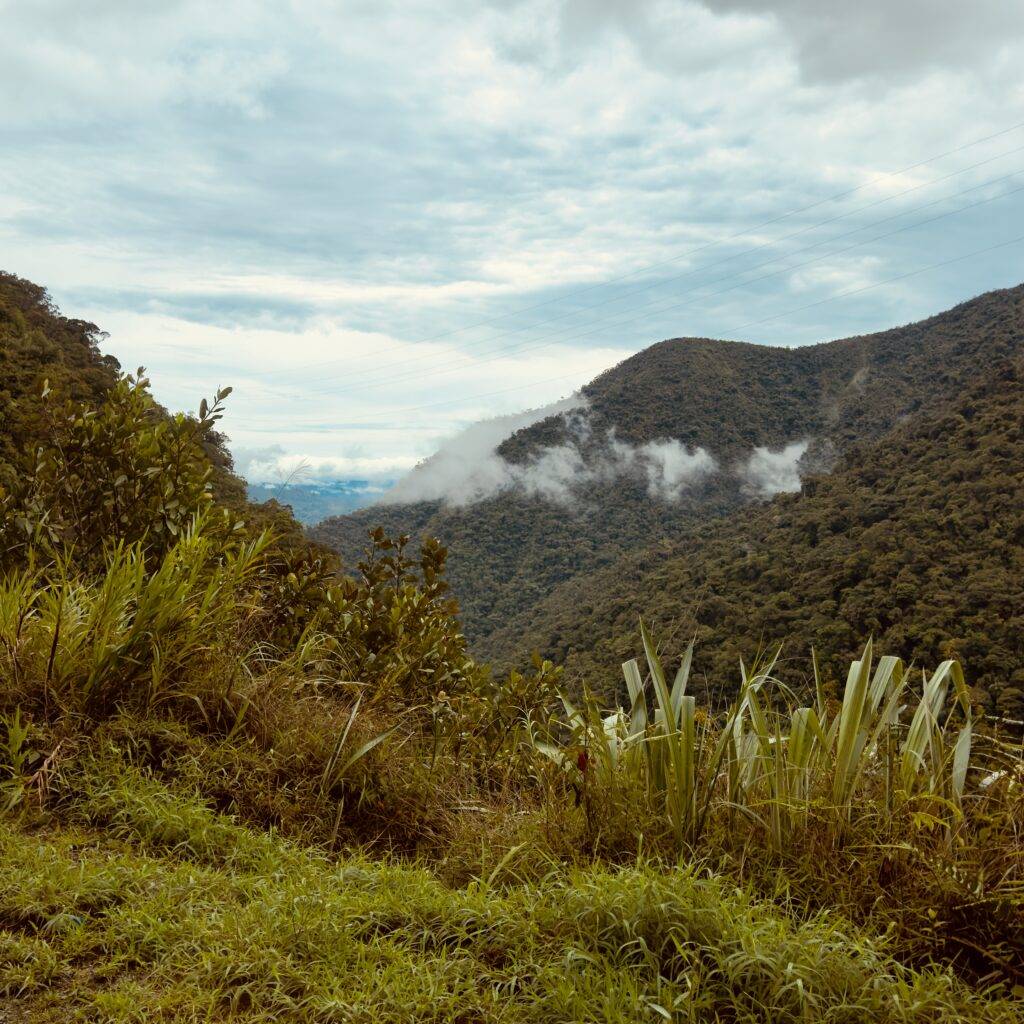
As we approached the entrance to Manu National Park’s buffer zone, the landscape grew lush, steep, and bright. Mist drifted between the trees, vines hung across the road, and waterfalls appeared without warning, one crashing so close we could feel the spray through the open van windows.
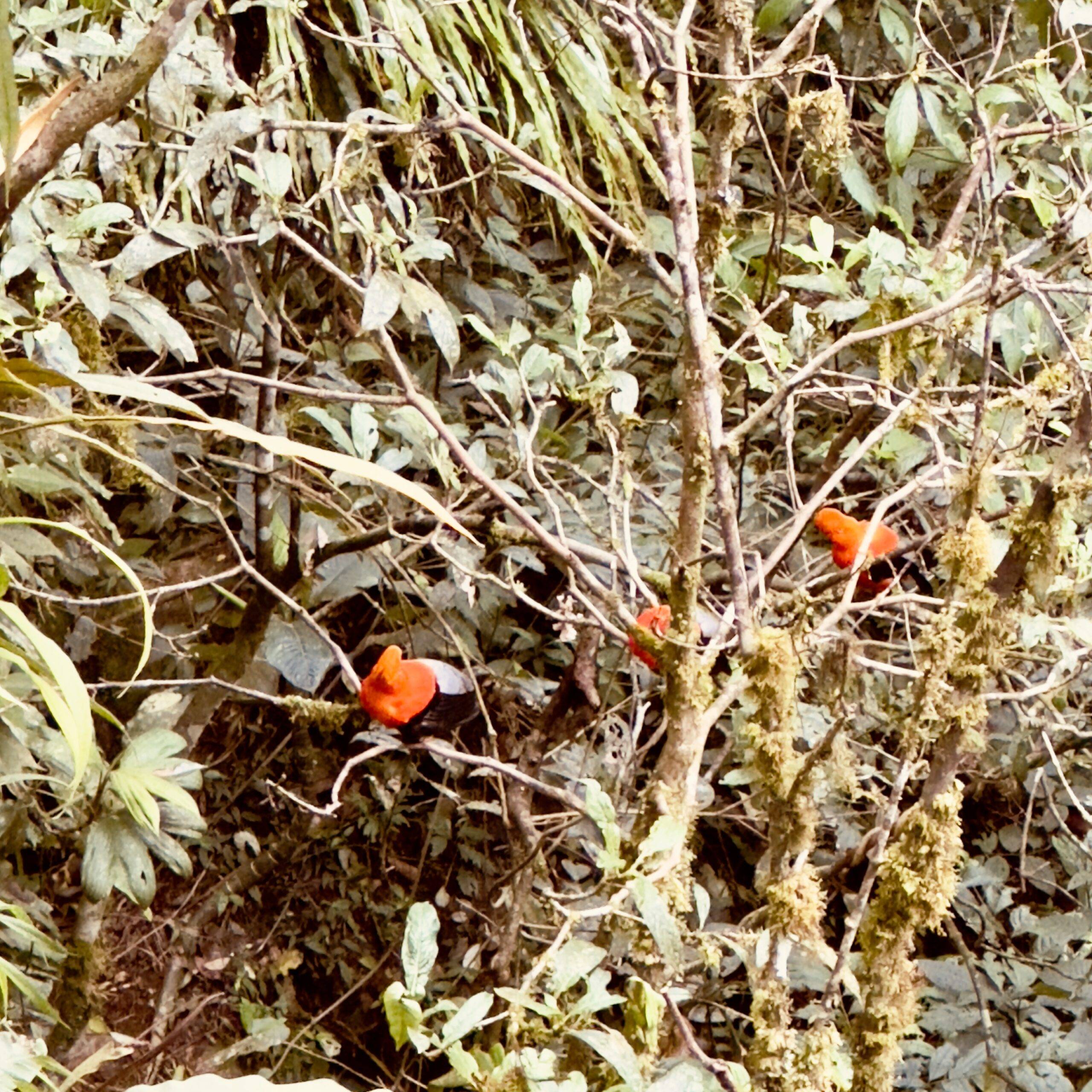
This stretch is famous for wildlife, and it lived up to the promise. We saw flashes of scarlet and orange in the trees — Cock-of-the-Rock males, Peru’s national bird, performing their morning displays. A small troop of monkeys rustled through the canopy, branches bouncing as they travelled. The kids were completely awake now, pressed against the windows, pointing and whispering every time something moved.
Our guide led us on a short walk to a waterfall, where the air felt cooler but heavier with moisture. The plants here were enormous mosses, bromeliads, orchids clinging to every surface. Even the kids noticed the shift: “It smells green,” our youngest said, which felt like the most accurate description we’d heard all day.
Arrival at Guadalupe Lodge
By mid-afternoon we reached Guadalupe Lodge, tucked into a clearing surrounded by dense forest and steep hillsides. The shift from road noise to jungle sound was instant. The humming, buzzing, chirping chorus rose up immediately, a living soundtrack that filled every corner of the property.
We dropped our bags in our wooden cabin, pulled aside the mosquito nets, opened the windows, and let the warm river air in. No Wi-Fi. No traffic. No stone streets. Just heat and birds and the kind of space kids can run in without being told to slow down.
After a short rest, our guide took us to a nearby canyon and cave system, one of the most unexpectedly fun adventures of the trip. The trail followed a shallow stream, cold, clear water rushing over smooth rocks, and the kids walked barefoot through it, squealing every time the water splashed high. Inside the cave, we spotted bats curled along the ceiling and delicate whip spiders clinging to the walls. The kids were fascinated, not scared, which was a relief and a surprise.
First Night in the Jungle
We returned to the lodge at dusk, where dinner was waiting, simple, hearty, cooked fresh. As the light faded, the sounds grew louder. By the time we crawled into bed under our mosquito nets, the forest had become a full orchestra: frogs calling, insects buzzing, birds settling in, wind moving through banana leaves.
And then, sometime after midnight, the sky cracked open.
A massive thunderstorm rolled over the valley, lighting the forest in electric flashes. The kids whispered to each other across the room, half-excited, half-unsure. Rain hammered the roof. Thunder rolled like it was shaking the mountains themselves. It was dramatic and wild and strangely comforting, the kind of night you never forget, because it reminds you how alive a place can be.
Day 1 set the tone: vivid, unpredictable, beautiful, and far easier with kids than we ever imagined.

DAY 2 - River Day: Atalaya Port → Oxbow Lake → Giant Kapok Tree
If Day 1 was about entering the rainforest, Day 2 was the day it opened up and showed us exactly why families fall in love with this part of Peru. We woke before sunrise, the usual jungle rhythm before and ate breakfast in the open-air dining area while the valley slowly brightened. The air was already warm, thick, and humming with life. By 5:30 AM we were in the van again, bumping along the road toward Atalaya Port, a tiny riverside launch point where the Andes finally release their grip and the Amazon Basin begins.
The drive to Atalaya was stunning: endless folds of green, wisps of cloud caught on ridgelines, the low rumble of waterfalls hidden behind walls of vegetation. At one viewpoint, the guide stopped so we could look out across miles of untouched jungle. It didn’t look real, more like a watercolor wash of greens and blues, layers disappearing into morning mist.
Down the Alto Madre de Dios
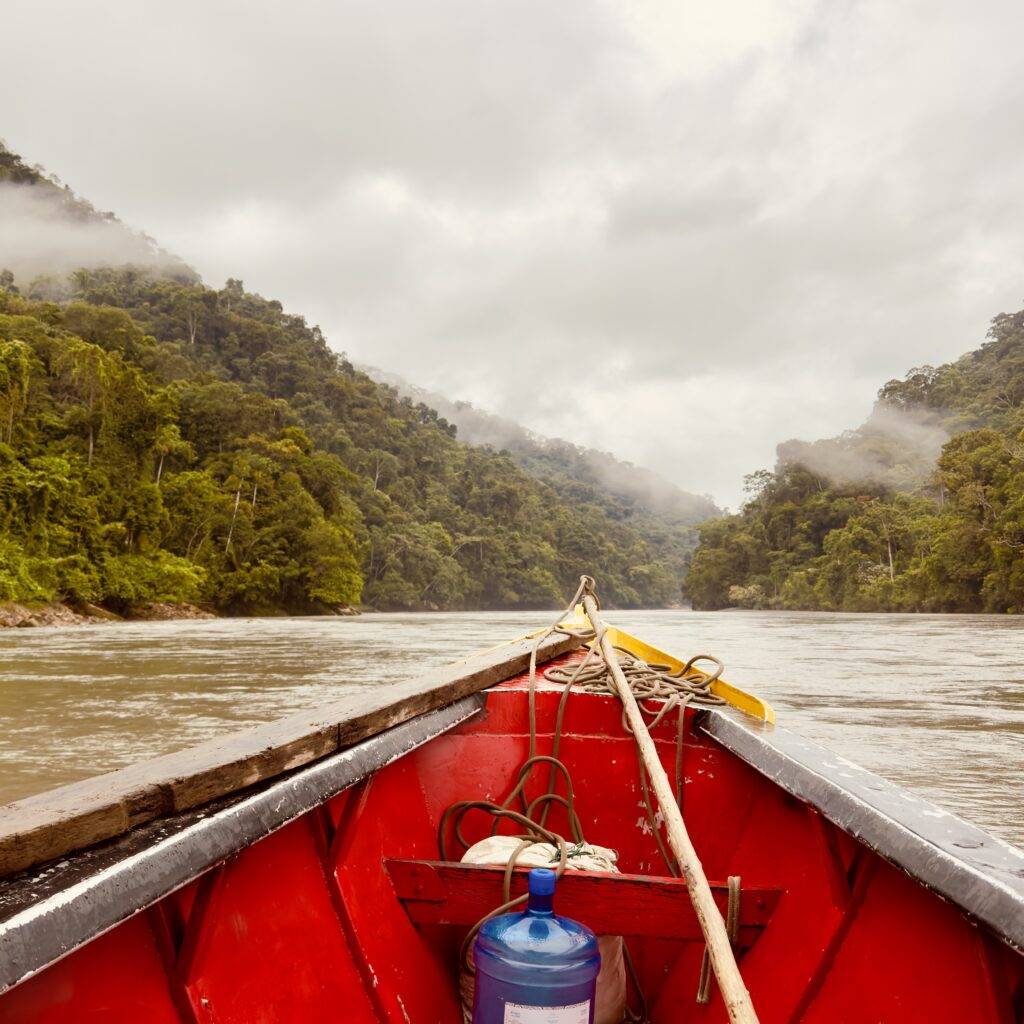
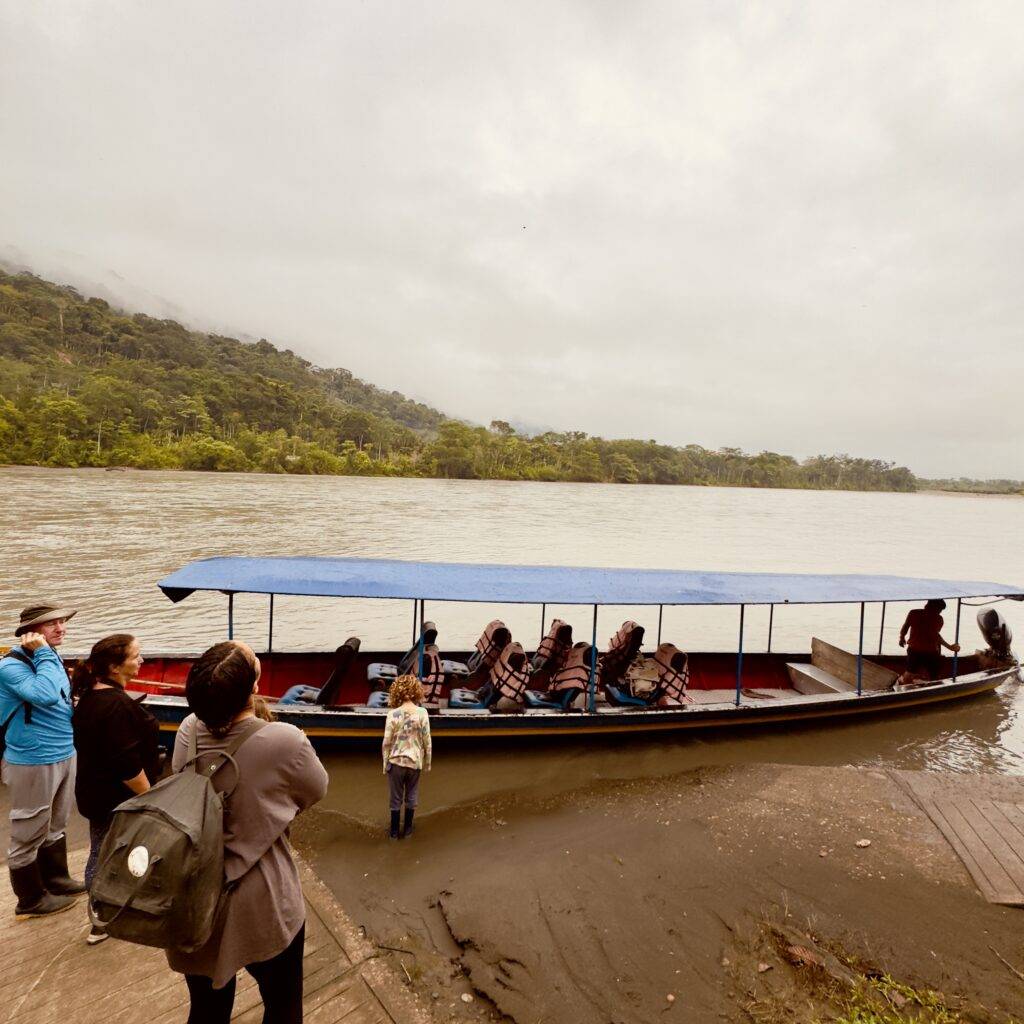
At Atalaya, our motorised canoe waited at the riverbank, long, narrow, and painted in the bright colours you see across the Amazon. The kids rushed to pick seats near the front, legs bouncing with excitement.
The Alto Madre de Dios River is one of those waterways that feels almost mythical. According to National Geographic, the upper Amazon tributaries are some of the most biodiverse river systems in the world, and it shows. As we moved downstream, red cliffs rose on one side, sandy inlets on the other, and vines dipped into the water like they’d grown specifically for monkeys to swing from.
Wildlife arrived fast.
A group of squirrel monkeys raced through the canopy, their tails trailing behind like long, expressive punctuation marks. A pair of macaws screeched overhead. We saw tracks of capybaras along the mud flats, though the animals themselves stayed hidden that morning. The kids were entirely absorbed, eyes scanning every branch, every ripple.
The river had that peaceful Amazon quiet, not silence exactly, but a softer version of the forest’s busier soundtrack. The boat engine would hum, then cut out, leaving us drifting slowly through corners of the jungle that felt unchanged for centuries.
Machuhuasi Oxbow Lake
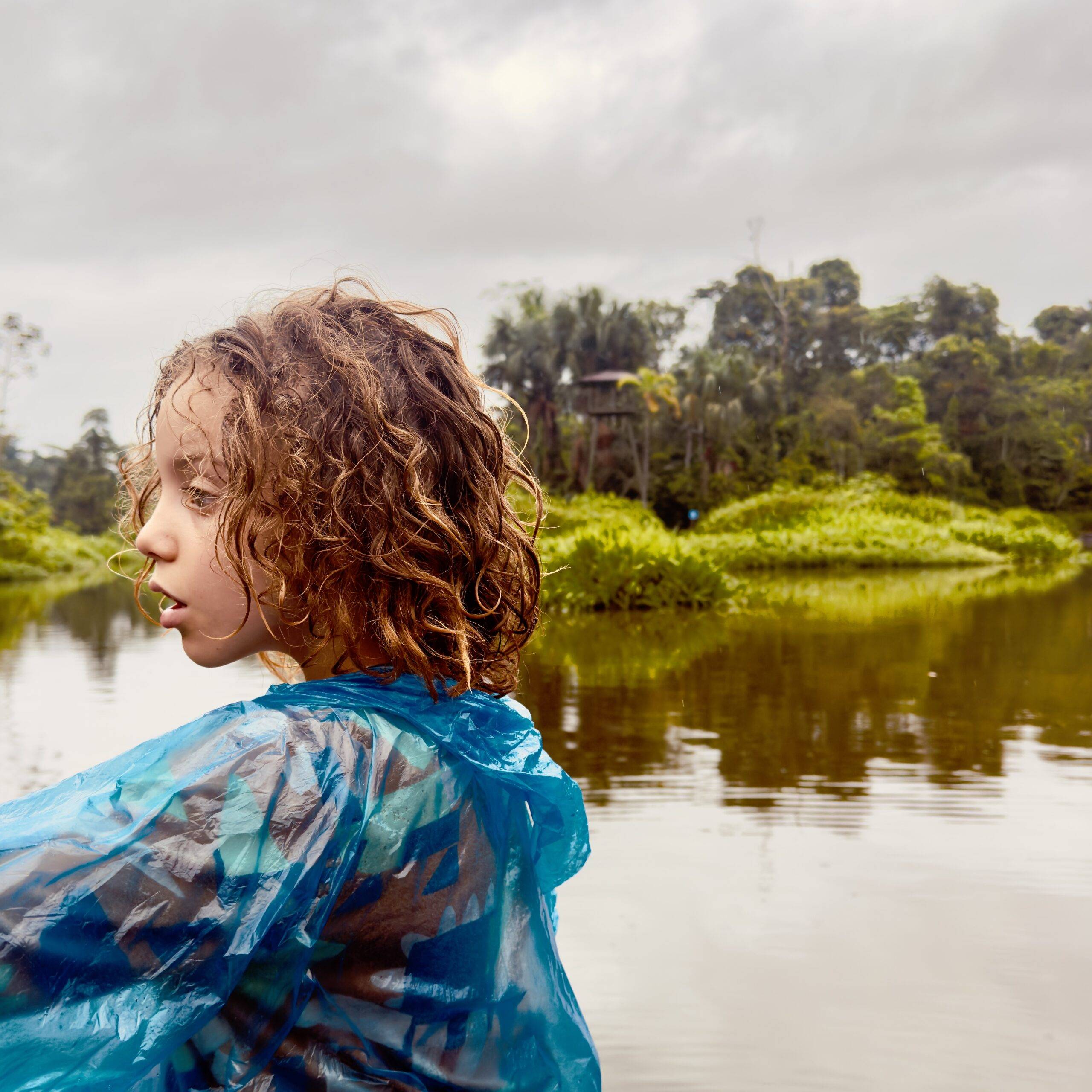
We reached the trailhead for Machuhuasi Lagoon, an oxbow lake formed when the river changed course years ago. The walk through the forest was short and easy, shaded by enormous leaves that looked almost too big to be real. The air had a different smell here, deeper, wetter, like moss and soil and something ancient.
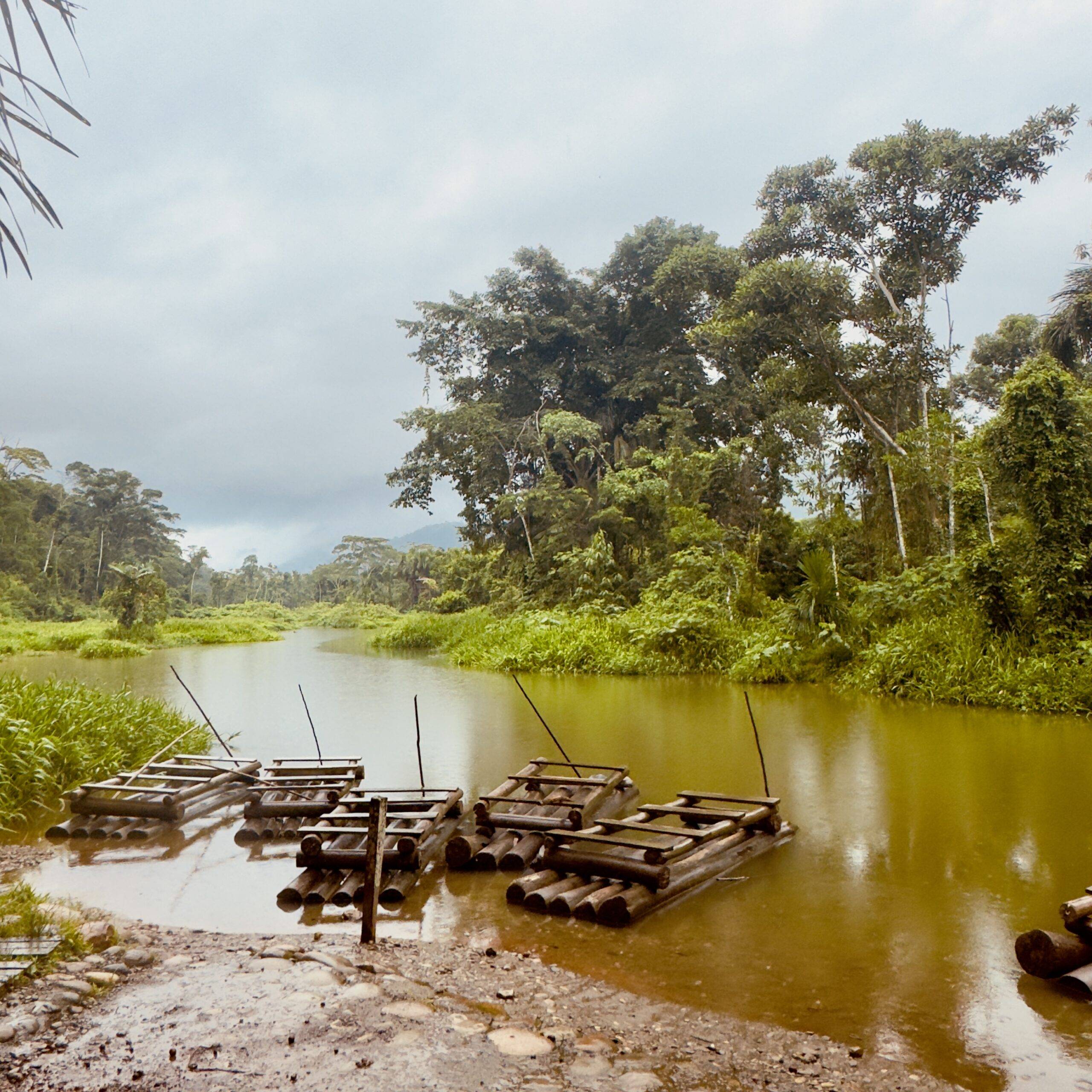
At the lake, our guide switched us into small wooden rafts, paddling us quietly along narrow channels where birds perched almost motionless and caimans floated with just their eyes above the water. The stillness was incredible. Every sound echoed: the dip of the paddle, the distant croak of a frog, the soft chatter of monkeys moving along the far bank.
This was one of the moments the kids talked about for days. Not because something dramatic happened but because of the calm. The slow drifting. The feeling of being somewhere delicate and alive, where everything moves at jungle speed.
The Giant Kapok Tree
After leaving the lagoon, we continued along a forest path toward a Giant Kapok tree, one of those iconic rainforest giants that anchors entire ecosystems. When we reached it, the kids stood perfectly still. The trunk was massive, flaring at the base like the folds of a skirt, and the canopy stretched impossibly high above us.
Our guide explained how these trees serve as highways for monkeys and home bases for entire bird communities. For us, it was simply awe-inspiring. The kind of tree that reminds you how small you are without making you feel insignificant.
Back to the Lodge
After returning to the boat, we headed slowly back toward Atalaya, stopping briefly to spot more birds, a few sunbathing turtles, and one young caiman that drifted lazily near the shore. By the time we returned to Guadalupe Lodge, the afternoon heat had settled in fully.
We spent the rest of the day resting, the kids flipping between hammocks and shaded play spots, us cooling off with cold drinks and watching the forest move. Sunset came early behind the ridges, and the sounds shifted again, softer but still constant.
Day 2 ended quietly, with tired legs, full hearts, and that pleasant jungle exhaustion that comes from filling a day completely, but gently.

DAY 3 - The Day the Jungle Slowed Us Down
Day 3 was the day everything softened. The day the pace shifted from “let’s see what’s next” to “let’s stay right here a little longer.” If Days 1 and 2 were about exploring the Amazon rainforest of Peru with kids — waterfalls, monkeys, caves, and riverboats, Day 3 was about feeling it. Settling into it. Letting the jungle set the tempo instead of the itinerary.
We started the morning with a short wildlife walk near the lodge. The air was already warm, rising in gentle waves from the ground, carrying the smell of wet leaves and mud. Birds flashed across the clearing, small and fast, while our guide pointed out tiny frogs camouflaged in impossible ways. It was the kind of slow walk that kids thrive on lots of stopping, lots of “look at this,” lots of bending down to inspect every leaf and stone.
But the best part of the day came later, down by the river.
Relaxing by the River Bank
We followed a narrow trail to a quiet stretch of river where the water moved slowly, shallow enough for the kids to wade, cool enough to make the humidity bearable. The sun broke through gaps in the canopy, scattering light across the surface. Every leaf shimmered; every stone glowed underwater.
The kids immediately started collecting rocks, organising them, and planning something with intense seriousness. Within minutes, they had built what they proudly called a “stone fortress,” a small circular wall rising slowly from the riverbank. They argued gently about design choices, laughed when a piece fell, rebuilt, refined, improved.
And for the first time in days, you and Tania sat down. No backpacks, no hurry, no schedule. Just the river touching your feet, cool and grounding. The forest surrounds you like a warm breath. A rare moment on long-term travel where time stops — not because something dramatic is happening, but because nothing is.
It was the quietest moment of the trip, and also the most powerful. A moment of gratitude that didn’t need words.
The lush Amazon rainforest covers nearly two-thirds of Peru, yet only around 5% of the population lives there. Visitors can explore remote waterways, stay in jungle lodges, and spot monkeys, sloths, birds, and river dolphins beneath the canopy.”
Source: Peru For Less
Jungle Rhythms
That afternoon, the heat settled in thickly. We drifted back to the lodge, where the kids alternated between hammocks and doodling in the dust with sticks. The jungle seems to encourage this kind of simple play, no toys, no technology, just imagination filling the space.
We spent the late afternoon sitting on the veranda, cold drinks in hand, listening to monkeys in the distance. Even the forest seemed to slow with us, the midday intensity fading into a gentler hum.
Nightfall & The Storm That Lit Up the Sky
Night fell quickly, as it always does in the rainforest. The chorus of insects grew louder, deeper, more resonant. The kids brushed their teeth under dim lights, climbed into their mosquito-netted beds, and listened to the rising wind outside.
Then the first flash came.
A white blaze through the mosquito netting, bright enough to momentarily illuminate the entire forest outside our cabin. A pause, and then a thunderclap so deep it felt like it shook the floorboards. The storm rolled in fast, heavy and wild, rain hammering the roof, thunder echoing off the hills.
The kids whispered to each other across the room, excitement tangled with nervous curiosity:
“Did you see that one?”
“What if it gets louder?”
“I love it, keep it coming!”
The forest lit up again and again, each flash revealing the silhouettes of the trees in perfect detail. It was dramatic, but not frightening. There was something comforting, almost protective, about being tucked under nets while the Amazon showed its power outside.
It was the kind of night that becomes a core memory, the kind kids talk about for years.
The Day the Jungle Became Home
By the time the storm pulled back into the distance, leaving only soft rain behind, we realised Day 3 was when the rainforest stopped being just another destination and became a place we genuinely connected with.
A place where the kids built castles out of stones.
A place where the river cooled our skin and reset our minds.
A place where the sky cracked open in brilliant light, and we all felt small in a way that made us grateful, not afraid.
It was, simply, the emotional heart of our entire Amazon experience.
DAY 4 - One Last Jungle Morning & The Slow Climb Back to Cusco
Our final morning in the Amazon felt slower, heavier, not because of the humidity (though it was doing its best to weld our shirts to our backs), but because none of us were quite ready to say goodbye. After three full days in the rainforest, the rhythm had finally sunk in. Wake early, listen to the birds, move through the forest, cool off by the river, fall asleep to a sky that crackles with electricity. It’s amazing how fast a place can become a temporary home.
We started the day with one last gentle walk through the lodge’s medicinal plant garden, where the kids ran ahead, calling out every new plant they recognised from previous days. Our guide walked us through the uses of coca leaves, cacao pods, annatto seeds, bamboo water, and plants used for everything from stomach aches to natural dyes. It wasn’t a dramatic wildlife encounter, but it was grounding. A subtle reminder that the Amazon isn’t just scenery; it’s a living pharmacy, a pantry, a classroom, and the foundation of countless local traditions.
The valley was warm by mid-morning, the sky bright, the jungle already alive with noise. We had one last look around — the hammocks, the trails, the clearing where butterflies drifted like confetti and then began loading our bags into the van. There’s a specific kind of bittersweet feeling that comes with leaving a place like this. You’re sticky, tired, slightly overwhelmed… but also a little changed.
The Drive Out of the Jungle
The journey back to Cusco retraces the same road you arrived on, but it feels completely different. On the way in, everything is anticipation, monkeys, waterfalls, cloud forest, heat. On the way out, everything is reflection.
The first couple of hours took us back through the tropical foothills, past banana groves, coffee farms, and bright green ridges still steaming from last night’s thunderstorm. As we climbed, the air thinned and cooled. The humidity loosened its grip. The kids watched for monkeys out the window, spotting one last (very lazy) squirrel monkey stretched across a branch like it owned the place.
We stopped again in Paucartambo, the same colourful market town with its colonial bridge and sleepy plaza. This time we moved slower, picking up coffee, fruit, and a few pastries for the road. The kids were noticeably calmer, quiet in that way kids get after a big experience.
From there, the landscape shifted back toward the Andean highlands, winding through the cloud forest where mist hangs low over the road. A few final birds flashed through the trees, a quetzal, a pair of parakeets, as if the jungle was giving us a soft farewell.
The Final Stretch to Cusco
By the time we reached the outskirts of Cusco, the altitude hit us again, thin air, cooler wind, familiar stone streets. It’s strange how quickly you can miss the heat and weight of the rainforest after complaining about it the entire trip.
We arrived tired, dusty, and grateful. Not in a dramatic, life-altering way but in that quieter sense of gratitude that comes from experiencing something as a family, together, in a place that demands your presence in every moment.
Day 4 wasn’t about wildlife or waterfalls or river fortresses. It was about coming full circle, carrying the Amazon back with us, even as we left it behind.
What We Learned About Doing the Amazon With Kids
Four nights in the Peruvian Amazon with kids teaches you things that never show up in glossy brochures. Some lessons arrive quietly, a slow morning by the river, the kids mesmerised by a beetle crossing a leaf. Others arrive with zero warning, like the thunderstorm that cracked the sky open at 2 a.m. and made the whole cabin flicker white.
Together, those moments form the version of the Amazon you actually remember, lived, messy, beautiful.
Kids Adjust Faster Than You Think
While we spent the first morning overthinking humidity, bugs, and the unfamiliar soundtrack of the forest, the kids were already settled in. They named butterflies. They splashed through streams. They asked when they’d see the next troop of monkeys.
Adults analyse. Children adapt.
And honestly, they handled the jungle better than we did.
The Amazon Runs on Its Own Clock
Cities reward rushing. The Amazon punishes it.
Here, the forest decides the pace:
wildlife appears when it wants to
rainstorms reset the day
shade becomes an activity
doing nothing by the river becomes a highlight, not a gap
Once you stop trying to “complete” the jungle, it starts to feel easier.
A Single Base Makes All the Difference
Switching lodges nightly looks adventurous in photos.
With kids, it’s chaos.
Staying four nights in one place gave us:
actual sleep
space to unpack
semi-dry clothes (semi being generous)
a rhythm, not a scramble
Routine in the jungle isn’t boring, it’s anchoring.
The Moments You Remember Aren’t the Ones You Expect
You expect monkeys, birds, waterfalls.
But the memories that stay look more like this:
the kids building a stone fortress by the river
dipping your feet into cold water beside Tania, without saying a word
lying in the dark as a storm rolls across the canopy
early mornings when the forest wakes at the same pace you do
These are the moments with weight.
Heat, Insects, Unpredictability - Manageable, Not Scary
With a licensed guide and a reputable lodge, the Amazon feels wild but not unsafe. The real challenge is comfort, not danger.
Parent Tip:
Bring two sets of lightweight, quick-dry clothes per person.
Accept that nothing will ever fully dry.
Once you stop fighting that fact, everything gets easier.
Why It’s Worth It
The Amazon doesn’t let you multitask.
It doesn’t let you scroll.
It doesn’t let you rush.
It pulls you into presence, whether you planned for that or not.
And for families, especially families travelling long-term, that kind of shared attention is rare. It’s not the easiest trip you’ll take, but it might be one of the most important ones. Vrbo family accommodations for 2026 offer a range of options that can cater to various needs and preferences. With amenities designed for comfort and activities perfect for kids, these accommodations can enhance your family’s overall experience. Planning ahead will ensure you find the ideal place to create lasting memories together.
Wildlife You’re Likely to See (Family Guide)
One of the biggest reasons to visit the Amazon rainforest in Peru with kids is the wildlife, not the staged, zoo-like kind, but the real, unpredictable, blink-and-you-miss-it sort that makes every walk feel like an adventure. What we loved about the Manu region is that wildlife comes to you. You don’t have to trek for hours or sit silently in a hide. The forest is busy, loud, and extraordinarily generous.
If you’re wondering what your family is most likely to see, here’s the honest breakdown.
Monkeys Everywhere (and Always the Kids’ Favourite)
Our children could have happily spent all four days doing nothing but watching monkeys move through the canopy. The Manu foothills are home to several species, and while deep-jungle lodges require long river journeys to see more elusive primates, the cultural zone offers easy, frequent sightings.
We saw:
Squirrel monkeys moving in noisy groups like messy little acrobats
Capuchins with expressive faces and a habit of staring directly at you
A few shy howler monkeys calling in the distance with their surreal, echoing roar
According to WWF, the Amazon rainforest supports over 100 species of primates, making it one of the richest primate regions on Earth
You won’t see all 100, but you will see monkeys. Probably before breakfast.
Birdlife That Doesn’t Feel Real
The Manu region is considered one of the top birding areas in the entire Amazon Basin. Even casual observers (like us) get drawn in. Colours appear from nowhere. Shapes move before your eyes register the bird.
Highlights your kids will probably spot:
The bright red Andean Cock-of-the-Rock, Peru’s national bird
Toucans with oversized beaks that look too heavy to lift
Electric-blue tanagers that don’t seem real
Parakeets and parrot flocks screeching overhead at sunrise
For context, National Geographic lists Manu as one of the most biodiverse bird regions on the planet, with more than 1,000 recorded species:
Even if your kids have never shown interest in birds, that changes here.
The Amazon rainforest spans eight countries and contains one in ten of all known species on Earth, home to millions of plants and animals, many still undescribed by science.”
Source: World Wildlife Fund
Caimans, Frogs & Things With Too Many Legs
Night walks are optional, but with a good guide, they’re one of the highlights for families. The forest transforms completely, the heat drops, insects come alive, and frogs take over the soundtrack.
We spotted:
Caimans floating silently in oxbow lakes
Tiny neon frogs hiding inside leaf folds
Spiders the size of your palm (don’t worry; they keep their distance)
Bats flickering through cave openings like shadows with wings
Kids usually find this thrilling, not scary. It helps that guides are excellent at keeping the experience controlled and educational.
Butterflies & Insects That Steal the Show
This might sound unglamorous, but insects are everywhere, in the best possible way. Our children became obsessed with the butterflies, which glide through the lodge clearing like moving gemstones.
Common sightings include:
Giant blue Morpho butterflies
Long-tailed swallowtails
Metallic-green beetles
Leaf-cutter ants carry entire forests on their backs
Watching wildlife here isn’t something you schedule; it’s something that happens constantly, whether you’re on a trail, sitting by the river, or brushing your teeth.
What You Probably Won’t See
Jaguar sightings do happen in Manu, but very rarely near foothill lodges. Think of it as a bonus miracle rather than an expectation.
Why This Region Works for Families
You get wildlife density without extreme conditions. Walkways are safe. Distances are short. The terrain shifts frequently, riverbanks, cloud forest, palm forest, wetlands, so kids don’t get bored. And because the forest is protected (confirmed by UNESCO: you’re seeing animals in genuine, thriving habitats.
For families, that authenticity is everything.

What to Pack for the Amazon With Kids (Based on Reality)
Packing for the Amazon rainforest in Peru with kids is very different from packing for Cusco or the Sacred Valley. Altitude swaps for humidity, dryness swaps for moisture, and suddenly you find yourself Googling things like “Do socks ever dry in the jungle?” (Answer: no, not really.) The Amazon demands less in terms of style and more in terms of practicality, breathable fabrics, quick-dry everything, and backups for the backups.
Here’s what actually mattered on our 4-night stay, learned the honest way.
Clothing That Works in Real Jungle Weather
The humidity is not a joke. Clothes stay damp, hair frizzes instantly, and cotton becomes a slow-moving sponge. The best approach is lightweight, breathable layers, things that don’t cling and don’t hold moisture.
For each adult and child, aim for:
• 2–3 quick-dry shirts (anything more is overkill; they’ll all smell the same after day two)
• 2 pairs of lightweight trousers (mosquito-friendly, breathable)
• 1 pair of shorts (for downtime or lodge use)
• 1 long-sleeve airy layer (evenings + protection)
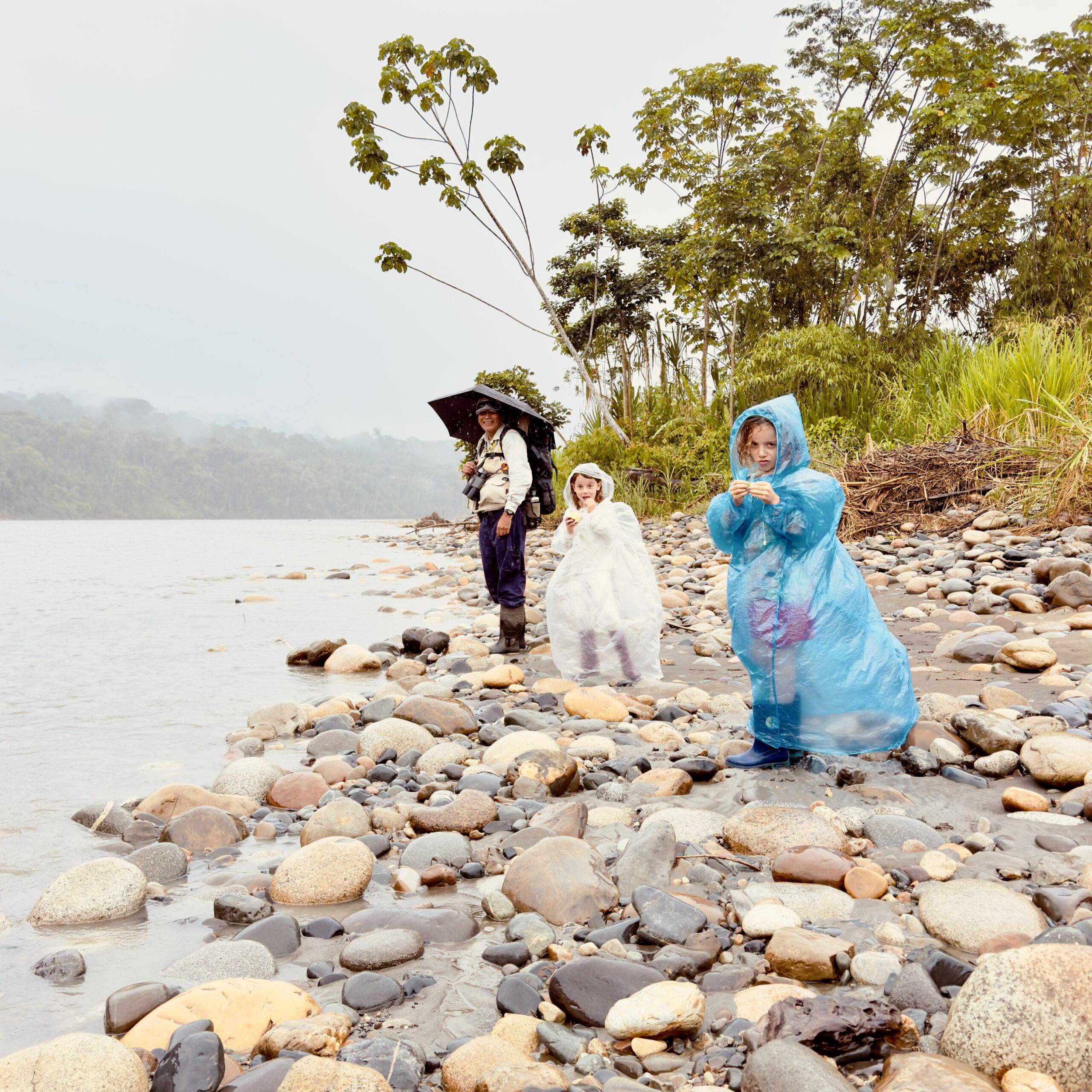
Rain jackets are helpful, but honestly, tropical storms often arrive so fast and heavy that you’ll be soaked before you zip anything up. A light poncho works better and dries quicker.
Footwear
Your kids will splash through streams, step on river stones, and walk across damp forest paths. Bring:
• One pair of sturdy trekking sandals
• One pair of breathable walking shoes
• Flip-flops for the lodge
Avoid heavy boots. They trap heat, take ages to dry, and become uncomfortable fast.
Mosquito Strategy (Realistic Edition)
You’ll see fewer mosquitoes during the day than you expect, but dusk is their moment. What worked for us:
• Long, lightweight trousers
• Kids’ safe insect repellent
• After-bite balm
If your kids attract mosquitoes like magnets, consider a mosquito-repellent shirt or natural bracelets as backup.
Gear That Actually Helps
• Headlamps for night walks
• Waterproof bags / dry sacks (for phones, passport, chargers)
• Portable battery pack
• Microfiber towels (dry faster than cotton)
• Travel-size laundry soap
• A small first-aid kit (band-aids, antiseptic, antihistamine, kids’ pain relief)
If you want to create an affiliate-friendly packing list later, these items are perfect candidates.
For the Kids
• One comfort item (small toy, teddy, book)
• Quick-dry swimwear
• A structured water bottle (less likely to spill in the van or boat)
• A journal or small sketchbook
We found that giving the kids something to “document” kept them engaged between wildlife sightings.
Wish We’d Known Beforehand
Nothing dries. Not socks, not shirts, not towels. Quick-dry fabrics are your best friend.
You will sweat. A lot. Everyone will. That’s normal.
You don’t need half the things you think you need. The jungle simplifies everything.
You’ll want more hair ties than you think. The humidity demands them.
Ziplock bags save lives. Or at least snacks, phones, and sanity.
Keep It Simple -The Jungle Doesn’t Care What You Wear
Your kids will get muddy. You’ll get sweaty. Clothes will take on a new jungle personality by day two. That’s part of the experience. What matters is comfort, movement, and being prepared for a climate that behaves on its own terms.
Pack light. Pack smart. And embrace the fact that this is not a place where anyone judges your outfit, the forest is far too busy for that.
Is the Amazon Worth It for Families? (Our Honest Verdict - Short + Real)
The Amazon isn’t a tidy family holiday. It’s humid, loud, unpredictable, and sometimes a little overwhelming. But it also gives you the kind of moments kids talk about months later, monkeys overhead, thunderstorms lighting up the cabin, riverbanks that feel like secret playgrounds carved out just for them.
The Good
The magic hits quickly:
wildlife that feels almost unreal
slow river days that reset your brain in ways you didn’t expect
kids who open up more here than they do on “normal” trips
Curiosity wins more than complaints. That alone feels worth the effort.
The Hard
It isn’t gentle all the time:
the humidity is relentless
nights feel very alive with jungle noise
travel days stretch longer than anyone intends
Flexibility isn’t a bonus, it’s essential.
Best For
The Amazon shines if you’re a family that:
can roll with heat, mud, and shifting plans
values experience over convenience
has kids who get excited by nature, not theme parks
This is an immersion, not an escape.
Who Might Struggle
families needing AC-level comfort or solid routine
anyone arriving already exhausted
parents who want predictable structure
The jungle doesn’t bend around tired energy.
Would We Go Back?
Yes, not every year, but yes.
The Amazon changes the rhythm of family life in a way that stays with you. It’s raw, intense, grounding, and absolutely worth it… as long as you arrive with patience and zero expectations of “perfect.”
FAQ: Amazon Rainforest With Kids (Real Answers for Real Families)
Is the Amazon safe for kids?
Yes, if you choose the right area and stay in reputable lodges. Regions like the Manu Biosphere’s buffer zone are much calmer than deep-jungle expeditions. Guided walks, slow pacing, mosquito control, and staying on marked trails keep risks low. The bigger challenge is comfort: heat, humidity, and long travel days. With good prep, the Amazon is safe for most families.Lorem ipsum dolor sit amet, consectetur adipiscing elit. Ut elit tellus, luctus nec ullamcorper mattis, pulvinar dapibus leo.
What’s the best age for kids to visit the Amazon?
Ages 5–12 tend to do best. They’re old enough to walk trails, follow instructions, and fully enjoy the wildlife, but young enough to still feel the magic of the jungle. Teens enjoy it too, but younger kids often react with more wonder. Babies and toddlers can go, but the experience is far less comfortable for everyone.
How dangerous are Amazon animals?
Surprisingly little. Most animals avoid humans completely, and risks are minimal when you stay with a licensed guide on established trails. Snakes and larger wildlife are rarely seen. The real nuisances are mosquitoes, ants, and slippery paths — all manageable with repellent, good footwear, and basic awareness. The Amazon feels wild, but guided family trips remain low-risk.
Can you visit the Amazon with a 1-year-old?
It’s possible, but not ideal. The heat, bugs, uneven terrain, and unpredictable routines make it tough for babies and parents. If you go, choose a lodge close to town with short activities, electricity for cooling, and strong hygiene. Most families find the Amazon far more enjoyable once children are at least 4–5 years old.
What’s the best area for families in the Peruvian Amazon?
For first-timers, Manu’s cloud forest and upper Amazon basin (near Pilcopata) is the sweet spot, accessible, less buggy than Iquitos, packed with wildlife, and home to several small, family-friendly lodges. You still get monkeys, caimans, birds, and night walks without committing to deep, remote jungle expeditions.
What is it actually like to visit the Amazon rainforest?
Hot, loud, lush, and absolutely alive. The air feels heavy, the forest hums nonstop, storms roll in fast, and the river becomes your clock. You won’t stay clean, but you will feel plugged into nature in a way most places can’t offer. It’s immersive, chaotic, beautiful, and unforgettable for families.