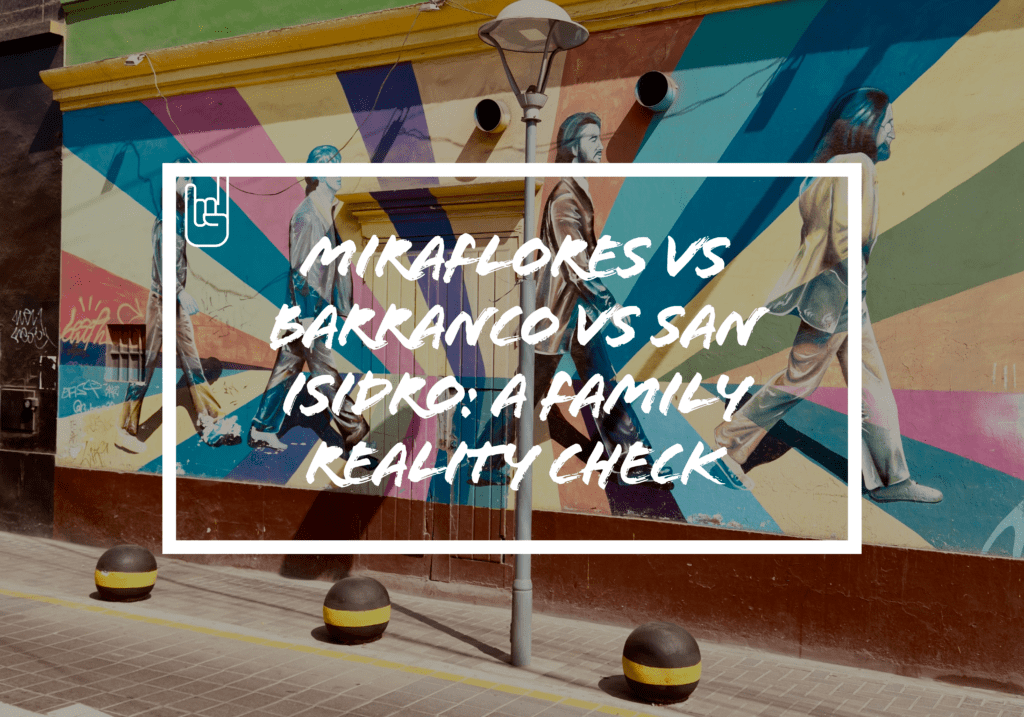
Miraflores vs Barranco vs San Isidro
Choosing where to stay in Lima with kids isn’t about which neighbourhood looks best on Instagram, it’s about noise, walkability, safety, green space, and how your family actually functions day to day. Miraflores, Barranco, and San Isidro all get recommended for families, but they offer very different realities once school runs, bedtime routines, and long days out come into play. This is a grounded, family-first reality check, what worked, what didn’t, and which neighbourhood makes sense depending on how you actually travel, not how travel blogs say you should.
Choosing where to stay in Lima with kids sounds simple on paper. Three neighborhoods come up again and again Miraflores, Barranco, and San Isidro, all described as safe, central, and “good for families.”
The reality is more nuanced.
We spent time in all three with our kids (8 and 6), and what stood out wasn’t attractions or landmarks. It was how daily life felt. How easy mornings were. Whether walks felt relaxed or tiring. If grabbing coffee turned into a moment or a mission. If the kids could burn energy without us constantly managing the environment.
Lima isn’t a city you conquer with a checklist, especially with kids. It’s a city of neighborhoods. And the one you choose quietly shapes your entire experience.
This isn’t a guide telling you which area is “best.”
It’s an honest comparison of what Miraflores, Barranco, and San Isidro are actually like for families, once the novelty wears off and real life kicks in.
Looking where to stay in these destinations?
➡️ Choose Miraflores if this is your first time in Lima, you’re jet-lagged, or you want things to work without thinking.
➡️ Choose Barranco if you love character, enjoy wandering, and don’t mind trading convenience for atmosphere.
➡️ Choose San Isidro if you’re staying longer, your kids need space, or you’re craving calm after busy travel. In San Isidro, families can explore unique attractions that engage young minds, including opportunities to learn about ancient cultures. Nazca lines family activities for kids are not to be missed, offering interactive experiences that spark curiosity and creativity. These activities provide a fun way for children to connect with Peru’s rich history while enjoying quality time together.

How We’re Comparing These Neighborhoods
This comparison is based on living daily life, not passing through on a highlights tour.
We’re not ranking museums or attractions. Instead, we’re looking at the things that mattered most to us as a family:
Walkability with kids – Can you step outside without planning transport?
Parks and open space – Where kids can move freely, not just behave.
Food and coffee culture – Places you actually want to return to.
Safety as it feels day to day – Calm, predictable, relaxed movement.
Noise, pace, and energy – Does it drain or support family routines?
Convenience vs character – Ease of living versus personality.
Short stays vs longer stays – What works for a few nights vs a few weeks.
All three neighborhoods have strengths. All three have trade-offs. The difference is in fit, not quality.
We’ll walk through each one honestly, then pull it together at the end so you can see which aligns best with how your family travels.
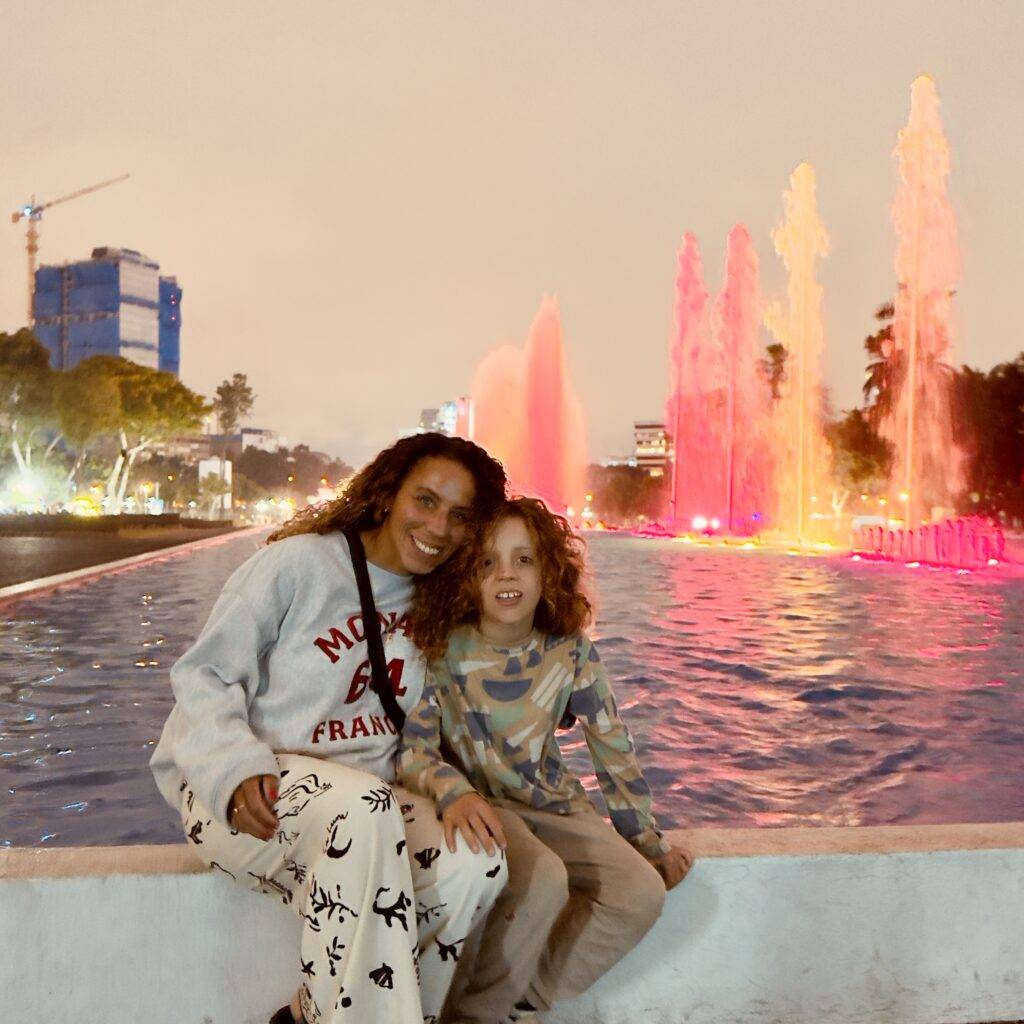

Miraflores With Kids: The Easiest Place to Settle
This is where Lima felt most immediately functional for our family. Streets made sense. Errands were easy. We didn’t need to plan every outing or brace ourselves before leaving the apartment. We could just step outside and let the day unfold.
What Miraflores Feels Like Day to Day
Miraflores has a steady, predictable energy. It’s busy, but not chaotic. There’s movement everywhere, runners along the cliffs, families in the parks, café doors constantly opening and closing and that rhythm helped the kids settle quickly.
Mornings often started with a short walk for coffee, turning into a longer wander without us really meaning to. That’s when you know a neighborhood works with kids: when plans stretch naturally instead of being forced.
Walkability & Getting Around With Kids
Flat, well-maintained sidewalks
Short distances between parks, food, and shops
Easy crossings and predictable traffic patterns
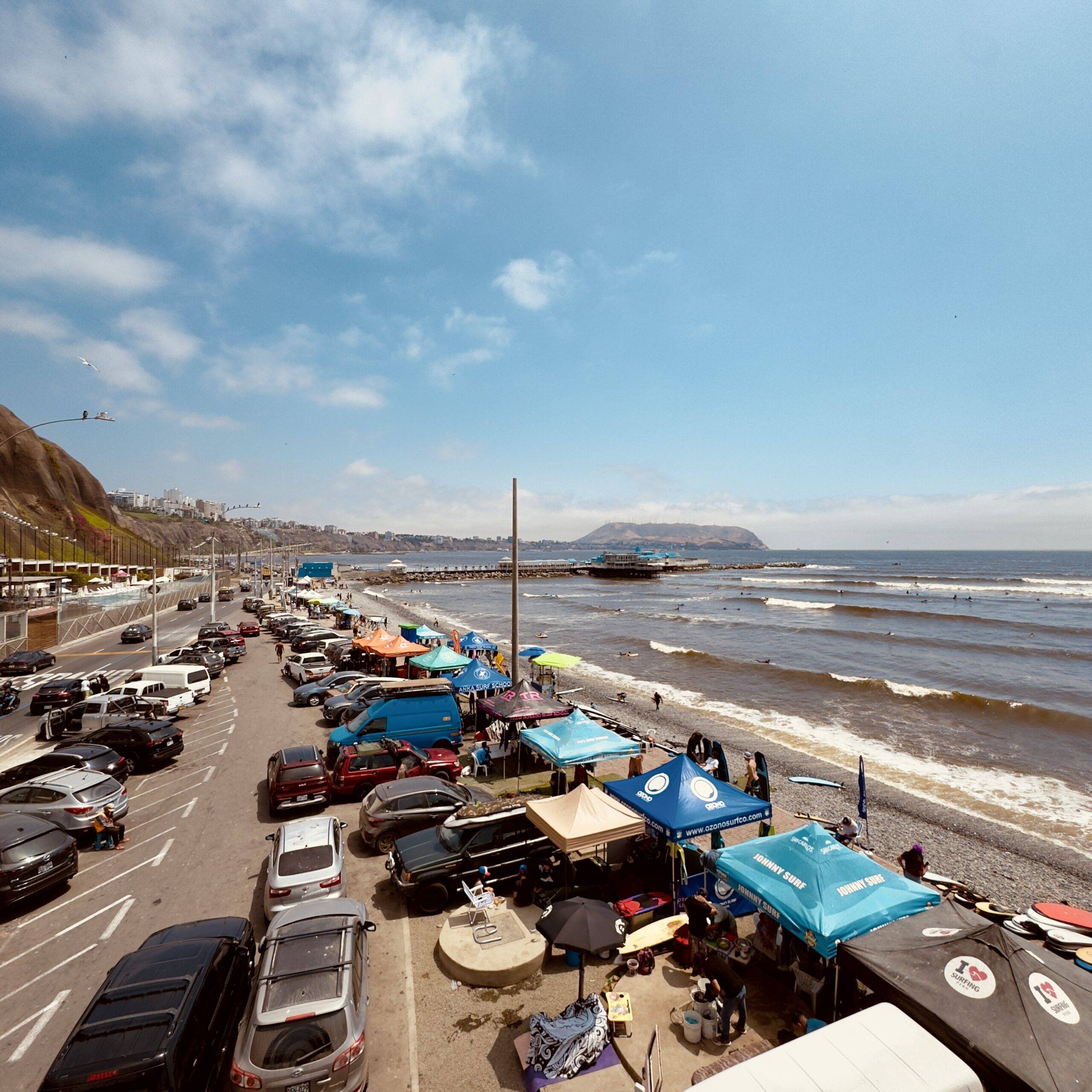
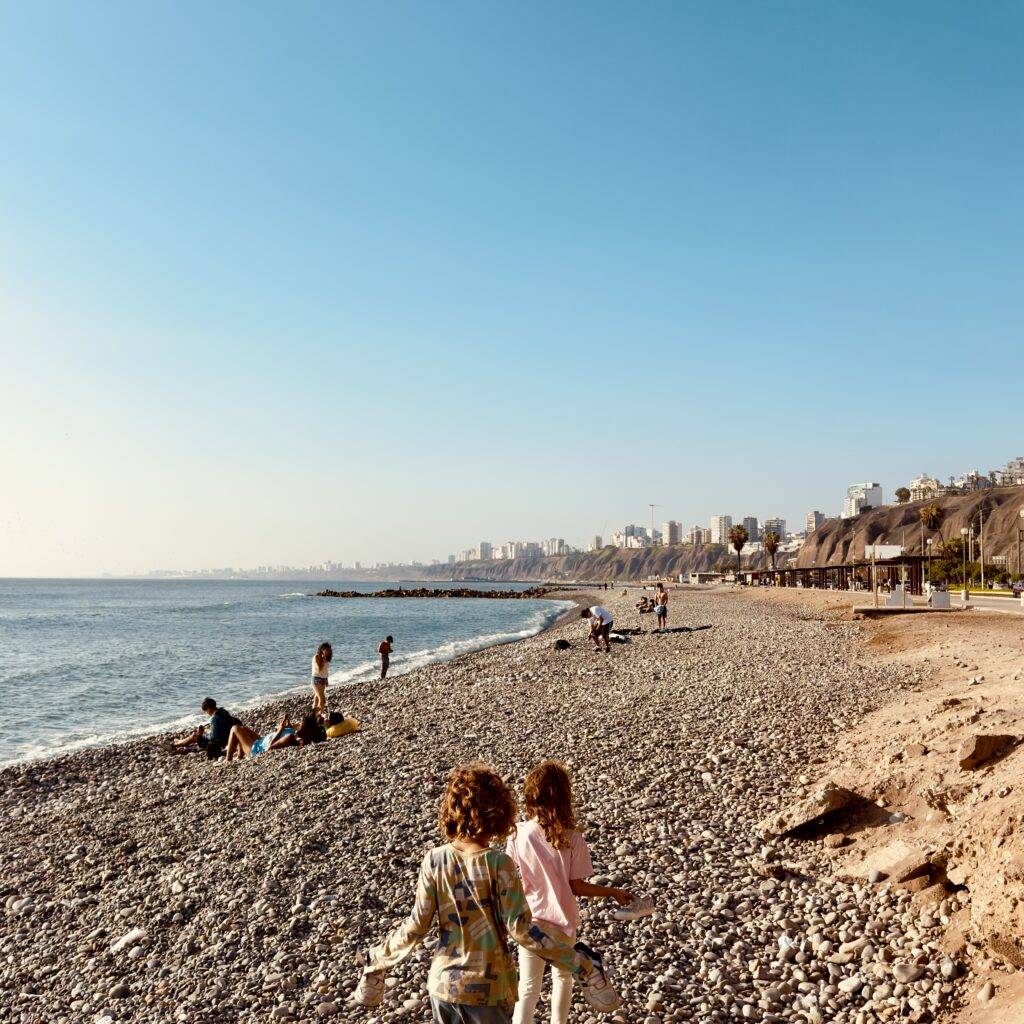
We walked far more than we expected to. Even longer routes along the Malecón never felt like a chore because there was always space, grassy patches, viewpoints, playgrounds for the kids to stop, climb, or run.
The Malecón itself became part of our routine rather than a one-off activity. Some days it was a full walk. Other days just ten minutes to reset moods. Either way, it worked.
Parks, Space & Letting Kids Be Kids
Parque Kennedy was chaotic in a good way, cats, performers, food stalls, people-watching
Smaller neighborhood parks popped up just when energy dipped
The coastal stretch offered room without rules
We didn’t feel like we were constantly telling the kids to be careful or quiet. They could exist normally, which made everything smoother.
Food, Coffee & Helado Stops
Coffee shops are everywhere, and most are relaxed about kids. Meals didn’t require research. Bakeries, casual restaurants, and ice cream spots were always close enough to solve hunger quickly, which matters more than cuisine quality when traveling as a family.
It’s the kind of neighborhood where:
Snacks are never far away
Meltdowns are avoidable
You don’t have to plan food around activities
Safety: How It Felt With Kids
Streets were well-lit, busy, and predictable. There’s a visible security presence, and you’re rarely alone on the street. That doesn’t mean you switch off completely, it’s still a big city — but it never felt tense or exhausting to move around.
Where Miraflores Falls Short
It can feel touristy in places
The polish sometimes comes at the cost of character
Traffic noise near main roads can be constant
It’s not where you go for Lima’s creative edge
If you stay too long, it can start to feel a bit uniform.
Who Miraflores Is Best For
Miraflores works best for families who:
Are visiting Lima for the first time
Want ease over experimentation
Prefer walkable days and familiar comforts
Need a low-friction base to settle kids quickly
For us, Miraflores felt like the easiest version of Lima, a place that let us find our feet before deciding how much of the city we wanted to lean into.
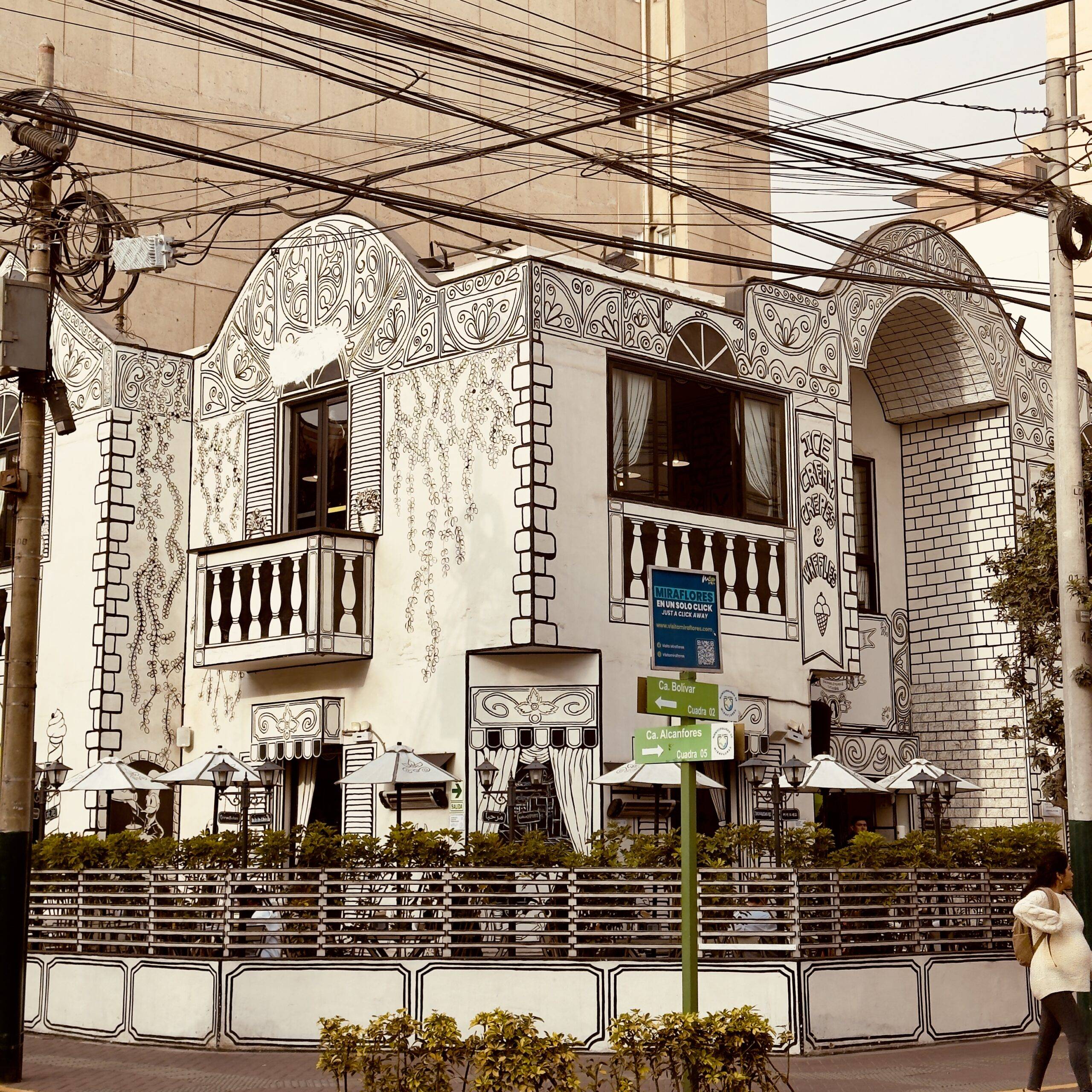
Barranco With Kids: Character, Creativity, and Trade-Offs
Barranco is where Lima starts to feel expressive rather than efficient.
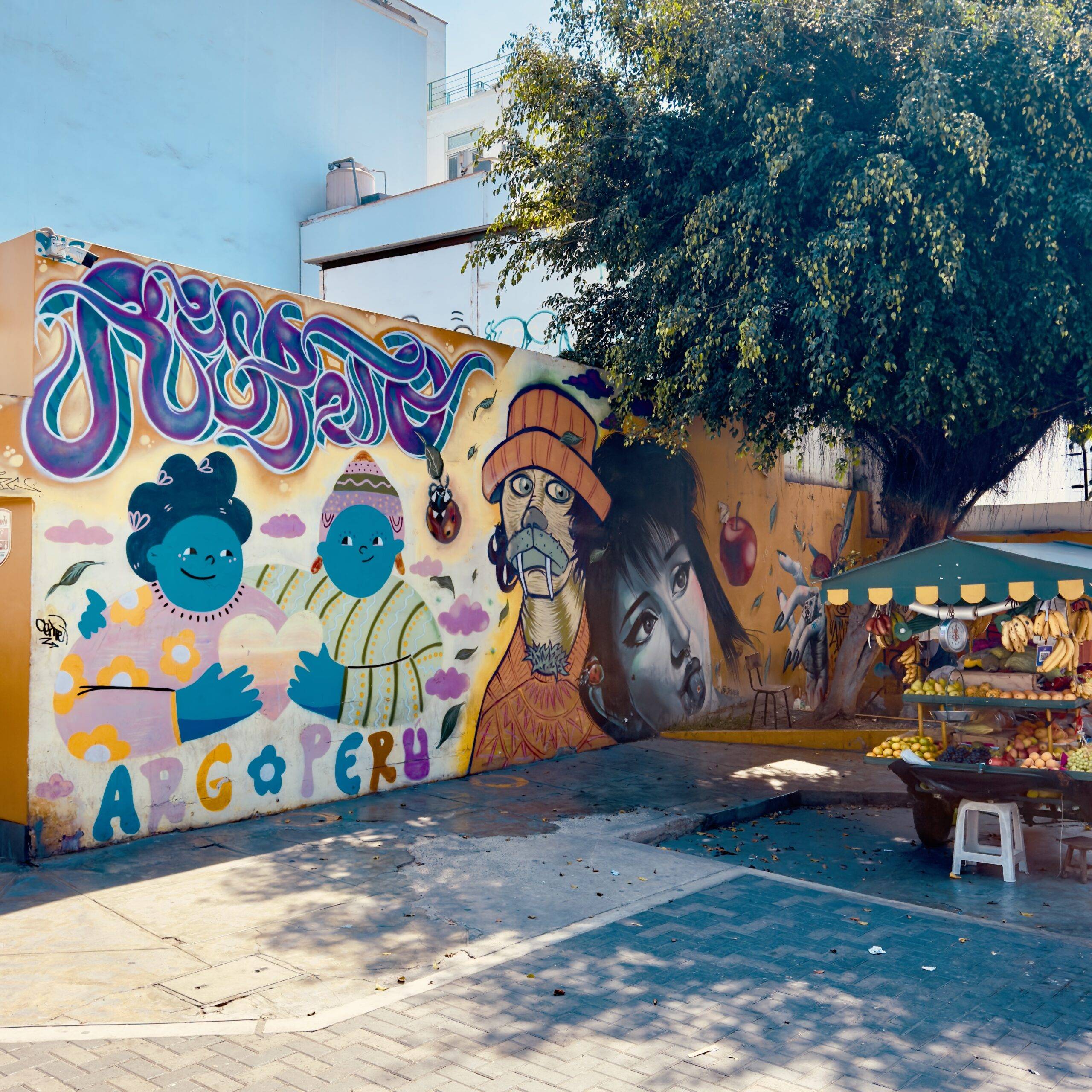
If Miraflores is about ease, Barranco is about atmosphere. Colourful buildings, street art, old balconies, cafés that invite you to linger, this is the part of the city where we slowed down without really meaning to. And with kids, that can be either a gift or a challenge, depending on what you need.
What Barranco Feels Like Day to Day
For the kids, that meant:
noticing murals
stopping for helados
watching street performers
asking more questions than usual
Barranco encouraged curiosity, but it also asked for patience.
Walkability With Kids (Not as Easy as Miraflores)
Streets are narrower
Sidewalks can be uneven
There are hills and changes in elevation
Crossings aren’t always obvious
This wasn’t a problem, but it did require more attention, especially with younger kids. Walks felt more like small adventures than routine errands, which can be lovely, but also tiring if everyone’s already low on energy.
Parks, Plazas & Space to Pause
Plazas where kids can move freely
Benches for breaks and snacks
Streets that feel communal rather than functional
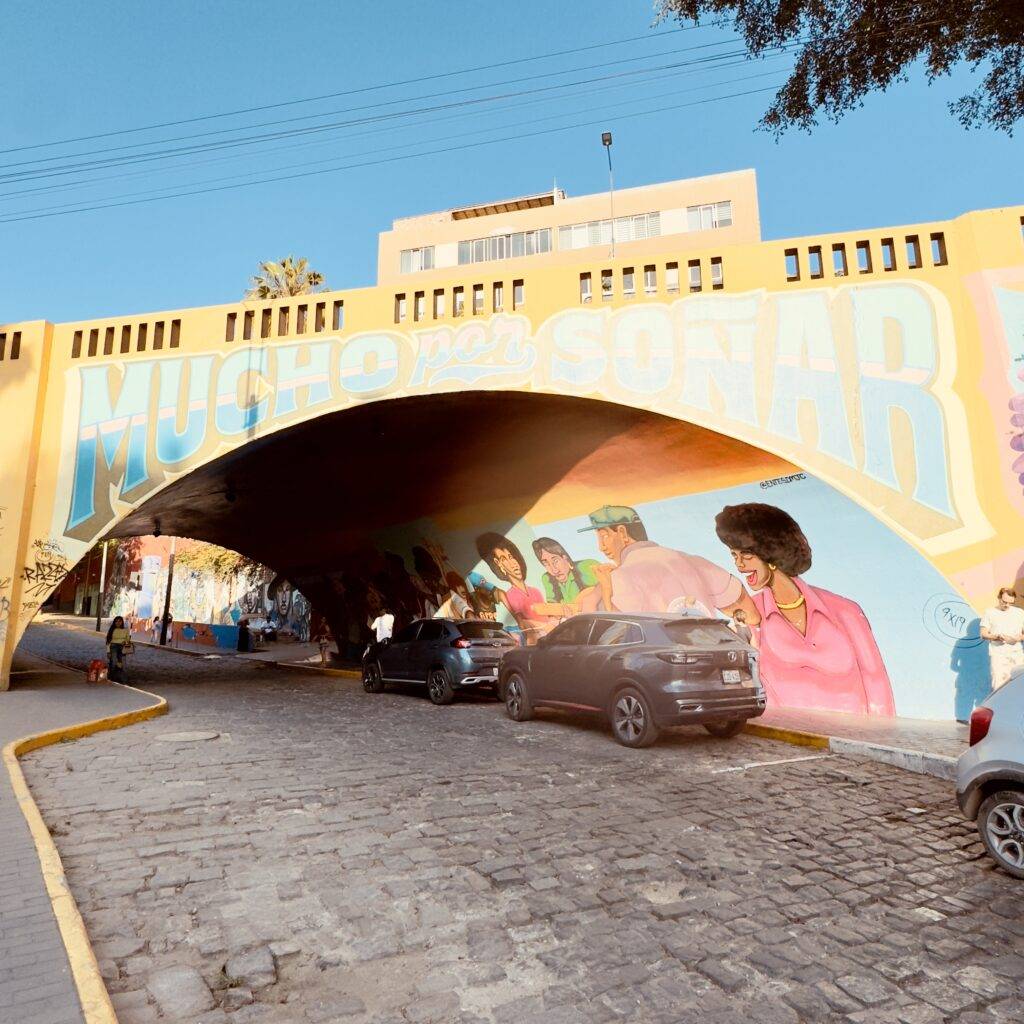
The famous Bridge of Sighs area was lively, especially in the late afternoon, but it’s more about soaking up energy than letting kids run wild.
Food, Coffee & Market Wandering
This was one of our favourite parts of Barranco.
Great independent coffee shops
Relaxed cafés where no one rushed us
Easy ice cream stops
Casual places that worked well with kids
Meals here felt slower and more intentional. Less grab-and-go, more sit-and-stay. That’s wonderful when moods align, less so when someone’s hungry right now.
Safety & Comfort With Kids
At night, the neighborhood quietens down noticeably. Some streets feel empty rather than unsafe, but with kids, that emptiness can feel less reassuring. We naturally adjusted our timing, earlier dinners, fewer late walks, without it feeling restrictive.
Where Barranco Falls Short for Families
Fewer playgrounds
Less convenience for groceries and errands
Not everything is close together
Requires more patience and flexibility
If your kids rely on routine and predictability, Barranco can feel slightly harder work.
Who Barranco Is Best For
Enjoy wandering over planning
Value character more than convenience
Are traveling slowly
Have kids who enjoy observing and exploring
For us, Barranco worked best in shorter stretches. It was a place we loved spending time in, just not the one we’d choose as our only base with kids.

San Isidro With Kids: Calm, Green, and Underrated
San Isidro felt like Lima exhaling.
After the movement of Miraflores and the character-heavy wandering of Barranco, San Isidro was where everything softened. Streets widened. Noise dropped. Days became less about deciding what to do and more about just being somewhere comfortable.
It didn’t feel like a place designed for visitors and that’s exactly why it worked so well with kids.
What San Isidro Feels Like Day to Day
San Isidro is residential, orderly, and noticeably calmer. Mornings were quiet. Evenings felt predictable. There was less stimulation overall, which meant fewer emotional spikes for the kids and far less decision fatigue for us.
This was the neighborhood where routines naturally reappeared:
regular walks
familiar parks
repeat cafés
slower transitions between activities
It felt less like traveling and more like temporary normal life.
Parks & Green Space: San Isidro’s Biggest Strength
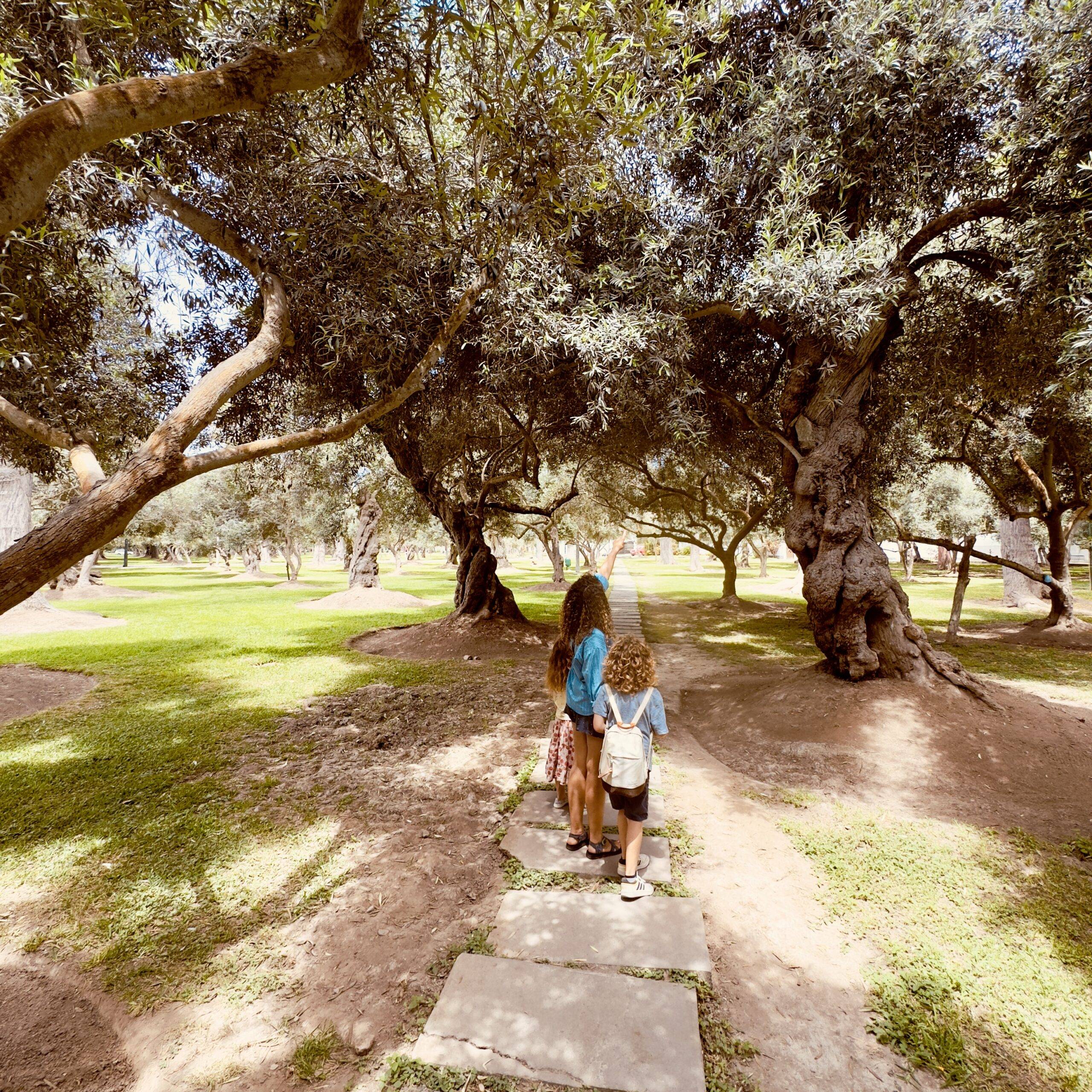
If Miraflores is about coastal space, San Isidro is about green space.
Parks here aren’t decorative, they’re functional. Wide lawns, shaded paths, space for kids to move without constant correction. El Olivar, in particular, felt like a gift after weeks of city movement.
For kids, this meant:
room to run properly
fewer “be careful” moments
less sensory overload
For parents, it meant calmer energy overall.
Walkability & Getting Around
San Isidro isn’t walkable in the same everything-is-close way as Miraflores, but it’s easy in a different sense.
Streets are wide and navigable. Walking feels safe and unrushed. When distances stretch, taxis and rideshares are quick and uncomplicated. We never felt stuck or isolated, just removed from the tourist flow.
Food, Coffee & Daily Life
There are fewer cafés clustered together here, but the quality is high.
This isn’t a neighborhood of constant discovery, it’s a neighborhood of returning. The same coffee place. The same bakery. The same park bench. That repetition turned out to be incredibly grounding for the kids.
Meals felt simpler, quieter, and less performative.
Safety & Comfort With Kids
San Isidro felt very safe for family life.
Not because of visible security or tourist presence, but because of how residential it is. Streets felt calm rather than monitored. Even at quieter times of day, there was a sense of normality that made moving around with kids feel effortless.
Where San Isidro Falls Short
San Isidro isn’t exciting.
Fewer attractions
Less buzz
Limited nightlife and street energy
For short stays, it can feel too quiet. For families seeking constant stimulation, it may come across as boring.
Who San Isidro Is Best For
San Isidro suits families who:
Are staying longer in Lima
Need rest after busy travel
Prefer calm over buzz
Value routine and space
For us, San Isidro felt like the most sustainable version of Lima with kids, not the most interesting, but the easiest to live in day after day. Managing monthly expenses in Lima, Peru, requires careful planning, especially when considering the cost of housing and education. Families often find that the amenities in areas like San Isidro can justify a higher budget. As the kids grow older, it’s important to reassess our priorities and adapt our financial strategies to ensure a comfortable lifestyle.
Miraflores vs Barranco vs San Isidro: A Side-by-Side Family Comparison
By the time we’d spent time in all three neighborhoods, the differences became very clear, not in a dramatic way, but in the quiet details that shape family days.
Here’s how they stacked up for us.
Walkability & Getting Around
Miraflores is the easiest by far. Flat streets, clear routes, and everything you need within walking distance.
Barranco is walkable, but it asks more of you, hills, uneven pavements, and less direct routes.
San Isidro is comfortable to walk in, but things are more spread out. You’ll mix walking with short taxi rides.
Winner for daily ease: Miraflores
Parks, Space & Kid Energy
Miraflores has lots of parks, plus the Malecón for long, open walks.
Barranco has smaller plazas and pockets of space, but fewer places for kids to really run.
San Isidro excels here, large green parks, wide paths, and room to decompress.
Winner for space: San Isidro
Food, Coffee & Family Eating
Miraflores offers the most options with the least effort. You’re never far from something quick and kid-friendly.
Barranco has better coffee and more character, but fewer easy fallback options.
San Isidro is quieter, fewer cafés clustered together, but high quality and calm.
Winner for convenience: Miraflores
Winner for vibe: Barranco
Noise, Pace & Overall Feel
Miraflores is busy but predictable.
Barranco is relaxed but inconsistent, lively one moment, quiet the next.
San Isidro is consistently calm.
Winner for calm: San Isidro
Short Stays vs Longer Stays
Short stay (2–4 nights): Miraflores
Medium stay (5–10 nights): Miraflores or Barranco
Longer stays (2+ weeks): San Isidro
Which Neighborhood Should You Choose?
If you’re still undecided, this usually makes it clearer:
Choose Miraflores if this is your first time in Lima, you’re jet-lagged, or you want things to work without thinking.
Choose Barranco if you love character, enjoy wandering, and don’t mind trading convenience for atmosphere.
Choose San Isidro if you’re staying longer, your kids need space, or you’re craving calm after busy travel.
None of these choices are wrong, but choosing the wrong one for your travel style can quietly drain energy.
Our Honest Family Take
If we were doing Lima again with kids:
We’d start in Miraflores to settle in.
Spend time in Barranco for flavour and slower afternoons.
Choose San Isidro if we were staying long-term or needed a reset.
Lima surprised us. It wasn’t loud and exhausting in the way we expected, but that was entirely down to neighborhood choice. Once we stopped trying to “see Lima” and focused on living in it, the city became one of the easiest stops in Peru with kids. We discovered that the rich and vibrant traditions of Andean culture in Peru influenced every aspect of life here, from the colorful markets to the delicious cuisine. Engaging with local artisans allowed us to appreciate the craftsmanship behind traditional textiles and pottery, creating memories that deepened our connection to the region. Each day felt like a new adventure steeped in history and community.

FAQs: Miraflores vs Barranco vs San Isidro With Kids
Which Lima neighborhood is best for families?
There’s no single best neighborhood, it depends on how your family travels.
For first-time visitors or shorter stays, Miraflores is the easiest and most forgiving option. If you value character and slower wandering, Barranco works well for shorter stretches. For longer stays or families who need calm and green space, San Isidro is often the most comfortable choice.
Is Miraflores safe for families with kids?
Yes, Miraflores felt very safe for day-to-day family life.
We were comfortable walking with our kids during the day and early evening, and the area is well-lit, busy, and predictable. Like any big city, basic awareness matters, but Miraflores never felt stressful or tense to move around with children.
Is Barranco okay for young kids?
Barranco can work with kids, but it requires a bit more patience.
The neighborhood is creative and relaxed, but it’s less convenient than Miraflores. Streets can be uneven, parks are smaller, and errands take more effort. We found Barranco worked best for families who enjoy wandering and don’t mind a slower, less structured pace.
Is San Isidro boring for children?
San Isidro isn’t boring, it’s calm.
There are fewer attractions and less buzz, but there’s far more green space and room for kids to play freely. For families staying longer or needing downtime after busy travel, San Isidro can be one of the most comfortable places in Lima with kids.
Which neighborhood is best for first-time visitors to Lima?
For most families visiting Lima for the first time, Miraflores is the best place to start.
It’s walkable, familiar-feeling, and easy to navigate. Once you’ve settled in, visiting Barranco or spending time in San Isidro becomes much easier and more enjoyable.
Can families stay in more than one Lima neighborhood?
San Isidro isn’t boring, it’s calm.
There are fewer attractions and less buzz, but there’s far more green space and room for kids to play freely. For families staying longer or needing downtime after busy travel, San Isidro can be one of the most comfortable places in Lima with kids.
How long should families spend in Lima?
Lima is often rushed, but it doesn’t need to be.
A few nights is enough to get a feel for the city, but families staying a week or longer often enjoy Lima more. Once routines settle in, daily life becomes easier, especially in neighborhoods like Miraflores and San Isidro.
Final Thoughts: Lima Works When You Choose the Right Neighborhood
Lima surprised us, not because it was flashy or effortless, but because once we chose the right neighborhoods, daily life with kids became far easier than we expected.
Miraflores gave us momentum when we needed it. Barranco reminded us to slow down and notice the details. San Isidro offered the kind of calm that lets routines return and energy rebuild. None of them were perfect, but each worked at different moments of our time in the city.
The biggest lesson wasn’t about where to stay, it was about how to stay. When we stopped trying to “do Lima” and focused on living inside a neighborhood that matched our family’s pace, the city softened. Walks replaced transport. Coffee stops became anchors. Parks mattered more than attractions.
Lima isn’t a one-size-fits-all destination for families, and it doesn’t need to be. Choose the neighborhood that supports your rhythm right now, whether that’s ease, character, or calm and the city meets you there.
For us, that made Lima not just manageable with kids, but genuinely enjoyable.