
Sandboarding in Huacachina (Plus What to Do in Ica, Peru)
We swapped coastal waves for desert winds and found ourselves rolling, literally, through the dunes of Huacachina.
Updated: November 2025
Visited: Ica, Peru (Oct 2025)
Family travel, long-term route through South America
👉 Don’t have time to plan everything? Find the best-rated Huacachina Hotels
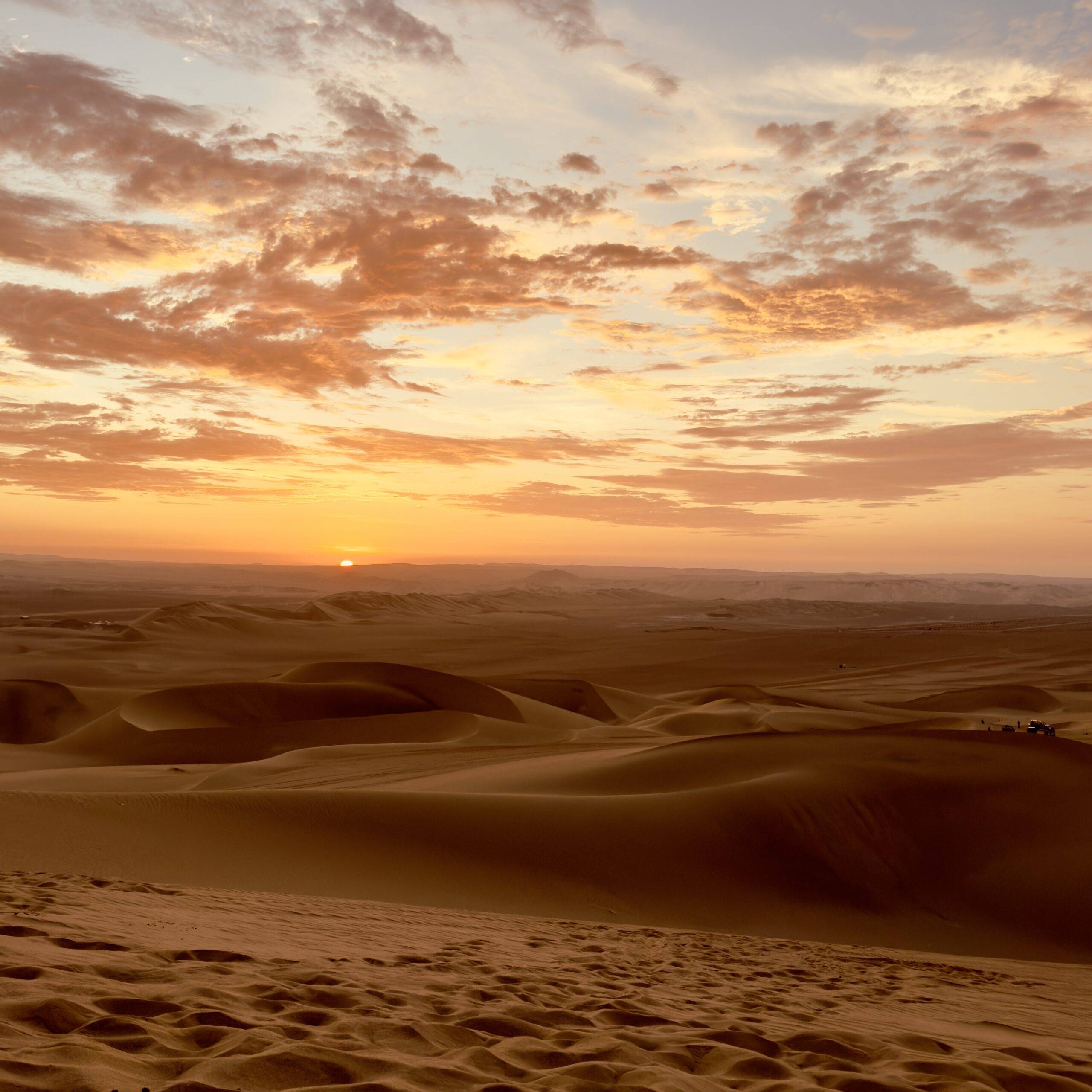
After weeks along Peru’s northern surf towns, we made our way south, trading the sound of the ocean for the quiet hum of the desert. The journey to Ica wasn’t our smoothest (six hours on a day bus reminded us why night buses are our go-to), but by sunset, we were surrounded by sand and orange skies.
The next day was Atty’s birthday, and instead of a cake, (well he still got cake but) he got dune buggies, sandboards, and the kind of laughter that carries across miles of open space.
Huacachina might be small, but it’s one of those places that hits harder than expected, a pocket-sized oasis that feels both otherworldly and completely Peruvian. Whether you’re chasing an adrenaline rush or a family-friendly day out, this desert spot outside Ica is proof that travel doesn’t have to be polished to be unforgettable.
Here’s everything we learned about Ica, Huacachina, and why sandboarding here turned into one of our favourite family adventures in Peru.
The Huacachina Essentials
Getting There / Huacachina sits just outside the desert city of Ica, about five to six hours south of Lima. The easiest route is by bus, most travellers come from Lima, Paracas, or Nazca. Once in Ica, take a 10–15 minute taxi or Uber to reach the oasis. If you’re travelling as a family with luggage, Uber is often cheaper (and calmer) than local taxis.
Why Go / Huacachina’s small — a handful of streets, palm trees, and a lagoon surrounded by golden dunes — but it’s unlike anywhere else in Peru. The big draw is the dune buggies and sandboarding, wild rides that are surprisingly family-friendly.
Sandboarding & Buggies / Tours typically last 2–3 hours and include multiple dunes and a sunset stop. Prices hover around S/60–80 per person for group tours, or S/200–250 for private/family ones. Most operators include dune entry fees. You can book in advance through your accommodation in Ica, or online for a smoother start. (We paid S/220 for a family of four — worth every sol.)
When to Go / Afternoons are best, when the light softens and the dunes glow gold. Morning tours are quieter but lose that sunset magic. Aim for 3–4 p.m. departures and bring layers — the desert cools fast after dark.
What to Pack / Closed shoes, sunglasses, sunscreen, and plenty of water. A buff or scarf helps against flying sand. Expect it to get everywhere, and plan laundry accordingly.
Where to Stay / Huacachina itself is compact and lively, ideal for one night if you want to wake up beside the lagoon. But for families, Ica often makes the better base — quieter, with more space and supermarkets nearby. Try Hacienda San Juan Resort for a resort feel or Ica Adventures II for something smaller but friendly.
Day Trips from Ica / Add variety with a visit to the Tacama Winery, one of South America’s oldest vineyards (open to families), or a half-day escape to the Paracas National Reserve for wildlife and sea views. For something different, the Cañón de los Perdidos offers a Martian desert adventure — go early and hire a local guide.
Family Tip / For younger kids, skip the midday heat, it hits 30°C+ and there’s little shade. Sunset tours are safer, cooler, and infinitely prettier.
In this ultimate Family Guide to Huacachina. I give tips on best places to eat, where to stay, how to get around and below are some of the tools I use:
🚗 Getting around: You can Rent a car or use Uber to get around.
📱 Data: Buy an Airalo eSIM before you fly.
🛡️ Insurance: Lightweight family insurance coverage


Where Is Huacachina and Why Visit?
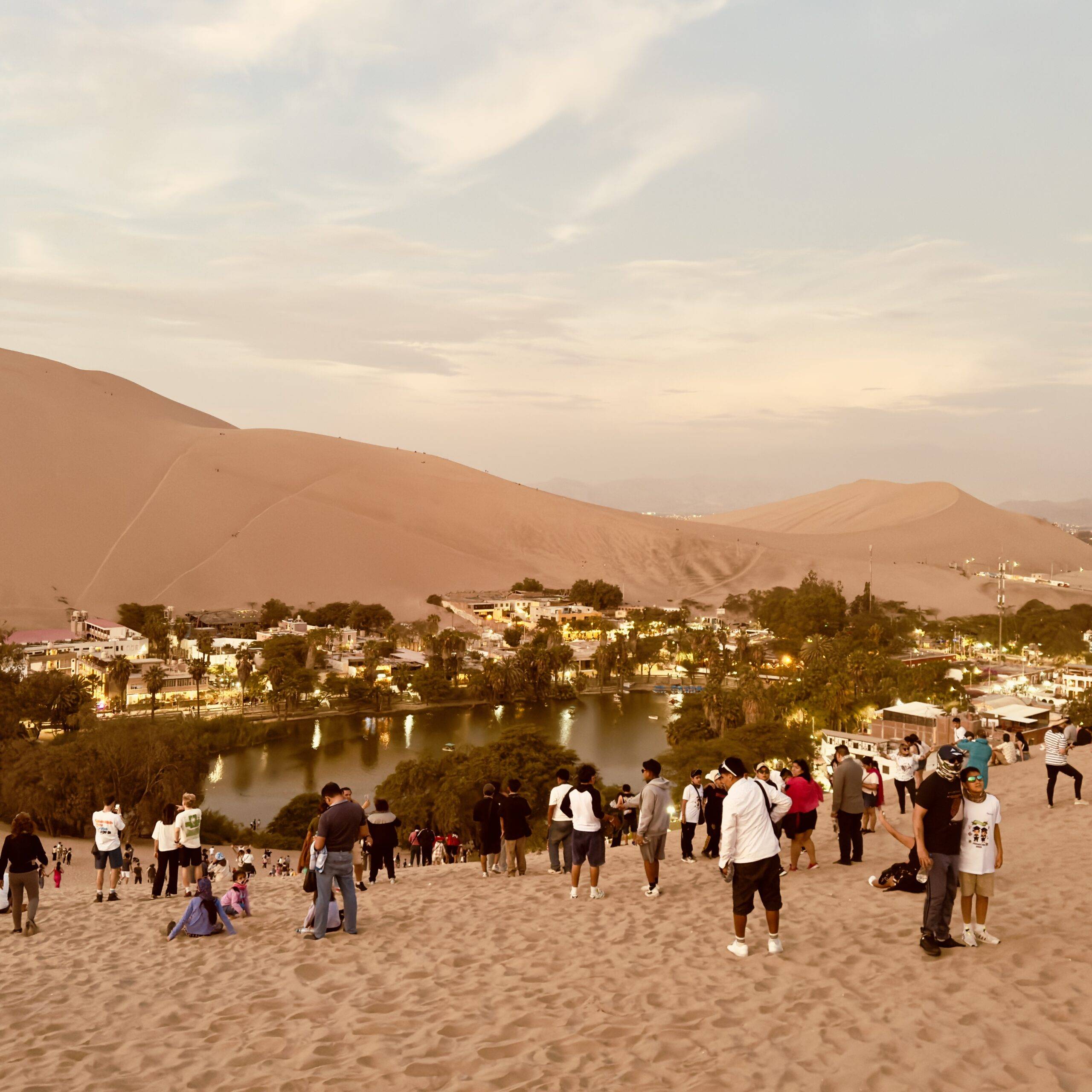
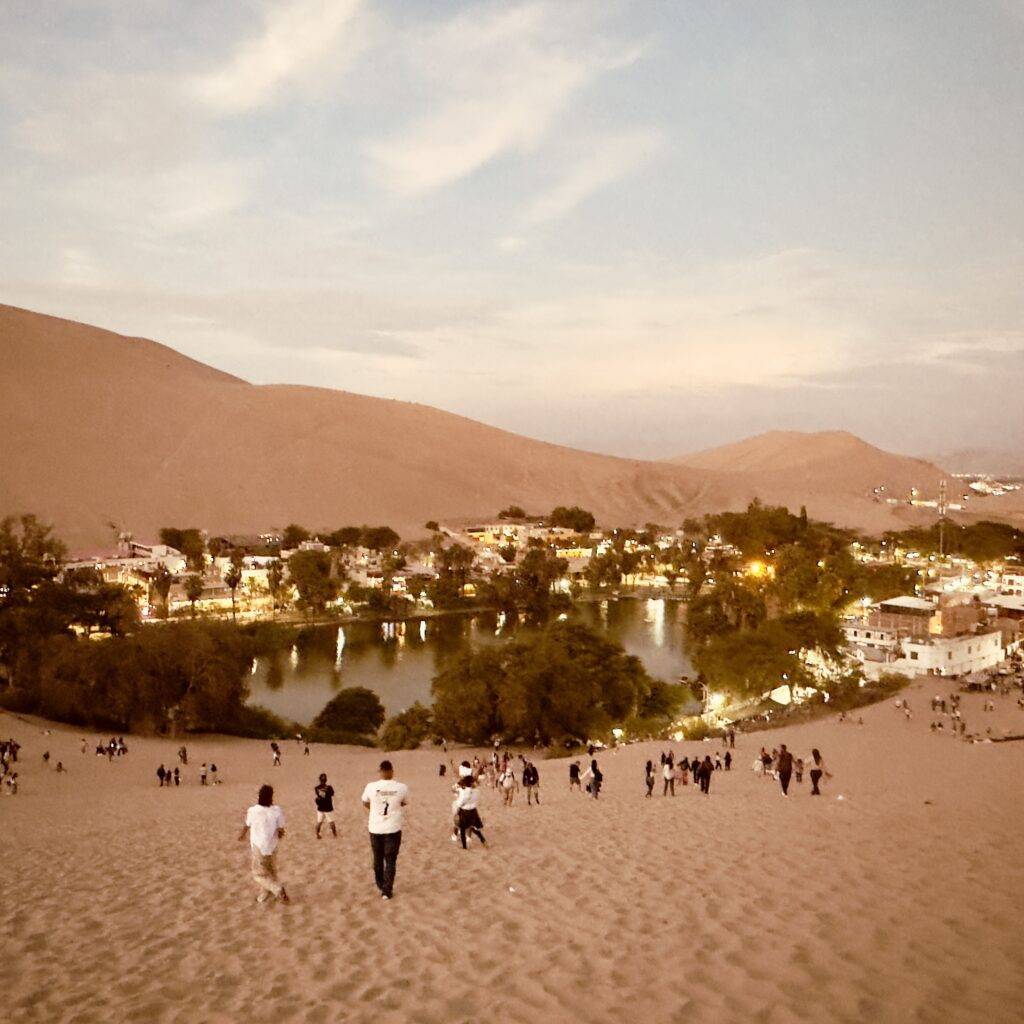
Tucked just outside the city of Ica, about five hours south of Lima, sits one of Peru’s most surreal landscapes, Huacachina, a tiny desert oasis surrounded by golden dunes that stretch as far as you can see.
It looks like something out of a movie, a mirror of green water framed by towering sand, palm trees, and a scattering of hostels, cafés, and sandboards waiting to be claimed. What makes it unique is that it’s real, not some luxury resort built for tourists, but a genuine natural oasis that’s been a getaway spot for Peruvians for decades.
Huacachina is famous for two things:
Sandboarding and dune buggies that blast across the desert like a rollercoaster in the sand.
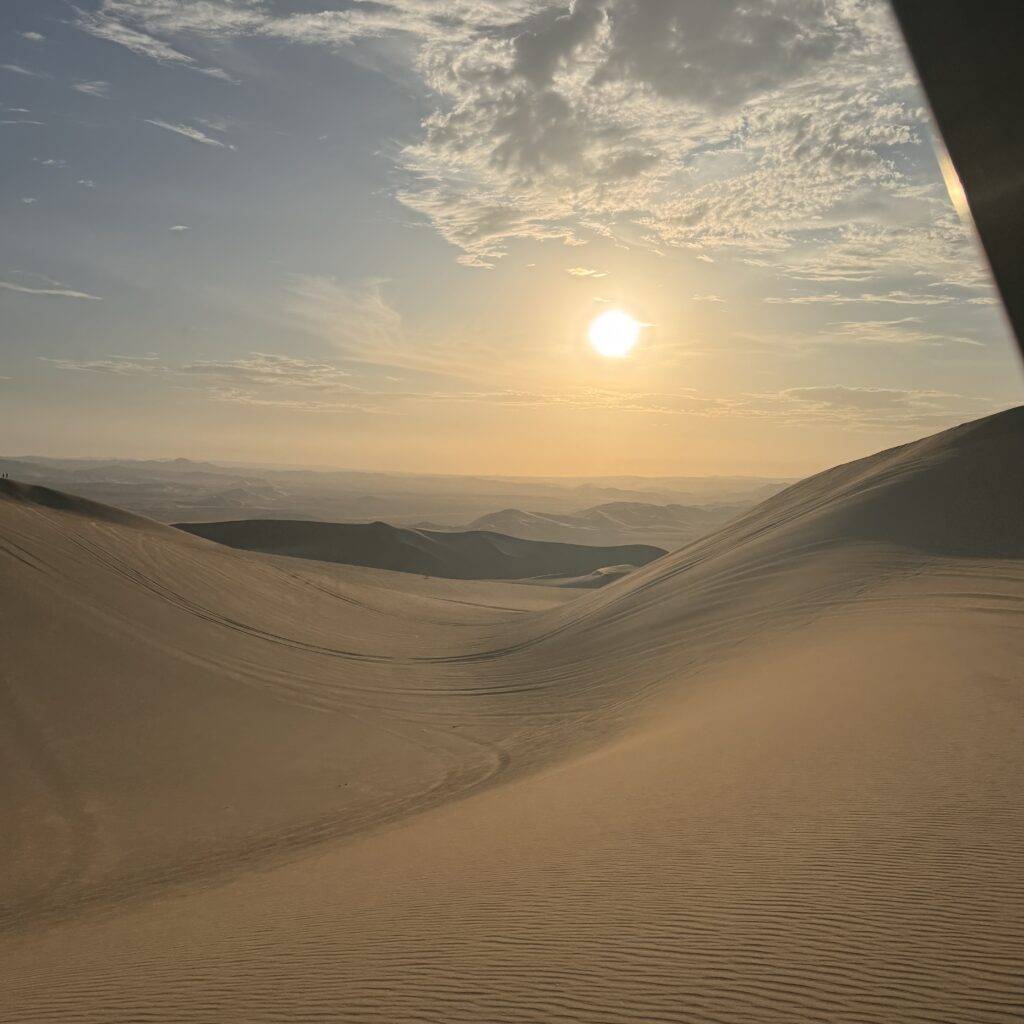
Its unreal sunsets, the kind that turn the dunes pink and make you forget you’re just minutes away from a bustling city.
But beyond the adrenaline, Huacachina is also about perspective. From the top of a dune, you can see the entire oasis, tiny and alive against the vast desert. It’s the kind of view that makes even the kids go quiet for a second (before immediately asking to go down again).
For families, it’s a rare win: safe, exciting, and easy to reach. You can stay in nearby Ica for comfort, visit Huacachina for a half or full day, and still be back in time for dinner and Wi-Fi.
If you’re travelling through Peru slowly, it’s an essential stop, not because it’s perfect, but because it’s pure fun. A natural playground where even adults forget to check their watches.
Getting to Ica and Huacachina (From Lima, Paracas, and Beyond)
Most travellers reach Huacachina through the city of Ica, a small but busy desert hub roughly five to six hours south of Lima. You can arrive by bus from Lima, Paracas, or even Cusco if you’re looping through Peru, but the Lima to Ica route is by far the most common.
Lima to Ica by Bus: Day vs. Night
We took the six-hour day bus from Lima and it reminded us exactly why we usually prefer travelling overnight. The theory was: leave early, arrive before dark, make the most of the day.
The reality?
One hour of traffic before we even left Lima, several unexpected stops, and a brief moment of chaos when a few frustrated locals tried to jump on mid-route.
By the time we rolled into Ica around 6:30 p.m., the kids were done, our snacks were gone, and I’d silently sworn to stick to night buses for the rest of the trip.
Night buses in Peru are the smarter choice for longer routes:
You sleep through the delays,
Save a night’s accommodation, and
Wake up ready to go (or at least ready for coffee).
If you’re travelling with kids, it’s worth paying a little extra for a “cama” or “semi-cama” seat, the full-recline ones make a huge difference.
Arriving in Ica: Taxis, Mototaxis, and Ubers
Once you arrive, Ica’s main form of transport is mototaxis, small, buzzing three-wheelers that dart through traffic. They’re cheap and everywhere, but they don’t work for every situation (or every family).
With four of us plus backpacks, we couldn’t squeeze into one, so we hailed a regular taxi instead, not obvious when you first step out of the terminal, but doable.
Here’s what we learned quickly:
➡ Get local data as soon as you arrive. For bigger cities like Ica, having data means access to Uber, which can save you a lot of haggling.
➡ Ubers are usually half the price of standard yellow taxis, and the drivers don’t try the tourist markup game.
➡ Local taxis dislike Uber, which explains the occasional side-eye when you mention it, but it’s safer, fairer, and easier when you’re hauling kids and luggage.
Getting Around Ica and Huacachina
Ica itself isn’t huge, but traffic can get wild.
Most families do what we did, base in Ica (for quieter nights, access to supermarkets, and better accommodation value) and then take a 10–15 minute taxi to Huacachina for the dunes and adventure.
If you’re staying in Huacachina directly, be aware it’s more compact and touristy.
There’s not much beyond the oasis, and it gets loud on weekends.
Our sweet spot was staying in Ica, doing the sandboarding day trip through our Airbnb host, and being back at our apartment before dark with a fridge full of snacks.
Routes from Other Destinations
- From Paracas: about 1.5 hours by bus, easy, scenic, and makes a good combo trip (coast + desert).
From Cusco or Arequipa: expect long-haul buses, usually 12–16 hours, or plan a stopover in Nazca to break up the journey.
Onward travel: from Ica, you can continue south to Nazca, Arequipa, or Cusco, or loop back north toward Lima or Paracas.
Family Travel Tip
Arriving late in Ica? Have your accommodation arranged before you get off the bus. Mototaxis and touts appear fast, and it’s not the best place to be wandering with luggage after dark.
If you’ve booked through Airbnb, ask your host to pre-arrange a driver, many will include that for a small fee, and it saves a world of stress.

Sandboarding In Huacachina (Family Perspective)
If you’ve seen the photos of Huacachina, the oasis framed by golden dunes, you might think it’s a calm, sleepy little desert village. That illusion lasts right up until you strap into a dune buggy.
We booked our sandboarding trip through our Airbnb host in Ica. The price was 220 soles (about $65) for the four of us, which covered the buggies, boards, and entrance to the dunes. The driver picked us up and within ten minutes we were crawling through Huacachina traffic, tuk-tuks, vendors, backpackers, and buggies everywhere, before meeting our guide at a small hostel near the edge of the sand.
First Impressions: Organised Chaos (But It Works)
The start of a Huacachina sandboarding tour feels a little like being thrown into a desert festival, noise, laughter, engines revving, and sand swirling.
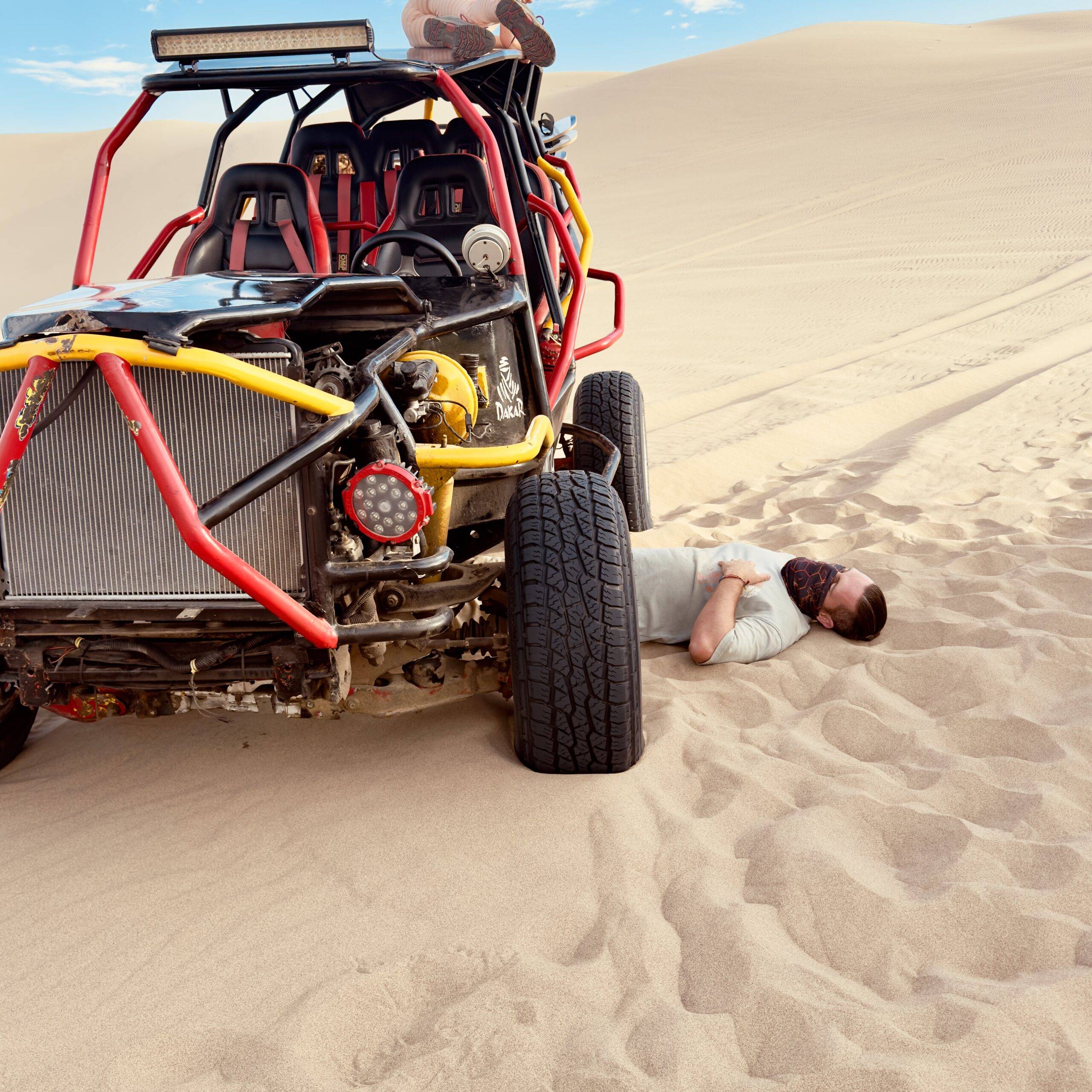
We paid, signed our names, and followed our guide up a steep sandy hill to where more than 50 dune buggies waited like rollercoasters at the start line.
Our group included two women from Málaga and our driver, who grinned like a man who’s done this a thousand times.
Seatbelts clicked, helmets on, and then, zero warning, the engine roared to life and we were off.
The first climb felt endless. The buggy tilted almost vertically before dropping, twisting, and flying across the dunes.
The kids were screaming, the good kind, shouting for him to go faster while I gripped the handle thinking, we really paid for this?
It was pure chaos, pure joy, and completely safe. The drivers know every slope by heart. Within minutes, we were all laughing and covered in sand.
Sandboarding 101: How It Actually Works
I’ll admit, I thought “sandboarding” meant standing up, snowboarding style. Turns out, unless you’re an experienced boarder (and have hours to spare), most tours use body boards so everyone can get multiple runs in.
The guide gave a quick demo:
Lie flat, hands tucked, feet in the sand to steer and brake. Easy enough, until you look down the slope.
Our first dune was medium-sized, perfect for the kids to try first. To my surprise, they didn’t hesitate, just launched themselves and flew down the hill, sand spraying everywhere.
Tania followed, then me, a little less gracefully but equally thrilled.
After that, it was dune after dune, each one bigger, steeper, faster.
The last one was at least three times higher than the first. I went first, feet pressed into the sand to slow down. Atty went next, full speed, no brakes. Halfway down, he started to turn sideways, rolled a few times, and came up laughing, “I’m fine, just sand in my nose!”
One of those heart-stopping parent moments that turns into family legend.
The Sunset Finish
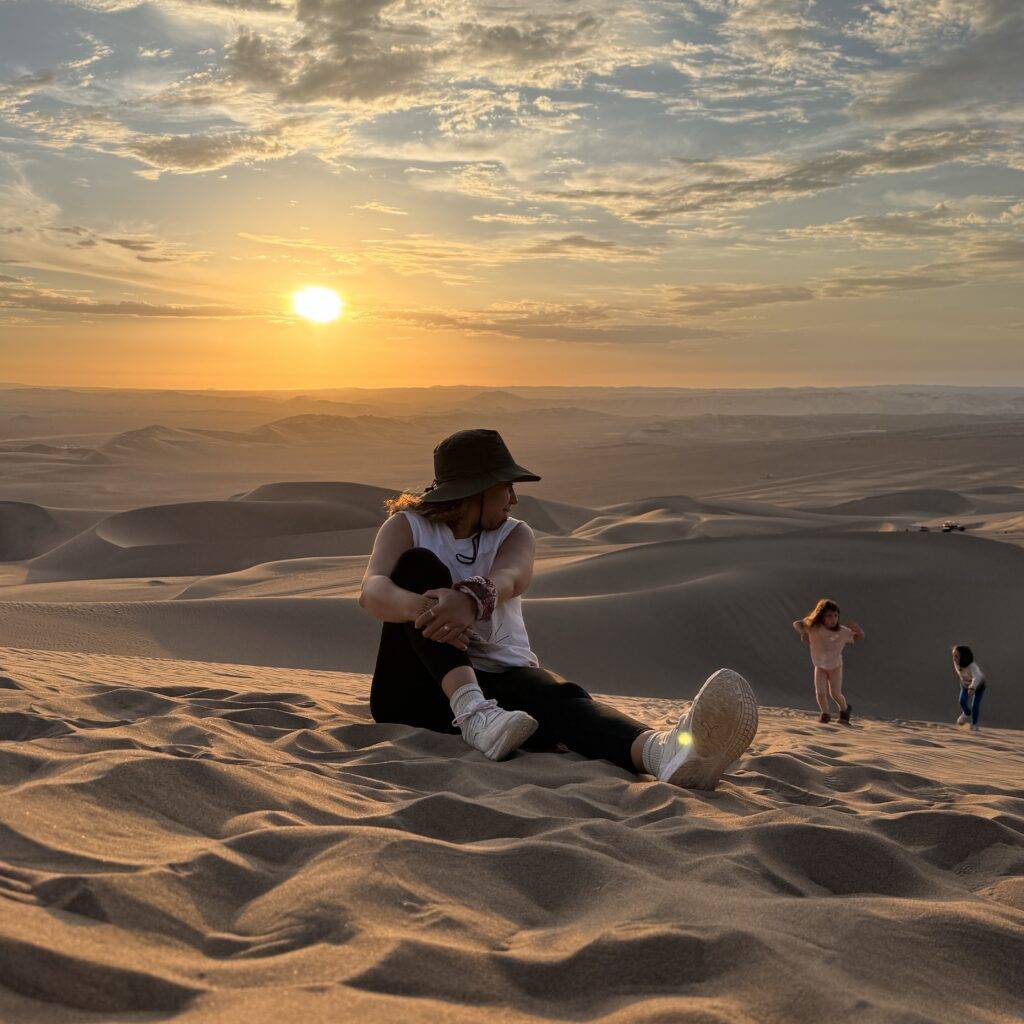
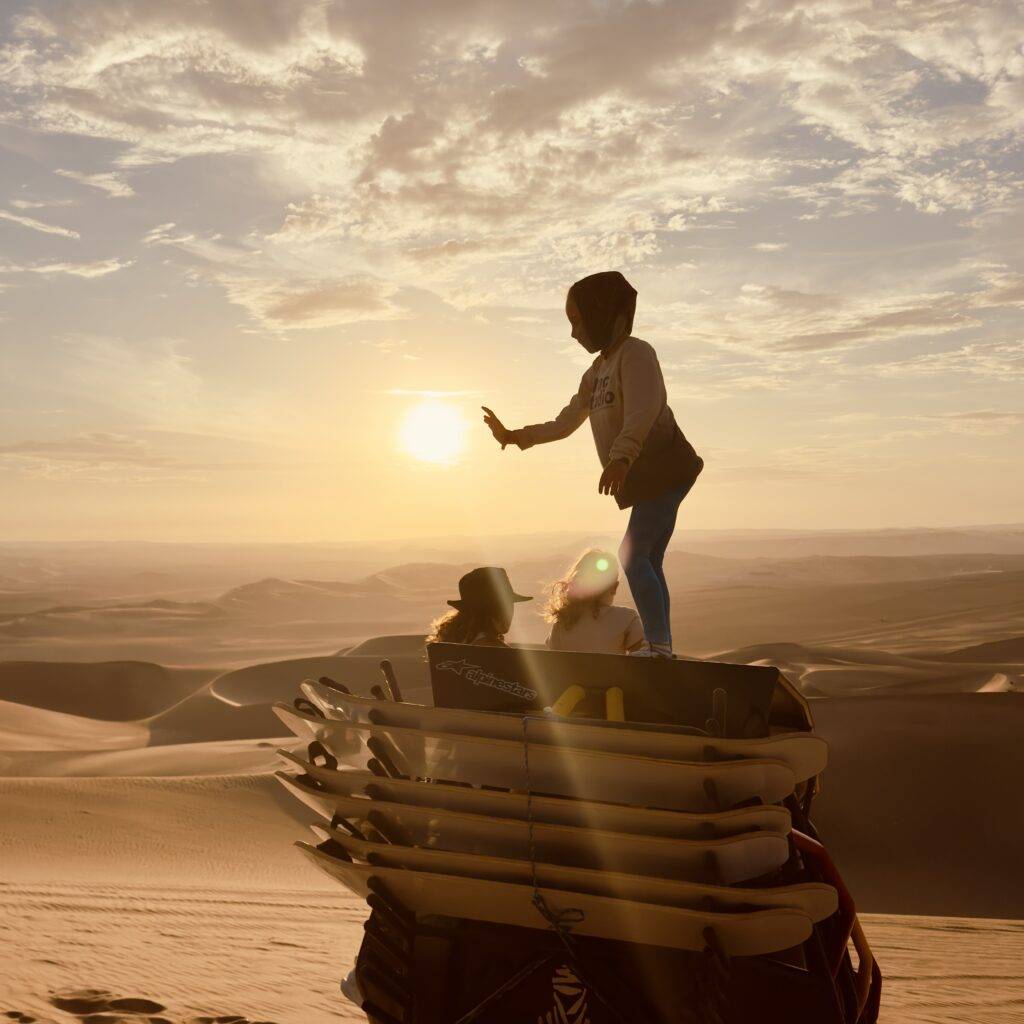
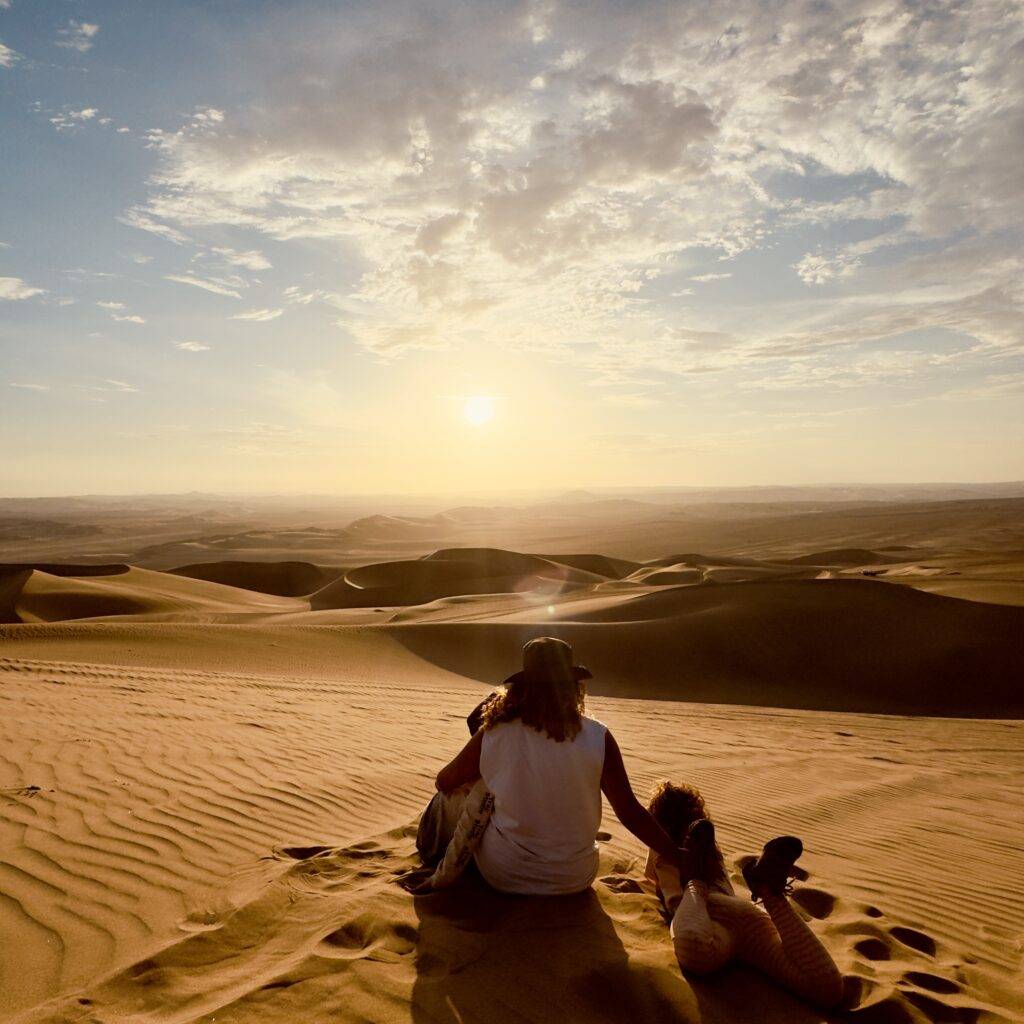
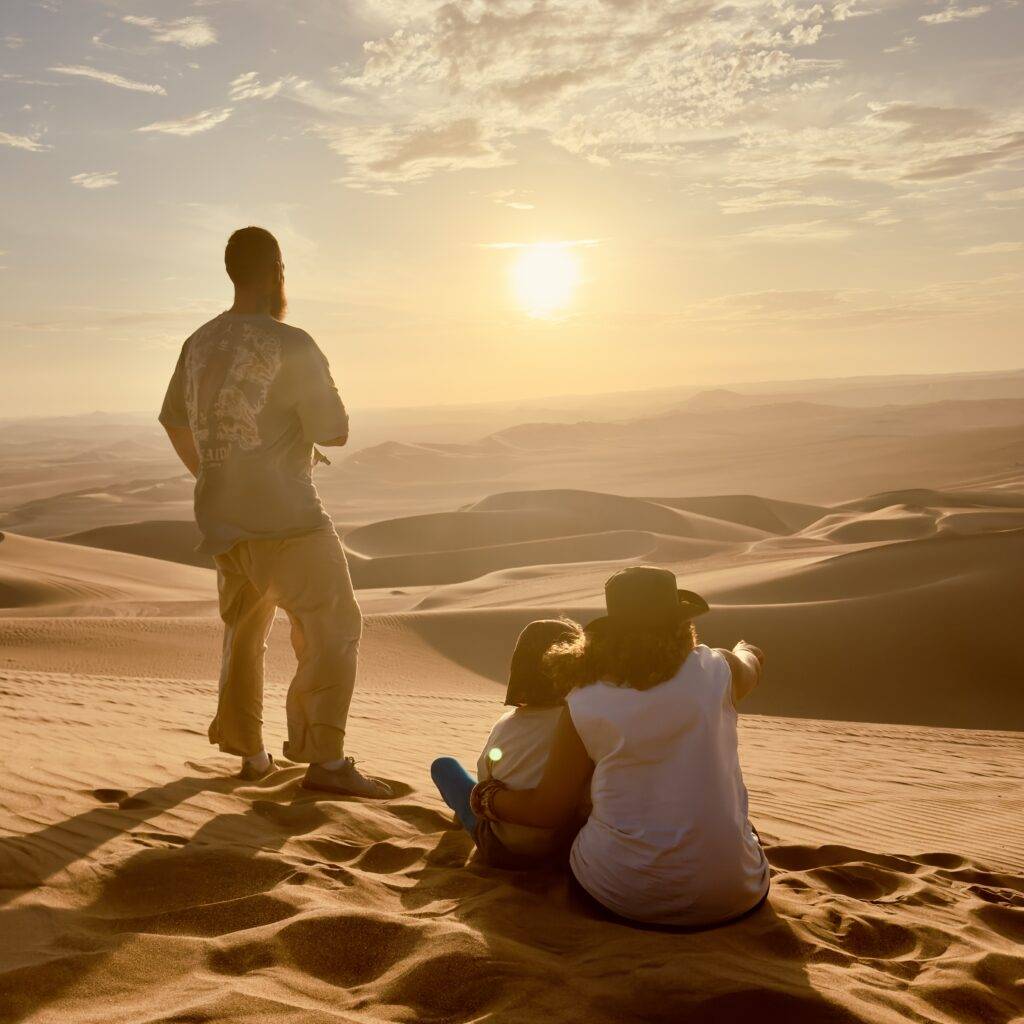
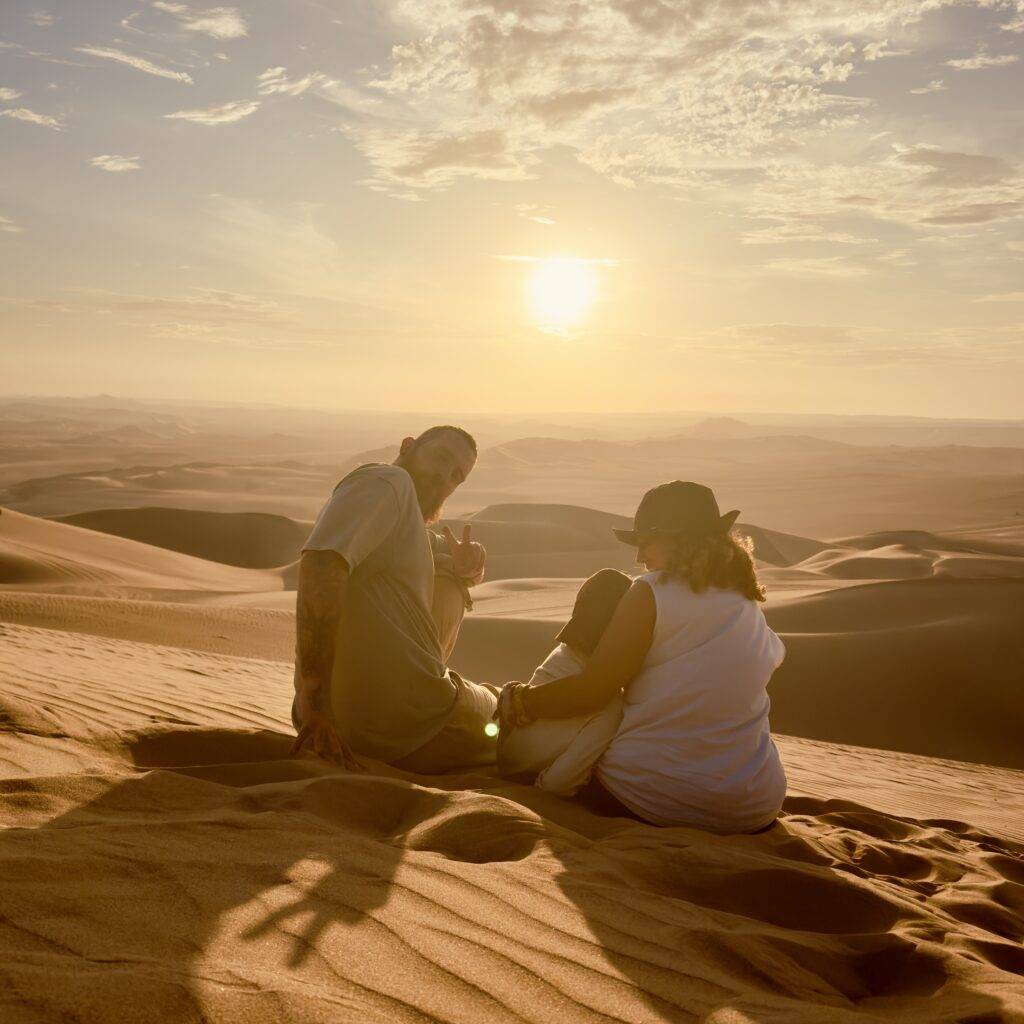
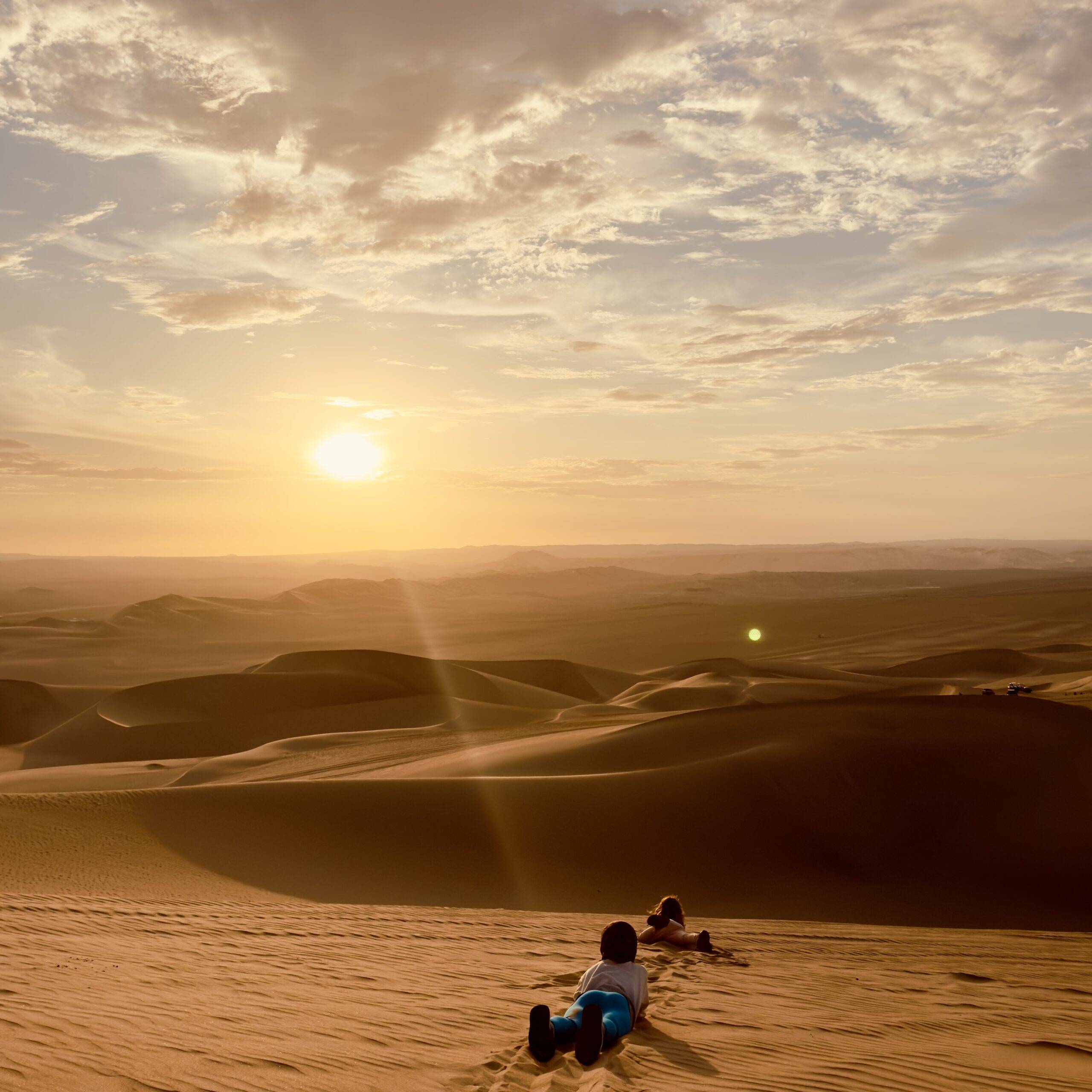
The final stop was at a lookout point where the dunes stretched for miles in every direction, golden waves under a deepening pink sky.
Engines idled, everyone quiet for a moment.
It was Atty’s eighth birthday, and as the sun dipped, he stood there grinning with sand in his hair, saying it was the best birthday ever.
Sometimes travel gives you polished, postcard moments. Other times it gives you this, messy, spontaneous, completely unforgettable. This is why I think Travel is good for kids
How Much Does Sandboarding in Huacachina Cost?
Prices vary depending on where you book:
Group tours: around 60–80 soles per person (shorter, busier trips).
Private/family tours: 200–250 soles total, often booked via hotels or Airbnb hosts.
The tour usually lasts 2–3 hours, and includes buggy rides, multiple dunes, and the sunset stop. Entry to the dune reserve is typically included, but it’s worth confirming.
Is Sandboarding Safe for Kids?
Surprisingly, yes, as long as you go with a reputable driver and follow the guide’s instructions.
Kids as young as five or six can join (ours were 7 and 8), and the bodyboarding setup makes it accessible.
The buggies have seatbelts, helmets are provided, and guides are used to families joining mixed groups.
Bring:
Water (lots)
Sunscreen
Sunglasses (sand will find your eyes)
Buffs or face covers
Confidence (you’ll need it for that first drop)
Family Verdict
Huacachina was one of the rare places where everyone, adults and kids, felt the same thing: pure fun.
It’s adrenaline without danger, chaos without stress. And for families, that’s gold.
By the time we were dropped back in Ica, we were exhausted, covered in sand, and buzzing.
If you do one adventure in southern Peru, make it this one.
What to Pack for Sandboarding in Huacachina
The good thing about sandboarding in Huacachina? You don’t need much gear.
The bad thing? Forget one simple thing, like sunglasses or water, and you’ll be reminded of it every two minutes while sand whips into your eyes and your mouth tastes like the Sahara.
Here’s our family-tested packing list for the dunes, learned the sandy way.
1. Clothes You Don’t Mind Getting Covered in Sand

Sand gets everywhere. Everywhere.
It’ll be in your shoes, your hair, your ears, somehow even in your pockets inside your backpack.
Wear light, breathable clothes that you’re not precious about.
What worked for us:
Quick-dry T-shirts and shorts (leggings for the kids, no scraped knees)
A thin long-sleeved for sun protection
Closed trainers (not sandals!)
→ You’ll be climbing up dunes, and that sand gets hot.A light windbreaker if you’re heading out for sunset (the desert cools quickly)
Skip anything white unless you’re fine with it becoming permanently beige.
2. Sunglasses or Goggles
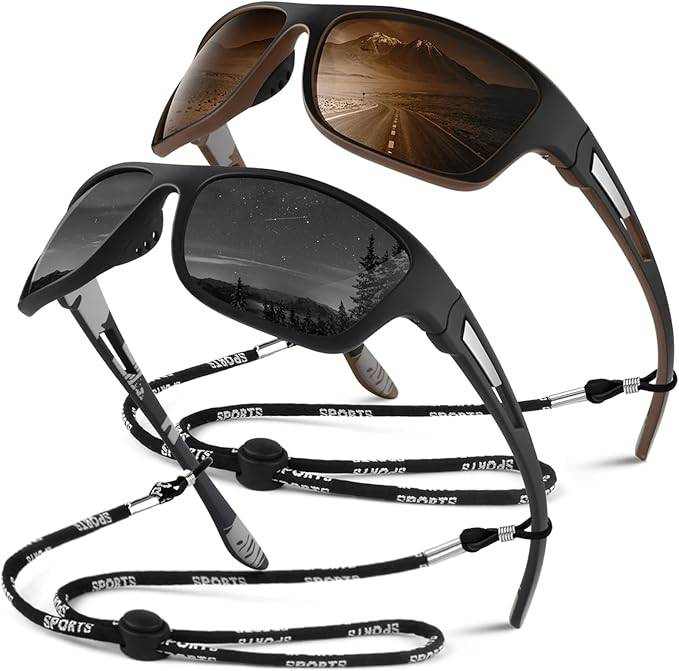
If there’s one thing you cannot forget, it’s eye protection. Well sunglasses
The wind can kick up at any time, and there’s nothing worse than trying to enjoy the dunes while blinking through a sandstorm.
Bonus tip: Cheap sunglasses work fine, just don’t bring your nice pair unless you enjoy watching sand scratch them in real time.
They also sell them at the place for around 10 soles.
3. Buff or Face Cover
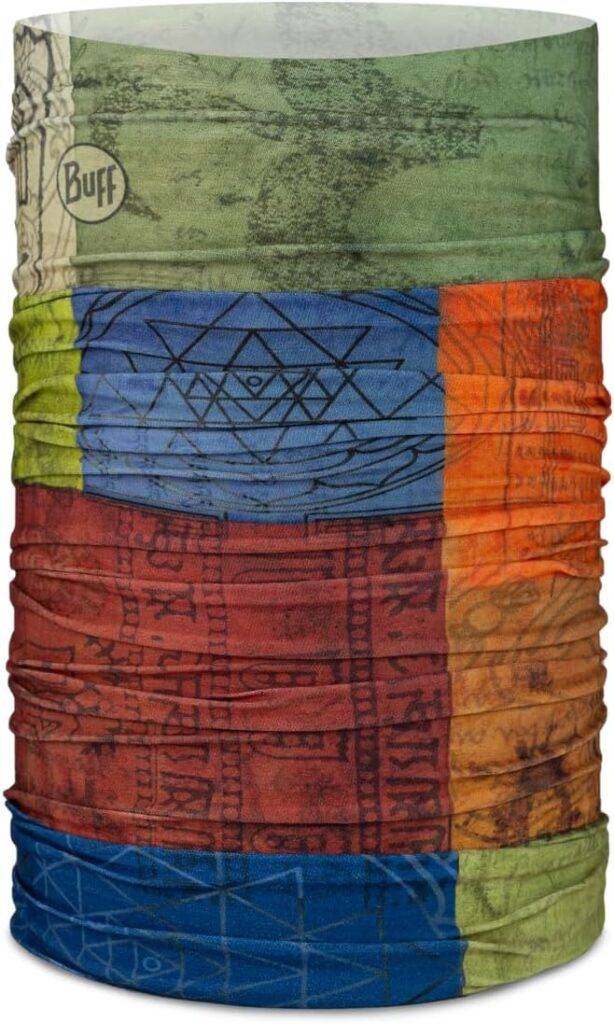
The guides all wear them for a reason.
A buff or scarf keeps sand out of your mouth, nose, and neck, especially during those high-speed buggy rides.
The kids turned theirs into superhero masks, which kept them entertained and surprisingly protected.
4. Water (More Than You Think You’ll Need)
The desert is dry, and excitement makes everyone forget to hydrate.
Each of us carried a 1-litre bottle, which was gone by halfway through the tour. Bring more than you think, or you’ll pay inflated prices back at the oasis.
5. Sunscreen and Then More Sunscreen
Apply it before you go, and again once you’re there.
The reflection from the sand doubles the burn potential, and it sneaks up fast, especially on noses, cheeks, and the backs of necks.
Pro tip: Put it on your hands after you finish boarding, not before. Otherwise, you’ll be greasing your sandboard instead of riding it.
6. Small Backpack or Drawstring Bag
You’ll want a hands-free way to carry essentials (water, sunscreen, camera, buff).
Keep it light, you’ll be climbing dunes between runs. A small drawstring bag is perfect; leave the big daypack behind.
Quick Checklist Recap:
Breathable clothes (no jeans)
Closed shoes
Sunglasses or goggles
Buff/face cover
Water (1L+ per person)
Sunscreen
Small backpack
Snacks
Camera (optional)
Bonus: What Not to Bring
- Big backpacks, you’ll regret it
Jewellery or watches, sand loves to ruin them
Anything that can’t handle a good layer of dust
Sandboarding in Huacachina isn’t about fancy gear or picture-perfect outfits, it’s about the thrill of doing something wild and simple as a family. Pack smart, keep it light, and you’ll be fine (just maybe plan a shower and laundry load for later).

What to Do in Ica (Beyond Sandboarding)
After the adrenaline rush of Huacachina, Ica felt like the calm we didn’t know we needed.
The city itself isn’t glamorous; it’s dusty, busy, and practical, but spend a few days here and you’ll start to see its rhythm. Local markets, old cafés, and slow sunsets over the desert give it a grounded charm that families like ours can actually breathe in.
Here’s what filled our days between sand and snacks.
Atty’s Birthday at the Megaplaza Ica
Our first night coincided with Atty’s 8th birthday, which meant a last-minute mission to find supplies, candles, snacks, and something that looked like a cake.
We headed to Megaplaza Ica, a surprisingly big shopping centre with everything from clothing stores to a full supermarket. It’s a lifesaver if you need essentials or forgot something on the road.
The kids ran wild in the toy aisles while we stocked up on groceries and birthday bits.
Travelling birthdays aren’t polished Pinterest affairs, they’re improvised, slightly chaotic, and perfect in their own way.
Lunch for Less: The Menu del Día
Peru does lunch right.
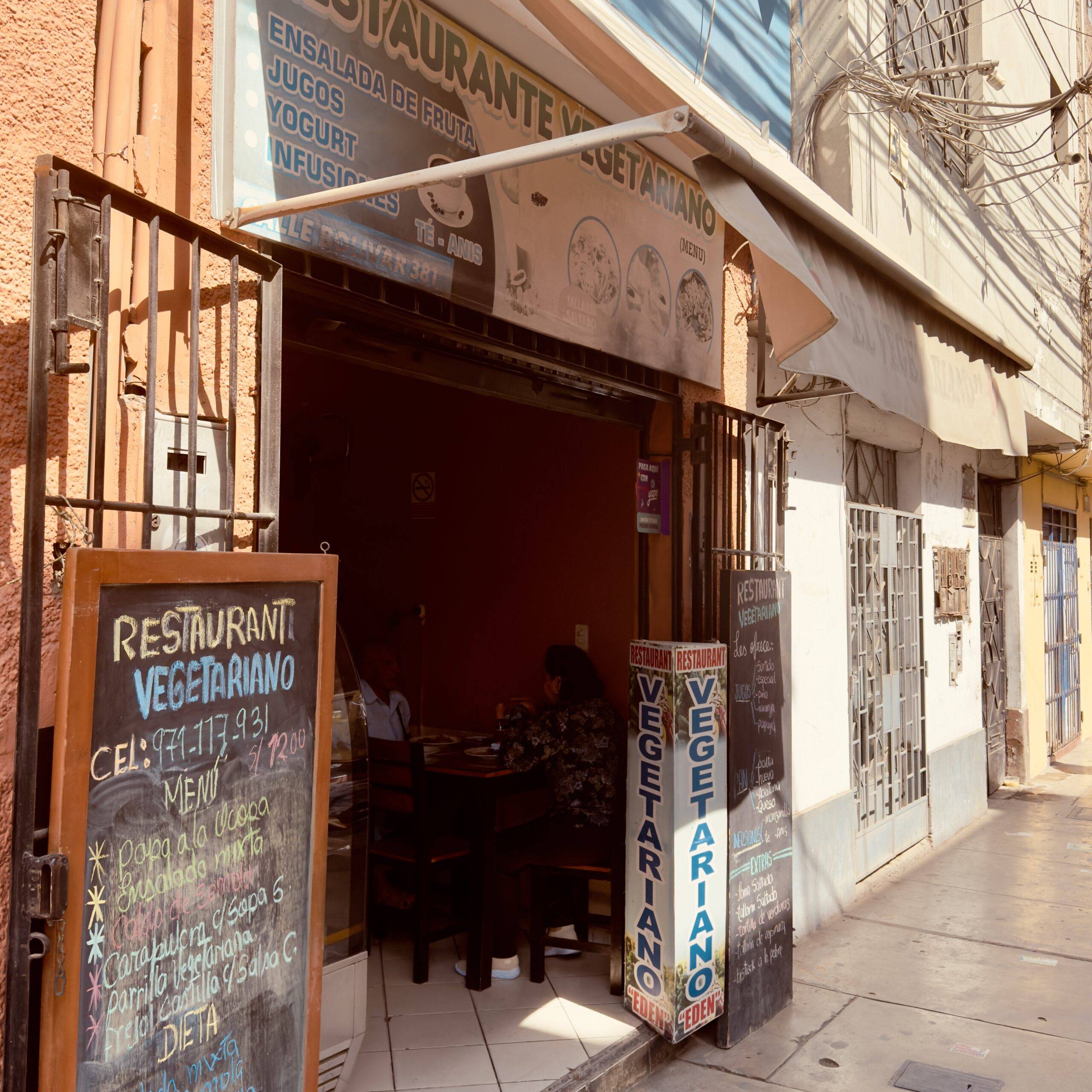
We found a vegetarian menu del día in town, three courses and a drink for 36 soles (around $10) for all of us. Soup, rice, lentils, a veggie stew, and fresh juice, simple, filling, and exactly what we needed after the dunes.
If you’re new to the idea, a menu del día is a fixed-price daily meal offered in most local restaurants, usually cheaper and more authentic than tourist menus.
Our pick: a small spot called El Vegetariano Restaurante (nothing fancy, just great food).
Add a few scoops of ice cream from D’Lizia Heladería afterwards, and you’ve got a perfect low-cost family day.
Plaza de Armas and People-Watching
Every Peruvian city seems to have a Plaza de Armas, a central square where life slows down.
Ica’s isn’t huge, but it’s the perfect place to sit, sip a coffee from Lora Café, and let the kids chase pigeons while you people-watch. Street vendors sell popcorn, drinks, and little toys.
It’s also one of the best spots to catch local energy without needing an itinerary.
Regional Museum of Ica: A Quiet Gem for Worldschoolers
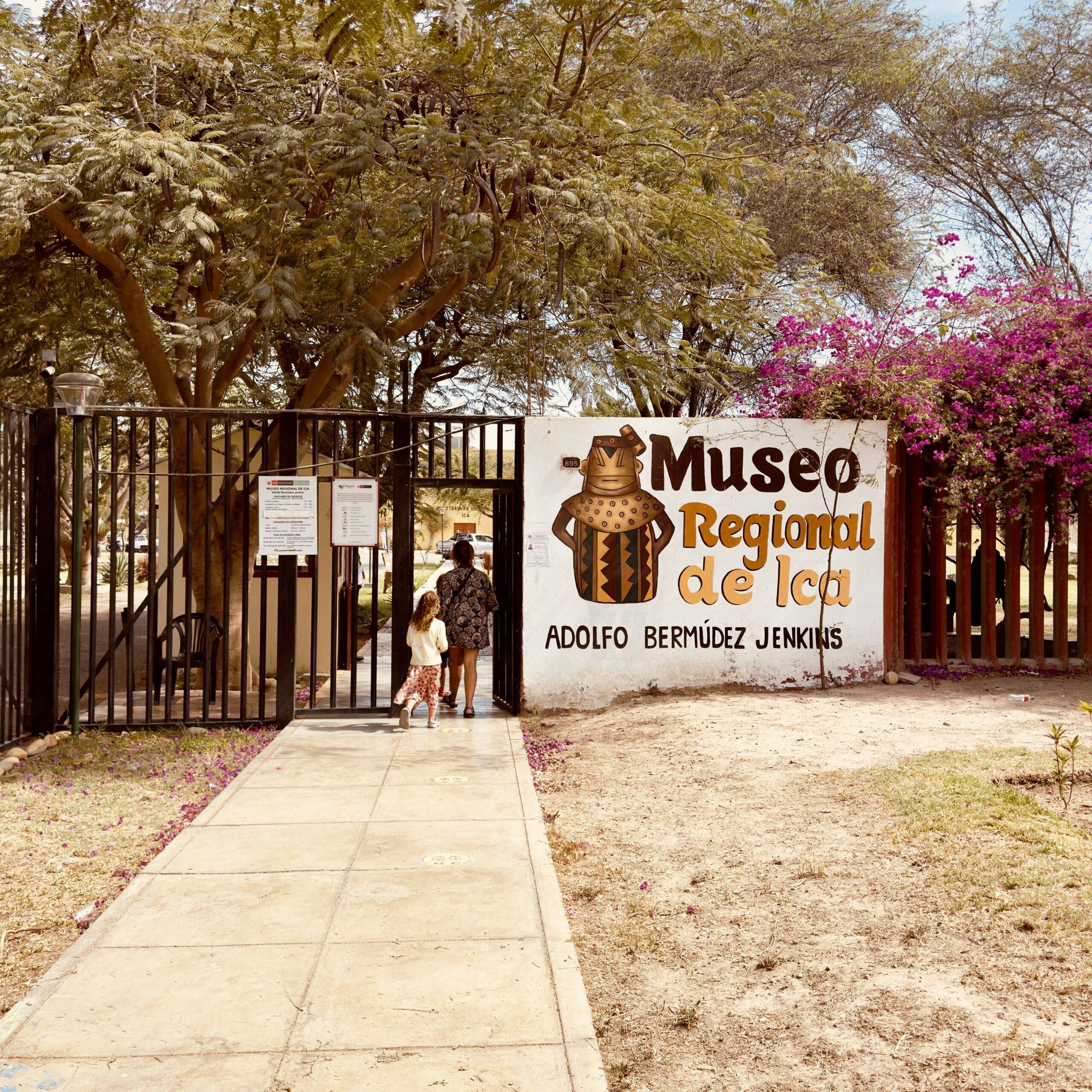
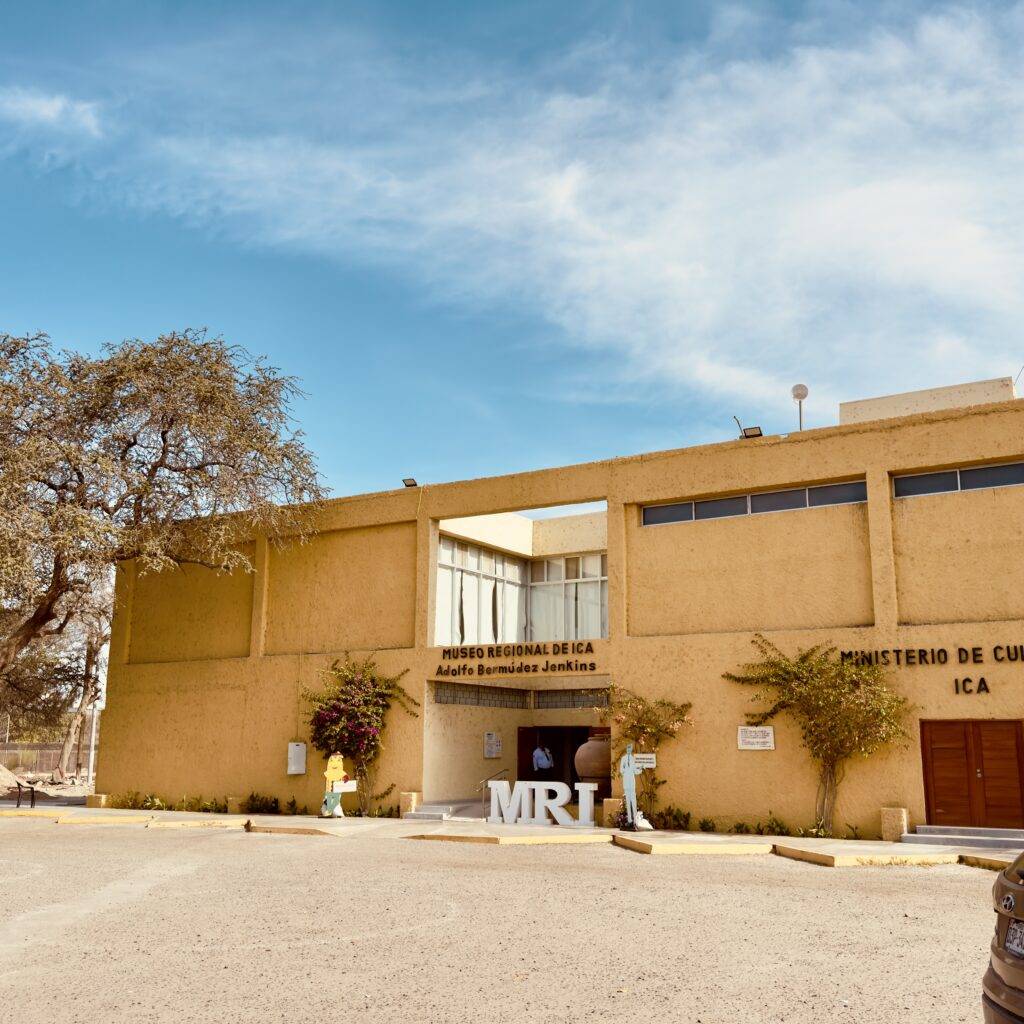
If you’re worldschooling or just trying to sneak in a little learning on the road, the Regional Museum of Ica Adolfo Bermúdez Jenkins is worth a visit.
It’s small, low-cost, and surprisingly educational, covering everything from the Nazca Lines and Paracas culture to ancient artifacts and mummies.
It’s the kind of museum that keeps kids curious without overwhelming them.
Plan an hour or two, bring snacks (there’s no café), and enjoy the air-conditioning while you learn about the region’s ancient desert dwellers.
Optional Day Trips from Ica
If you’re staying a bit longer, Ica is perfectly placed for short adventures.
Paracas National Reserve: About 1.5 hours away, wildlife, beaches, and the famous “Ballestas Islands,” often called Peru’s mini Galápagos.
Tacama Winery: One of South America’s oldest vineyards. Not just for wine lovers, they have family-friendly tours and open grounds for kids to explore.
Canyon de los Perdidos: A hidden desert canyon (roughly 3 hours away) that looks like Mars. Go early, bring water, and hire a local guide from Ica.
These trips make Ica more than just a stopover, it’s a full desert base for slow travellers.
Simple Pleasures and Local Tips
- Groceries: Megaplaza or El Super are easiest for basics.
Coffee: Lora Café or Café Arenas near Plaza de Armas.
Transport: Mototaxis for short rides, Uber for anything longer.
Wi-Fi: Cafés are hit or miss, grab data instead of relying on free networks.
Ica isn’t flashy, and that’s the point.
It’s where you slow down, eat well, and actually feel the pace of Peru between adventures.
For us, it was the perfect reset after the chaos of the dunes.
Is Huacachina Worth Visiting?
Short answer: Yes, absolutely.
Long answer: It depends what you’re after.
Huacachina is one of those places that divides travellers. Some call it overhyped; others call it magic. We landed somewhere in between, and loved it for exactly what it was.
The Good Stuff
1. It’s Pure Adventure.
There aren’t many places in the world where you can race dune buggies, sandboard down mountains of sand, and watch the sunset from what feels like the edge of the Earth, all within an afternoon. For families, that combination of safe adrenaline and easy logistics is gold.
2. It’s Easy to Reach.
You don’t have to trek through the Andes or fly across the Amazon, Huacachina is just a short hop from Ica and only a few hours from Lima. You can do it as a day trip, or stay overnight to soak it in.
3. It’s a Rare Family Win.
Travel with kids often means compromise, what’s fun for them isn’t always fun for you. Huacachina is that rare overlap: the adults get the thrill, the kids get the adventure, and everyone goes home smiling (and slightly sunburned).
The Not-So-Great
1. It’s Busy and a Bit Chaotic.
Don’t picture an untouched desert. By late afternoon, dozens of buggies are roaring across the dunes. It’s still fun, but it’s not exactly serene.
If you want quiet, go early or book a smaller, private tour.
2. It’s Tourist-Oriented.
Huacachina’s economy revolves around visitors, prices reflect that. Food and souvenirs cost more here than in Ica, and the oasis itself, while pretty, isn’t the cleanest. Think fun over flawless.
3. It’s a One- or Two-Day Stop, Not a Base.
You don’t need a week here. Once you’ve done the sandboarding, watched the sunset, and wandered the lagoon, you’ve seen the main show. For families, it’s perfect as a highlight between Lima and Nazca, not a long stay.
Is Huacachina Safe for Families?
Yes
.
It’s lively but safe. Locals are used to tourists, tours are regulated, and buggy drivers operate in designated zones.
Basic precautions apply, don’t flash valuables, don’t wander the dunes alone at night, but it never felt unsafe, even with kids in tow.
We’d rate it family-friendly with a dash of adrenaline.
Our Honest Take
Huacachina isn’t perfect, and that’s what makes it memorable.
It’s loud, sandy, a little rough around the edges… and completely unforgettable.
It gave us one of the best days of our trip, Atty’s eighth birthday, spent flying down dunes and watching the sunset turn the desert gold.
If you’re travelling Peru slowly, make space for Huacachina. Go in expecting a little chaos, leave room for laughter, and you’ll love it as much as we did.
Practical Tips for Families Visiting Huacachina
Huacachina might look like a movie set, but it’s still Peru, expect a bit of dust, a few surprises, and plenty of moments where you’ll be glad you packed snacks.
Here’s everything we wish we’d known before arriving with two kids and zero idea how much sand one person can collect in their shoes.
1. Book Tours Through Locals or Your Airbnb Host
You’ll see dozens of tour operators offering buggy rides and sandboarding. Prices are similar, but quality varies.
We booked ours through our Airbnb host in Ica, same cost, less chaos.
They arranged the taxi, handled entry fees, and made sure we had a driver who was both safe and happy to go fast enough for the kids.
2. Go for Sunset, Not Midday
Afternoons in Huacachina can hit 30°C+ with minimal shade.
Aim for a 3–4 p.m. tour, when the light softens, the dunes glow gold, and you’ll finish right as the sun sets, easily the most magical part of the day.
Morning tours are quieter but lack that sunset magic.
3. Bring Cash (and Small Change)
Most tours and small cafés prefer cash.
There are ATMs in Ica, but none reliable in Huacachina itself.
Bring soles, especially small notes for tips and snacks.
4. Stay in Ica, Visit Huacachina
Huacachina is great for a day or two, but Ica makes the better base, quieter, cheaper, with proper supermarkets and more family-friendly stays.
The oasis is only 10–15 minutes away by taxi or Uber, so you can have your dunes and a good night’s sleep.
5. Use Uber Whenever You Can
Traditional taxis in Ica often quote double to tourists.
Uber works in Ica, and drivers are friendly and honest.
Download the app once you’ve got local data (Claro or Bitel SIMs are easiest to buy).
6. Pack Like It’s the Desert (Because It Is)
Bring sunscreen, sunglasses, buffs, and plenty of water.
Even short buggy rides dry you out quickly, and that desert sun is no joke.
Closed shoes beat sandals every time, especially for kids climbing dunes.
7. Expect Sand. Everywhere.
You’ll find it for days, in your shoes, in your bags, even in your toothpaste.
Bring a small brush or pack towel to dust off before heading back into taxis or cafés.
And accept it: the sand wins. Every time.
8. Best Time to Visit
Huacachina is a year-round destination, but the sweet spot is May to October (Peru’s dry season).
Days are warm, skies are clear, and sunsets are unreal.
Avoid January–March if possible, occasional rain turns the dunes muddy and tours may be limited.
9. Don’t Overstay
Two days here is perfect:
One for sandboarding and sunset
One for exploring Ica or a day trip to Paracas or Tacama
Then move on, south to Nazca or Arequipa, or north back to the coast.
Huacachina may be small, sandy, and a bit noisy, but it’s also unforgettable. Plan smart, pack light, and you’ll leave with sore legs, sandy bags, and one of the best travel memories your family will ever make.
A Family Adventure in the Desert
By the time we left Ica, the car floor was still full of sand, and we’d told the story of Atty’s “sandboard barrel roll” at least ten times.
Huacachina wasn’t the smoothest stop, it was loud, messy, and covered in grit, but it gave us something rare: a day where everyone felt like a kid again.
It’s easy to rush through places when you travel long-term, ticking off the highlights. But sometimes, slowing down, even in a chaotic desert oasis, gives you the stories that stick.
For us, that sunset over the dunes, laughter echoing across the sand, was one of those moments.
Huacachina might not be perfect, but it’s perfectly worth it.