
Best Carry-On Luggage for Family Travel in 2026: What We’d Upgrade After Long-Term Travel
Before travelling long-term as a family, we didn’t think too deeply about luggage.
Honestly, we thought people obsessing over suitcases online were being slightly dramatic. If the wheels rolled and the zip closed, surely that was enough.
Then we started actually travelling.
Not one holiday. Not a quick airport-to-resort trip. Real long-term family travel:
airports
buses
ferries
apartment moves
uneven pavements
tired kids
overpacked bags
constant transitions
Somewhere between dragging a badly balanced suitcase through cobbled streets and trying to reorganise snacks, passports, chargers, and emergency clothes at airport security with two children beside us, we realised luggage quietly affects almost every travel day.
And now, preparing for our family relocation to New Zealand, we’ve found ourselves rethinking our setup completely.
Not because we suddenly care about “luxury luggage.” Mostly because long-term travel taught us what genuinely matters, and what becomes deeply irritating after a few months on the move.
That’s partly why we started looking more seriously at luggage built for frequent travel rather than occasional holidays. If you want to see the setup we ended up testing, you can check out their luggage range here.
Use my discount code for TVF10 10% off
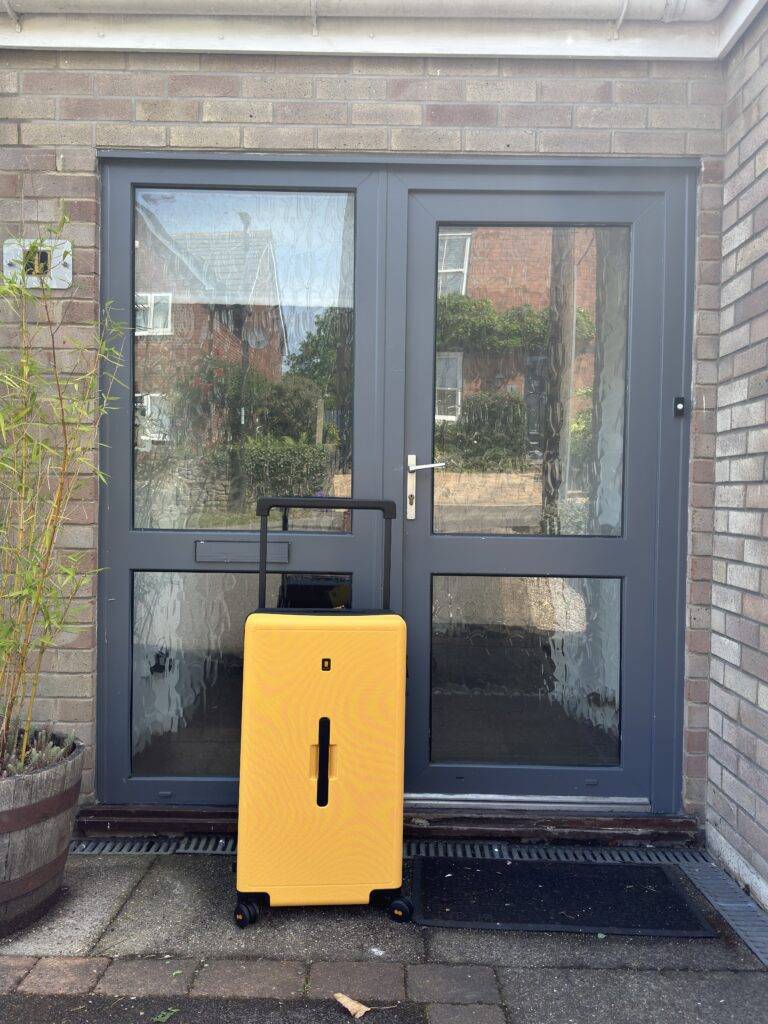
What Long-Term Family Travel Taught Us About Luggage
The biggest surprise wasn’t how much we packed.
It was how quickly small luggage problems became big ones.
A stiff wheel doesn’t seem important until you’re crossing an airport at midnight carrying a backpack while one child refuses to walk and the other urgently needs a toilet.
A weak handle doesn’t matter much until it starts wobbling halfway through a relocation journey.
And heavy luggage? That becomes everyone’s problem eventually.
We started our travels with a fairly random mix of luggage. Some cheaper cases. Some older bags. Some things bought more out of convenience than strategy.
At first, it all seemed fine.
Then came:
- broken zips
- awkward weight distribution
- handles loosening
- wheels struggling on rough streets
- constantly overstuffed carry-ons
- trying to access important items buried under everything else
It wasn’t disastrous. Just tiring.
And after months of travel, tiring things start standing out very clearly.
Why We’re Changing Our Luggage Setup Before Moving to New Zealand
Relocating as a family feels very different from going on holiday.
Even compared to long-term travel.
This time we’re not just packing for movement. We’re packing for transition:
- important documents
- electronics
- kids’ essentials
- clothing for different seasons
- things we’ll actually need while settling somewhere new
At the same time, we still want flexibility.
That’s why we’ve landed on a setup that feels far more realistic for family relocation travel:
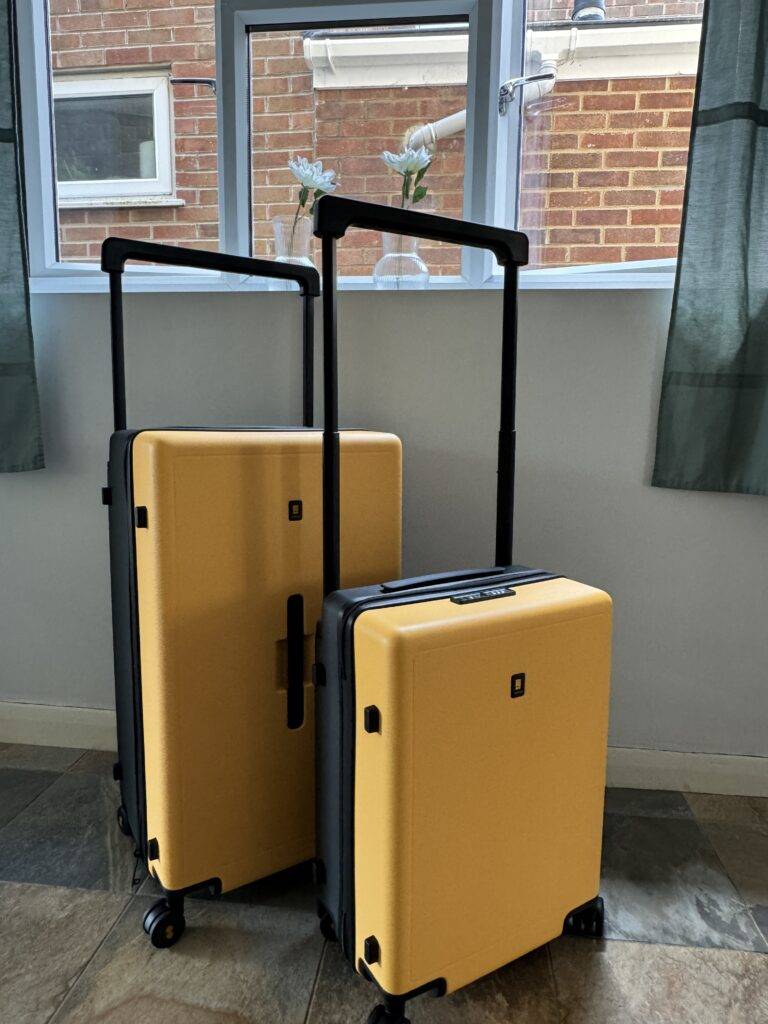
- one checked suitcase
- one carry-on
- backpacks for daily essentials
Not minimalist.
Not excessive.
Just practical.
Long-term travel completely changed how we think about luggage. We stopped caring about having the “perfect travel aesthetic” and started caring much more about:
- movement
- accessibility
- weight
- organisation
- reducing stress during transit days
Because when you’re travelling with children, reducing friction matters a lot.
Why We’re Using a Checked Suitcase and Carry-On Combination
We briefly flirted with the idea of trying to travel entirely with backpacks.
The internet makes this sound very achievable.
For some families, maybe it is.
For us, it quickly became obvious that constantly carrying everything on our backs while managing children, airports, transport, and relocation logistics sounded more exhausting than freeing.
So instead, we’ve become much more intentional about what each bag actually does.
The checked suitcase handles:
- bulkier clothing
- shoes
- slower-access items
- backup essentials
- things we won’t immediately need in transit
The carry-on handles:
- passports
- electronics
- chargers
- snacks
- kids’ entertainment
- emergency clothes
- medication
- valuables
Basically: the things that can completely derail a travel day if they’re difficult to access.
That division feels far calmer for us than trying to cram everything into one system.
What Actually Matters in Family Carry-On Luggage
Before travelling long-term, we probably would’ve answered this differently.
Now?
The most important things are surprisingly boring:
- good wheels
- lightweight design
- strong handles
- easy-access compartments
- practical organisation
That’s it.
Because eventually, every family travel day becomes a logistics exercise.
One adult is:
- pulling luggage
- carrying backpacks
- checking directions
- handling documents
- opening snacks
- answering questions
- trying not to lose their mind in airport security
Good luggage doesn’t magically fix stressful travel days.
But bad luggage definitely makes them worse.
The One Thing We Underestimated: Wheels
This sounds ridiculous until you travel properly.
Wheels matter far more than we expected.
Especially outside the perfectly smooth airport floors luggage brands love showing in adverts.
Real travel looked more like:
- cracked pavements
- gravel paths
- uneven roads
- ferry terminals
- rushed train platforms
- dragging luggage uphill while children complain about being tired
That’s where we noticed the difference between cheaper luggage and premium travel luggage.
Smooth movement genuinely reduces stress.
Not in an exciting way. In a very practical:
“This is making today slightly less chaotic”
kind of way.
Honestly, after enough long travel days, that becomes incredibly valuable.
What We Liked About the LEVEL8 Setup
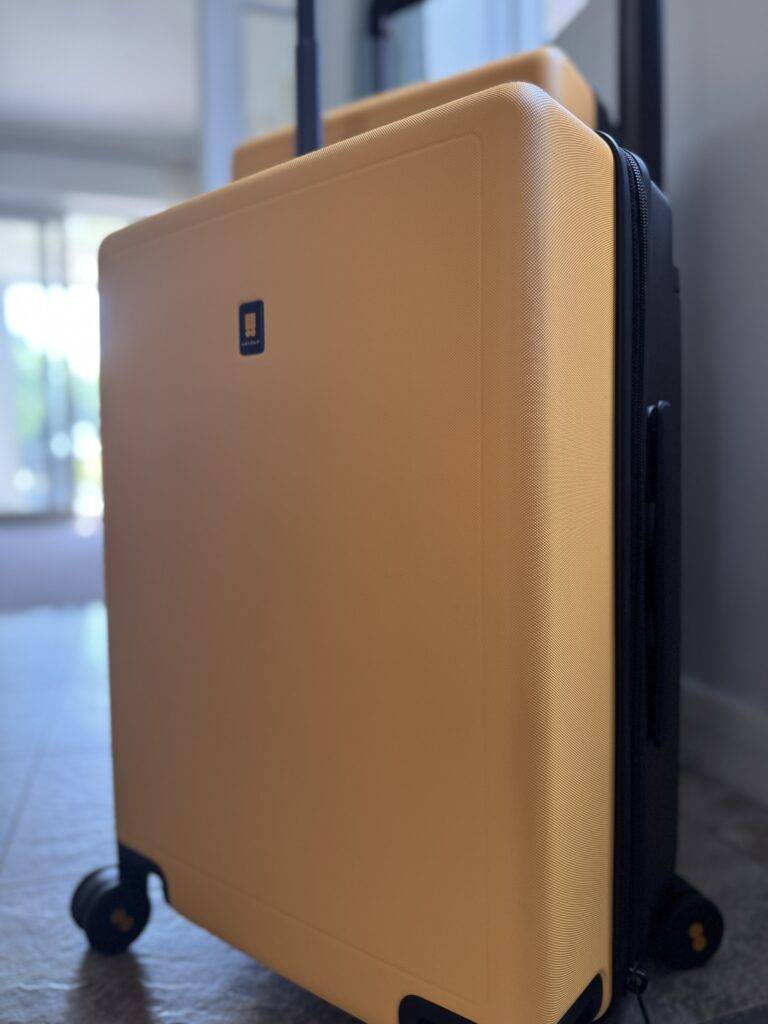
One thing we appreciated immediately was that the setup felt practical rather than overly engineered.
The carry-on especially worked well for how we actually travel as a family.
A few things we genuinely liked:
lightweight feel
smooth wheel movement
sturdy telescopic handle
organised interior
hard shell durability
We originally thought the biggest benefit would just be the overall storage space.
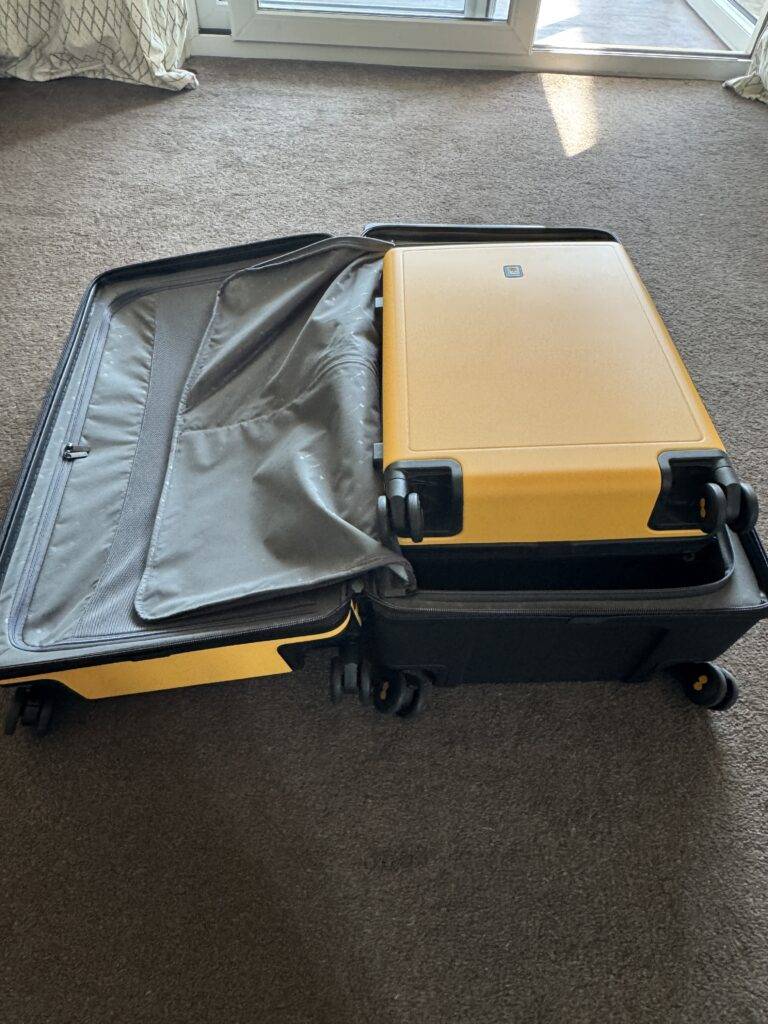
What actually stood out more was how easy the interior was to organise properly once we started packing for longer stretches of travel and the lightweight hardshell suitcase.
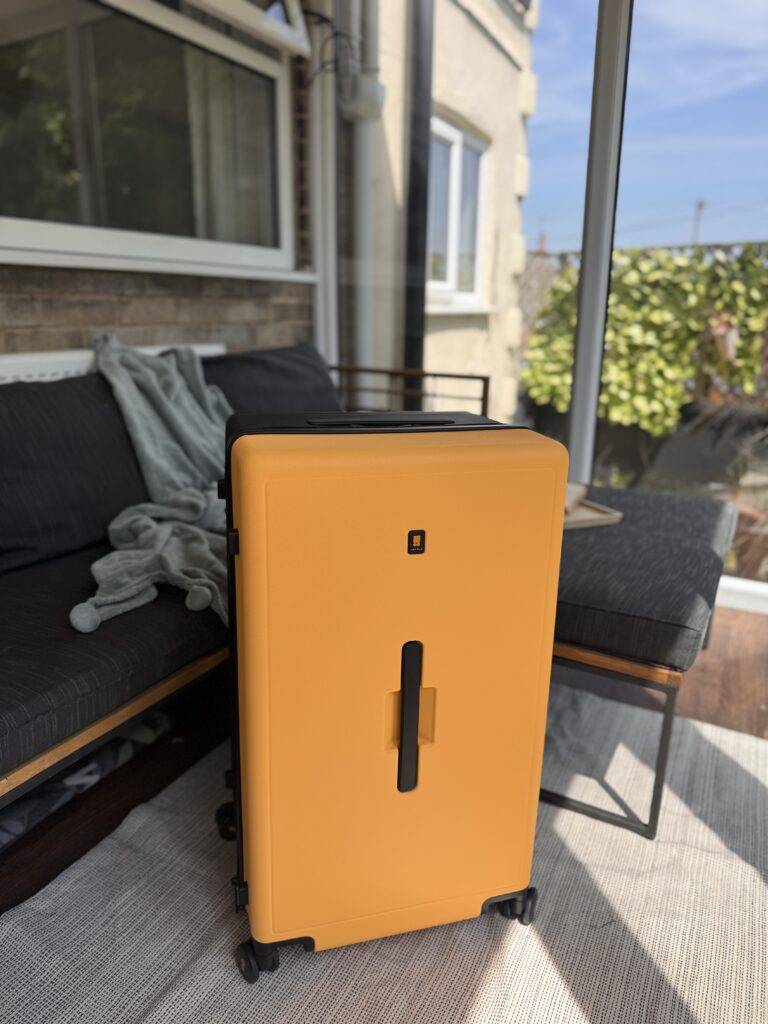
The wide handle design makes a bigger difference than we expected. Because the handle sits externally, the inside packing area stays flatter and less awkward to work around, which genuinely helped when trying to fit packing cubes, kids’ clothes, and all the random extras family travel somehow creates.
It sounds minor, but after months of moving between places, small practical details start mattering a lot more.
The whole setup felt more functional than flashy, which honestly suited us better anyway.
If you’re looking for luggage focused more on usable packing space and straightforward organisation rather than gimmicks, you can check out the Voyageur range here.
The Packing Mistake We Kept Repeating
Overpacking the carry-on.
Every single time.
Travelling with children creates this onstant temptation to prepare for every possible scenario:
- spare clothes
- extra snacks
- backup medicine
- emergency entertainment
- “just in case” jumpers
- duplicate everything
Before long, the carry-on becomes heavier than the checked suitcase and nobody wants to lift it into the overhead locker.
The longer we travelled, the more we simplified.
What actually helped:
- compression cubes
- fewer duplicate items
- shared family essentials
- buying basics locally
- accepting we didn’t need to prepare for every disaster
We didn’t become minimalist travellers.
We just became tired of carrying unnecessary things.
Carry-On vs Backpack for Family Travel
There’s a certain type of travel content online that treats backpack-only travel like a personality trait.
We understand why people love it.
Backpacks absolutely make sense for:
- stairs
- rural transport
- uneven terrain
- shorter trips
But for airports, city travel, and relocation days with children, we’ve personally found carry-on luggage far easier physically. Packing essentials for family travel can significantly reduce stress during your journey. It’s helpful to create a checklist to ensure that nothing important is forgotten. Consider including items that keep the kids entertained and comfortable throughout your trip. When preparing for long-term adventures, fulltime family travel essentials become paramount. These items can include versatile clothing, travel-sized toiletries, and useful gadgets to stay connected. Organizing these essentials ahead of time can ensure a smoother experience for everyone involved. Packing tips for family travel can also include providing snacks and entertainment for the journey. Ensuring that each child has a small bag with their favorite items can make a significant difference. Additionally, planning breaks during long trips can help everyone stretch and recharge.
Dragging a well-designed suitcase while wearing a smaller backpack usually feels far more manageable than carrying everything on your back while also helping children navigate airports.
Especially after long-haul flights.
Long-term family travel made us less interested in “traveller identity” and much more interested in what actually reduces stress.
What We’d Upgrade Again for Family Travel in 2026
After months of travelling, the things we now prioritise are surprisingly simple:
- lighter luggage
- durable wheels
- practical compartments
- fewer total bags
- organised packing systems
- luggage designed for actual movement
Not just luggage that photographs well.
That shift happened slowly.
At some point we stopped trying to travel in the most impressive-looking way and started trying to travel in the least exhausting way.
Honestly, that change improved our travel days far more than we expected.
Best Carry-On Luggage for Family Travel in 2026
Long-term family travel changed how we think about luggage completely.
Before travelling, we cared mostly about price and appearance.
Now, preparing for our move to New Zealand, we care much more about:
- practicality
- weight
- durability
- organisation
- flexibility during transit
Because when you’re relocating with children, luggage quietly becomes part of the experience.
The best carry-on luggage for family travel in 2026 isn’t necessarily the most expensive or the most aesthetic.
It’s the luggage that helps difficult travel days feel slightly more manageable.
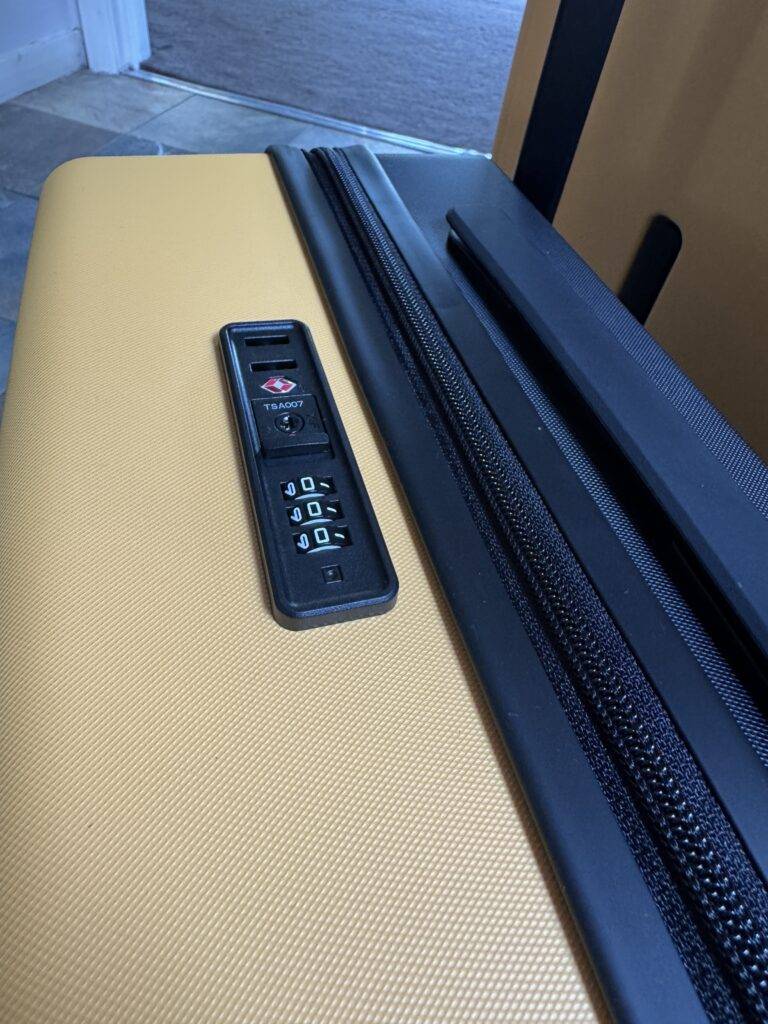
Thats why we’re picking Level8 voyageur carry-on for our luggage in 2026 and beyond, you can check out their Carry-On Luggage here.
And honestly, after months of airports, transfers, overpacking, and travel chaos, that’s become the only thing we really care about.